

It seems like these days, most weddings are considered destination weddings. I got married in Miami, which is where all my family was from, but my husband’s family was like everywhere. So we had probably 80% of our guest list flying in. Even though it wasn’t on some tropical island, it was still a destination wedding for most of the people we invited, and that shaped almost every decision we made about the list.
When you shop links on our site, we may earn a small commission at no cost to you. Learn more.
One of the first things you want to do when planning a wedding is to figure out who you want there to celebrate with you. It sounds simple until you sit down with your partner and two very opinionated families and try to get everyone’s names on one spreadsheet without a fight.
So consider these the guest list dos and don’ts I’d share with any engaged couple, including the one mistake you can’t take back once it’s out there (that one is further down, and I’ve seen it blow up more holidays than I can count).

Do: Give the List More Time Than You Think It Needs
Your guest count decides your venue, your catering bill, and a surprising number of things after that, so the list needs to come together before you fall in love with a space that seats 120 when you have 175 people you can’t imagine cutting. In my Smart Wedding Planner, drafting the guest list shares the very first checklist with setting your budget (and it gets finalized before the save the dates are ordered). If you’re not sure what number to aim for, we walk through it in our guide to how many people you should invite to your wedding.
While you can create an Excel spreadsheet for your guest list, it’s much more efficient to use one of the guest list managers that most personal wedding websites offer. Zola and Joy have the best tools, making it easy to collect guest addresses, track online RSVPs, note dietary restrictions and plus ones, and a whole bunch of other cool features.
Do: Sort Everyone Into Tiers (Even If It Feels a Little Ruthless)

Start with an A list (the people you cannot imagine getting married without), then a B list (you’d love to have them there), then a C list (it would be nice if they came but the are the first to cut), and be honest about the names you’re only writing down out of obligation. Nobody ever sees these categories but you two, and they make every hard call you might have to make later about ten times easier.
One commenter on Reddit described their approach the same way: “You invite by circles – invite both of your Bestest Friends first, Closest Family first, etc. And then expand from there.” Another couple got even more tactical about it:
“A lot of our B list were what we called ‘slippery slope’ people. Meaning if we invited a certain person we’d have to invite others. It was all strategic.”
— via Reddit.com
Keep in mind: tiers aren’t only about closeness. Think about how the day feels with each person in the room, because one guest who turns every family event into a scene can take up more space than ten guests who are pure fun.
Consider making a sample, smaller guest list ahead of time so you can see what that might look like. That way, if the budget shifts or the venue holds fewer people than you hoped, you’re not starting from scratch.
Don’t: Tell Anyone They’re Invited (Yet)
This is the mistake you can’t take back. In the excitement right after your engagement, it is so easy to tell a coworker “you have to be there!” and then realize months later that your venue caps you at 100 and she didn’t make the final list. Once someone believes they’re invited, you have two options: pay for them anyway or have a painfully awkward conversation. And that awkwardness cuts both ways. One guest on Reddit described getting a save the date with no invitation to follow: “I just had to do the ‘hey, this is really awkward, but I just wanted to check if I’m still invited? It’s just so I can book the time off work, they need x amount of notice.'”
“You can’t uninvite people. That’s rude. Not to sound harsh but it was your responsibility to set boundaries on the guest list before anything goes out. On the bright side, those people are often great gifters with low turn out rate.”
— via Reddit.com
The same rule applies to save the dates, which are a promise that an invitation is coming. Wait until the list is final and the venue is booked before you send anything, and check our month-by-month save the date timeline so you know when “final” needs to happen. And if word gets out anyway and extra people start assuming they’re coming, we have a whole guide on keeping uninvited guests from showing up at your wedding.
Do: Budget Like Every Single Person Is Coming

ALWAYS operate on the assumption that 100% of your guests are coming. As RSVPs start to come in and that count dwindles, you can then decide if you want to send out extra invites, save the difference, or put that budgeted money toward a wedding extra (like a photo booth or a late night snack), as wedding planner Brooke Avishay of Orange Blossom Special Events recommends.
Will everyone come? Almost certainly not. When I interviewed venue owner Maria Erickson of Walden Chicago for my Smart Wedding Planner, she told me what she sees across hundreds of weddings: “Typical would be about if you’re estimating inviting 200 guests or so, 15 to 20% of those would RSVP no. So you want to err on the side a little higher.” The declines are sad, but they’re also a nice surprise for your budget. Counting on them is how couples end up over venue capacity, because as one bride put it on Reddit a week after her wedding, “the people who are declining won’t tell you until the rsvp date.”
Don’t: Count On the B-List to Save You
A B-list can work, but the timing rarely cooperates. Invitations go out six to ten weeks before the wedding, and most declines arrive at the deadline, which leaves you about a week to invite someone without making it obvious they were a second-round pick.
“We did two lists and ended up having 20% of our A list declining. I wish we just would have invited people from both lists when we sent save the dates. Once the rsvp deadline came, it was too late and all of the people on the b list declined.”
— via Reddit.com
Some couples skip the second round entirely. “We had no B list. If we wanted someone there we invited them in the first place,” one commenter shared. If you do use one, keep the rounds close together and keep it quiet. Or, as another Reddit commenter advised: “Just don’t send out mass emails with ‘To the B List’ in the subject line and you should be okay.” LOL.
Do: Know What One Name on the List Costs
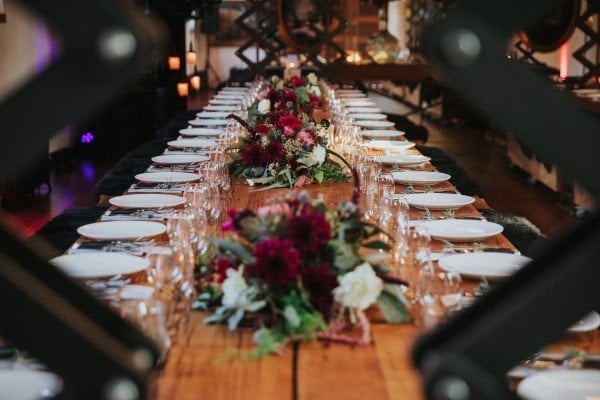
This may be the most obvious (and annoying) recommendation, but the easiest way to save $1,000 on your wedding is to invite 10 less people if you’re paying $100 per person. When you start to look at your guest list as a per person cost, it becomes way easier to cut. And according to The Knot’s most recent study, the national average is now $292 per guest, so for a lot of couples that math is closer to $3,000.
Every name also ripples into your rentals, your florals, your favors, and your bar bill, not only the catering. If the total is scaring you, start with our 5 ways to cut your wedding guest list before you start trimming things you care about, like your photographer’s hours.
Numbers check: even your dance floor is a guest list line item. To estimate the size you’ll need, divide your guest list by 2 (since typically only 50% of your guests will be dancing at a time), then multiply that by 4.5 to get the square footage.
Don’t: Make Cuts (or Adds) Without Your Partner
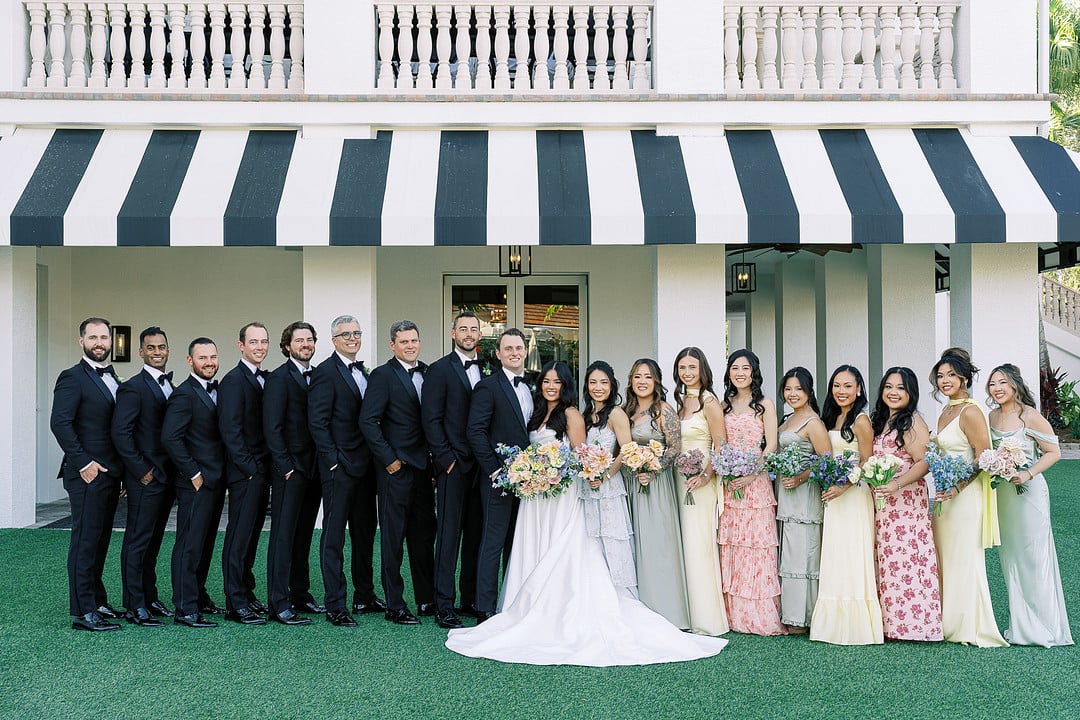
The list belongs to both of you, and removing your fiancé’s college roommate without telling him to make room for your cousin’s new boyfriend is how a spreadsheet argument becomes a relationship argument. Every add and every cut should happen with both of you looking at the same screen.
The same goes for parents. Traditionally, parents who are contributing financially get more invites (we break down that whole conversation in who pays for what in a wedding), so give each set a specific number instead of an open invitation to brainstorm. When I interviewed Lizzie Post of the Emily Post Institute, she gave me my favorite piece of advice for handling everyone’s opinions about your wedding:
“Love everything for five minutes. Be willing to hear a lot of opinions and stay confident that you can stick to what you’re going to do that’s going to be right for your wedding.”
— Lizzie Post, The Emily Post Institute
She also reminded me that “you can deliver rejections in ways that show gratitude and appreciation rather than ways that tear people down and make them feel stupid for having spoken up.” In other words, hear your mom out about her book club, then tell her the count won’t allow it and you love her for asking.
Don’t: Send Anything Without a Real RSVP Date on It
Your caterer, your rental company, and your stationer all need final counts on specific dates, so work backward from those deadlines instead of picking an RSVP date that sounds nice. One bride on Reddit shared the timing that worked: “We set our deadline for about 30 days before the wedding day. I gave 2 weeks before the final counts were due as a buffer. All of our guests did RSVP by the deadline, except for two people who I knew I would have to chase down.”
A firm date also gives you a kind, non-negotiable answer for every late request and surprise plus one. This response, which another commenter suggested for a cousin who invented a date after the deadline, is the template I’d save:
“Hey, sorry but since the rsvp deadline has passed we’ve already locked in our guest list so we won’t be able to accommodate your guest at the wedding. [insert nicety about how you hope he understands and you’re looking forward to seeing him.]”
— via Reddit.com
Heads up: chasing down stragglers is a job you can hand to your most organized bridesmaid or your mom. For everything else guests do with reply cards, our roundup of RSVP mistakes that drive brides crazy will make you feel very seen.
Do: Cut the List Without the Guilt Trip
Our general rule is if we haven’t met someone in person, they don’t get invited. And unless they’re a childhood friend or family member, if you haven’t talked to them in a few years, they don’t get an invite either. Kids? Totally optional! Just be sure to make one general rule (for example, only kids in the wedding party are invited) and be understanding that some guests with kids won’t be able to make it because of that. We have a whole guide on having an adults-only wedding if you’re leaning that way.
However you draw your lines, someone will have feelings about them, and that’s okay. The people who love you will dance at your wedding whether it’s 50 guests or 250. Once the list is set, our guide to who’s invited to what wedding event covers the showers, rehearsal dinner, and every other party question that comes next, and my Smart Wedding Planner has the worksheets I mentioned for splitting counts with your parents. Now go make that A list, and remember not to say a word about it at Thanksgiving.




Such great advice! As a wedding invitation designer, I especially love the tip about finalizing your guest list early. I always remind couples to think in terms of households, too—150 guests doesn’t necessarily mean 150 invitations! Having that list organized early makes the whole invitation and RSVP process so much easier.