
Building a guest list is already one of the most stressful parts of wedding planning. The RSVP process somehow manages to make it ten times worse. Brides spend the final month before their wedding chasing down replies, recalculating seating charts, and sending careful follow-up texts to people who treated the reply card like junk mail.
After nearly two decades running WomanGettingMarried.com, the same RSVP complaints land in our inbox every single wedding season, and the offenses are wildly creative. From the friend who never replies at all to the relative who writes in their unannounced new boyfriend on the reply card, brides have seen all of it. The good news is that most RSVP problems are avoidable if you set up the process right from the start, especially since a lot of guests genuinely don’t realize what they’re doing is rude until someone spells it out for them.
Here are 13 of the most common wedding RSVP mistakes that drive brides crazy, what they actually look like, and how to head them off before they wreck your final headcount.
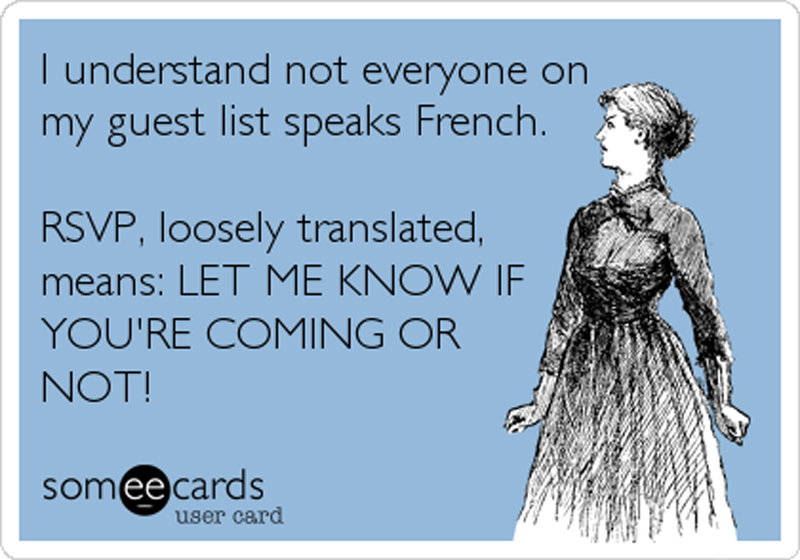
1. Never Replying at All
This is the number one RSVP complaint by a long shot. You sent a beautiful invitation with a stamped reply envelope inside, and a chunk of your guests just… didn’t write back. According to wedding forums and surveys, anywhere from 10 to 20% of guests routinely miss the deadline, which is a wild number when you think about how easy a “yes” or “no” actually is.
Why it happens: a mix of forgetfulness, procrastination, and the awkward “I’ll do it later” loop where they feel guilty about not responding and then put it off even longer. The Emily Post Institute (the etiquette experts who quite literally wrote the book on it) recommends calling each non-responder directly instead of sending a group text. Most people will give you a real answer when they’re asked one-on-one, even if they’ve been ignoring the reply card on their kitchen counter for a month.
Etiquette tip: If you don’t hear back within one week of your follow-up, mark them as not attending and move on. Your caterer needs your final number, and your sanity needs the resolution.

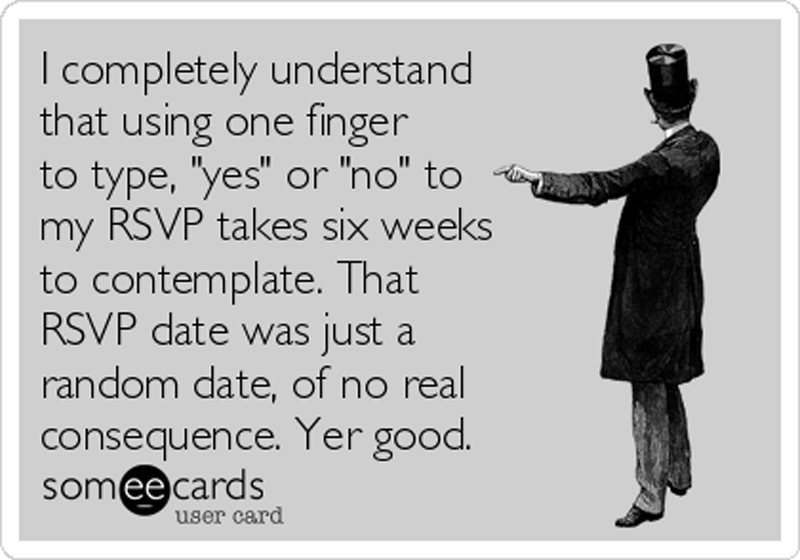
2. Replying Way Past the Deadline
A late RSVP is almost as frustrating as never replying at all. The deadline came and went. The guest was clearly in your phone the whole time, but the actual reply rolls in three weeks late, after you’ve already updated your headcount, paid your venue, and locked your seating chart.
We always recommend setting your RSVP deadline 4 weeks before the wedding (we go deeper on this in our Smart Wedding Planner Guide) so you have a real cushion. That cushion is exactly for these situations. The caterer needs final numbers around 1-2 weeks out, the venue needs them around the same time, and the seating chart needs at least a week to finalize.
Pro tip: Use online RSVPs (through your wedding website or a service like an online RSVP system). Late responses are easier to handle when they’re already in your spreadsheet, not on a stamped envelope sitting in someone’s car.
3. Adding a +1 That Wasn’t Offered
Guest fills in their RSVP card with “2 attending” when the invitation was clearly addressed to one person. Or, worse, writes in their boyfriend’s full name like you forgot him. This is one of the most uncomfortable RSVP situations because you have to either accept the +1 you didn’t budget for, or push back to a friend who’s now invested.
Most of this comes down to how you address the invitation in the first place. The way an invitation is addressed dictates who’s invited. “Ms. Sarah Smith” means just Sarah. “Ms. Sarah Smith and guest” means she gets a +1. Make this clear on your wedding website FAQ too: “We’ve addressed each invitation to the specific guests we’re hoping to celebrate with.”
Watch out for: Family members who keep up the pressure. If your aunt asks if she can bring her latest boyfriend, “Unfortunately our guest count is already final” is a complete sentence. You don’t owe a longer explanation.
4. Bringing Kids to a Kid-Free Wedding
Despite the wedding website note, the addressed envelope, and the side conversation you had with your sister-in-law, parents still show up with their kids in tow. Suddenly there are three high chairs the venue didn’t plan for, and the reception you imagined is now competing with toddler meltdowns.
Our Smart Wedding Planner Guide recommends communicating “no kids” across multiple channels: the way the invitation is addressed (just the parents’ names, no “and family”), a clear note on your wedding website FAQ, and a personal heads-up to close family members with kids. Avoid the phrase “Adults Only” on the actual invitation, but use it freely on the website.
Best for: Couples expecting pushback. Wording like “Although we love your little ones, we’re keeping the celebration adults-only so everyone can relax and enjoy the night” softens the message without leaving wiggle room.
5. Saying Yes, Then Not Showing Up
This is the unforgivable one. They RSVPed yes. You bought them a $200 plate. You sat them next to your favorite cousin. The wedding starts and there’s an empty chair where they should be.
Sometimes it’s a real emergency, and most people will reach out the day-of with an explanation. The frustrating cases are the silent no-shows: no text, no call, just an empty seat. There’s no perfect fix, but a quick “Can’t wait to see you Saturday!” group text two days before the wedding catches more last-minute drops than you’d expect.
Watch out for: Couples who RSVP yes for two and only one shows up. This happens more than people realize, especially with relationship breakups in the weeks before. If a guest is going through something, give them grace, but ask in advance if they want to update their RSVP.

6. Saying No, Then Asking to Come at the Last Minute
Picture getting a “Hey, our other plans got canceled, can we still come Saturday?” text at 9pm on a Wednesday, ten days after your headcount went to the caterer.
Most guests don’t realize that wedding logistics are essentially locked in by the 2-week mark. Catering numbers, seating charts, name cards, transportation, even hotel blocks are based on that final count. A late “yes” creates a domino of problems your venue will charge you for.
Etiquette tip: Have a kind but firm response ready. “Unfortunately our final headcount was due to the caterer last week, so we won’t be able to add you in. We’d love to celebrate at the post-wedding brunch on Sunday if you can swing it!” Keeps the relationship intact, keeps your event intact.
7. RSVPing for Someone Else Without Asking Them
Mom RSVPs yes for her adult kids without checking with them. Aunt sends back the family RSVP marking everyone “no” before half of them have even seen it. You think you have a confirmed guest. They have no idea they’re invited.
This is the #1 reason to address each adult guest individually on the envelope, even within the same household. It’s also a great argument for online RSVPs that require each named guest to respond separately, rather than one card per household where mom can fill in everyone.
Pro tip: If you suspect someone is RSVPing for their whole family without consulting, follow up directly with the adult kids. A quick “Hi! Just confirming we have you and your partner attending on Saturday?” usually surfaces the misunderstanding.

8. Texting the RSVP Instead of Using the Card or Website
You get a casual “Hey love we’ll be there!!” through Instagram DM. It’s a sweet sentiment, but it’s unhelpful for tracking. Now you have to remember to manually add them to your spreadsheet, and you cannot trust your written RSVP list as the source of truth.
The cleanest move is to make the official RSVP method clear (and easy). On the wedding website, write something like: “We’re tracking responses through our website to make sure no one slips through the cracks. Please RSVP by 2026 at [link].” Then if a guest texts you instead, redirect: “Yay, can’t wait! Could you also pop your RSVP in on the website so I have you in our system?”
Best for: Couples doing online-only RSVPs. A great wedding website with built-in RSVP tracking saves you from the spreadsheet-and-stamps chaos.
9. Asking Detailed Menu or Logistics Questions on the RSVP
Some guests treat the RSVP card like a help desk. “What if I’m vegan?” “Can I have something gluten-free?” “What time does the reception end?” “Will there be parking?” Then they don’t actually mark whether they’re attending.
The fix is to anticipate every question on your wedding website FAQ. Dress code, parking, dietary options, end time, kid policy, transportation: all of it goes on the website, prominently. If you’re offering meal options, list them on the RSVP card with check boxes. Anything else is “see our wedding website.”
Etiquette tip: Add a single line to the RSVP card or online form: “Any allergies or dietary restrictions we should know about?” That gives guests a place to flag what matters without opening a back-and-forth conversation.

10. Adding Unsolicited Notes on the Reply Card
“I’d love to come but only if Jen isn’t there.” “We’re attending but only the ceremony.” “We’ll come if you can change the date.” These are real notes that real brides have actually received on real RSVP cards.
The right move is to not engage with the side commentary at all. Mark the RSVP based on what they actually checked (yes or no) and move on. If a guest is making attendance conditional on something unreasonable, the answer is “we’d love to have you, but the wedding is what it is” with no further discussion.
Watch out for: Side notes that make you doubt the friendship. If a guest is openly negotiating their attendance, that says more about their judgment than yours. The wedding is in motion regardless.
11. Asking About Gifts or Registry on the RSVP Card
Some guests literally write “Where are you registered?” directly on the reply card. Others scribble “What price range should I aim for?” or even return the card with their own Venmo handle on it asking how much they should send.
This is an etiquette violation on both sides. Couples should never list registry information on the invitation itself (it goes on the wedding website). And guests should never ask about gifts in writing on the RSVP card. The solution is to make sure your wedding website has registry information clearly visible, and gently redirect any guest who asks: “Anywhere on our wedding website’s registry page would be lovely!”
Pro tip: If you’re nervous guests won’t find your registry, link to it in the same email/text where you confirm their RSVP. Subtle, helpful, totally appropriate.
12. Ignoring the “We Have Reserved X Seats for You”
You used the lovely modern RSVP wording: “We have reserved 2 seats for you.” Guest sends it back marking “5 attending” because they assumed they could bring the kids, the cousin, and the new boyfriend.
The pre-printed reservation number is meant to be unmistakable, but a surprising number of guests treat it as a suggestion. The cleanest workaround is to list the names of the people you’re inviting directly on the card: “We have reserved 2 seats for [Sarah Smith] and [Mike Jones].” When the names are printed, there’s no room for invention.
Etiquette tip: If a guest does try to add people, follow up the same day. “Hi! I noticed you marked 5 attending, but we’ve only reserved 2 spots for you and [Name]. Just want to make sure we have the right count!” The earlier you address it, the cleaner the conversation.
13. RSVPing Yes Online, Then Saying Something Different In Person
The website RSVP says yes. Then at the bridal shower, the same person mentions they “might not be able to make it after all.” Or the inverse: they marked no online but tell your mom over the phone that they’re definitely coming.
Conflicting answers happen, and they’re hard to track. The rule of thumb: trust the most recent answer, and confirm it in writing. A quick “Just confirming we have you down for Saturday!” text within 24 hours of any verbal update gets it on the record.
Best for: Couples with chatty extended families. Set the expectation early that all RSVP changes go through the official channel (the website or a single text thread with you), not through your mom or a third party.
So, What Actually Matters?
RSVP frustration is real, but most of it isn’t personal. The vast majority of guests aren’t being malicious, they’re just being human about something that happens to be high-stakes for you and low-stakes for them. The right systems take most of the pain out of the process.
The big three: set your deadline at least 4 weeks out, use online RSVPs through your wedding website, and write a thorough FAQ that anticipates every question your guests might be tempted to email you separately. After that, follow up directly with calls (not blanket texts) and trust your number once the deadline passes.
The wedding will happen with whoever shows up. Your job is to plan for the people who confirmed, not for the people who left you guessing.
FAQ: Wedding RSVP Mistakes
How early should I set my RSVP deadline?
4 weeks before the wedding is the sweet spot. That gives you 2-3 weeks to chase non-responders before your caterer’s final count is due, plus a buffer for last-minute changes.
What do I do if someone never RSVPs?
Follow up directly: a phone call works better than a text or email. If you don’t hear back within a week of your follow-up, mark them as not attending and adjust your final count accordingly.
Can I require online-only RSVPs?
Yes, and many couples do. Online RSVPs are easier to track, easier to update, and easier for younger guests. Plan for older relatives who may need a phone call walk-through, and offer a phone-in option as a backup.
Is it OK to call out a guest publicly for ghosting on the RSVP?
No, even if it feels deserved. Public callouts (social media posts, group-text shame) make you look worse than the offender does. Handle it privately if at all.
Should I include a meal selection on the RSVP card?
If you’re offering options at dinner, yes. List 2-3 entrée choices with check boxes. If your reception is buffet or stations, just include a single line for “Any allergies or dietary restrictions we should know about?” so guests can flag what matters.
Some links in this post may be affiliate links, which means we may earn a small commission if you make a purchase through them. Thank you for your support!