When I interviewed Lizzie Post of the Emily Post Institute, she was blunt about where the whole “bride’s family pays” idea comes from: “traditionally they used to talk about it in really heteronormative terms. So it was the bride’s family pays for this and my groom’s family pays for this and never the two shall cross. Thank goodness times have changed.”
So this is the mother-of-the-bride version of our who pays for what in a wedding guide. One mom on Reddit summed up the whole job:
I’m a MOB, initially thought $10K but I can see that will probably be $20K by the time we are done. I do not want my daughter to stress over this. In life, there are many bills which come with no fun attached. It makes me so happy to pay for this and I know they appreciate it and don’t feel entitled. And I have zero demands over guest list or food lol.
a mother of the bride, on Reddit
1. Do You Have to Pay for Your Daughter’s Wedding at All?
No. A mother of two, asked on Reddit how much parents “should” give: “There’s no ‘normal’. Only pay if you want, but there’s no obligation. They’re adults enough to be married; they’re adult enough to pay for their own wants.” Another parent: “There’s no normal amount. I have friends whose parents are paying for the whole thing. I have friends who’s parents aren’t contributing anything. My parents are covering a 3rd of the wedding. It’s what you can afford and are HAPPY to do.”
It hasn’t disappeared, though. “My parents are paying for my wedding and the last 6 weddings I went to were funded entirely by the parents. People say that that traditions is long gone but it’s still rampant in my circles.” Another bride: “I thought very few of my friends parents would be contributing, and as it turns out, about 60% are having at least 50% of the wedding covered by parents.”
The one thing every bride agreed on: “An old friend of mine ‘afforded’ her wedding by her mom using her retirement funds. I would NEVER let my mom do that.”
2. The Wedding Dress
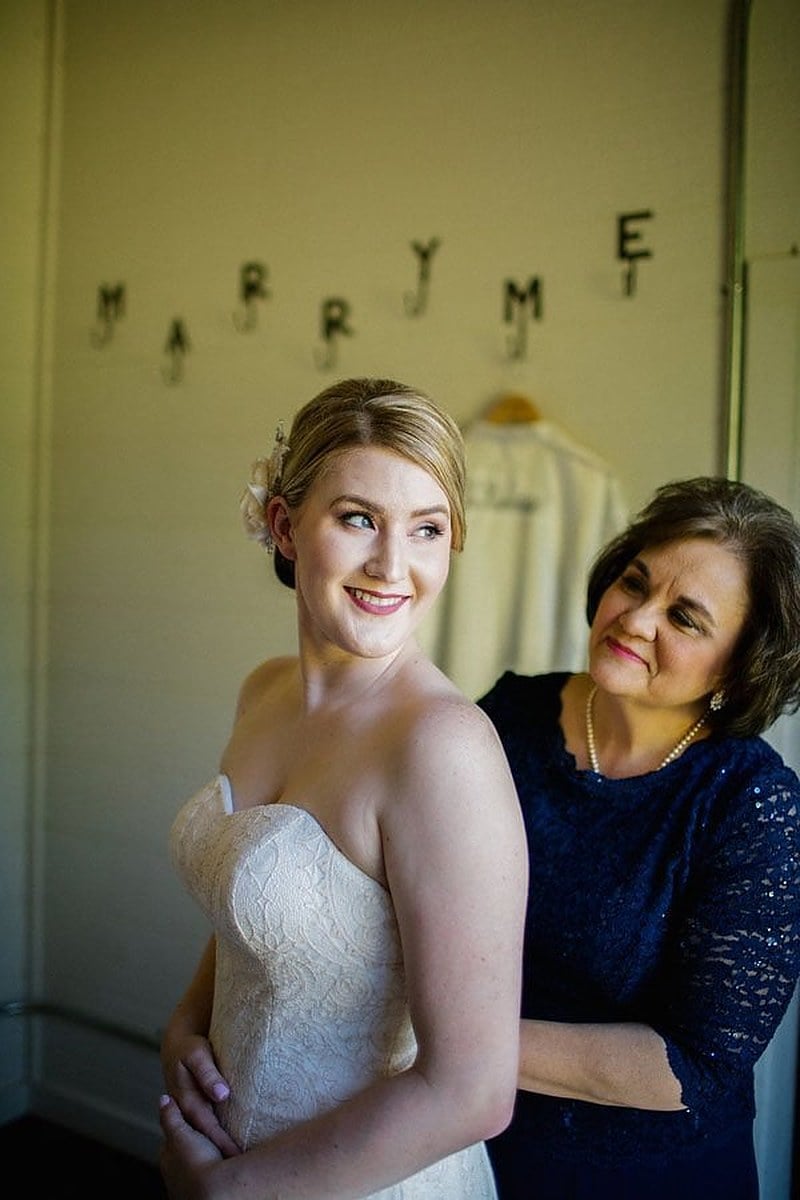
If there is one line item mothers still claim, it’s this one. “We told both our daughters that we wanted to pay for their dresses. Both were happy to accept. We did give them an amount so they knew before shopping.” A bride whose mom did the same: “My mom has generously offered to cover my dress and alterations. I’m so grateful! It’s not a budget priority for me, but it is for her (and I greatly value her opinion), so dress shopping has been a fun aspect of the planning that we are doing together.”
One single mom drew the line in a way we loved:
I (single mom) gifted my daughter and fiancé 5K to use as needed and I’m going to host the bar. I’m also paying for everything that makes my daughter a bride – dress, shoes, HMU, etc. I make her a bride, he makes her a spouse. It’s symbolic to me.
a mother of the bride, on Reddit
If you offer, buy it on time. A bride whose mother promised the dress and then stalled for five months was told: “Some wedding dresses are still taking 9-12 months to even ship, and that’s not even taking into account the time for alterations.” And: “Are you in a position to buy it? It sounds like you’re better served buying it yourself and she can maybe reimburse you.” (Our mother of the bride dress shopping emotions piece covers the appointment.)
3. Your Own Dress, Hair and Makeup
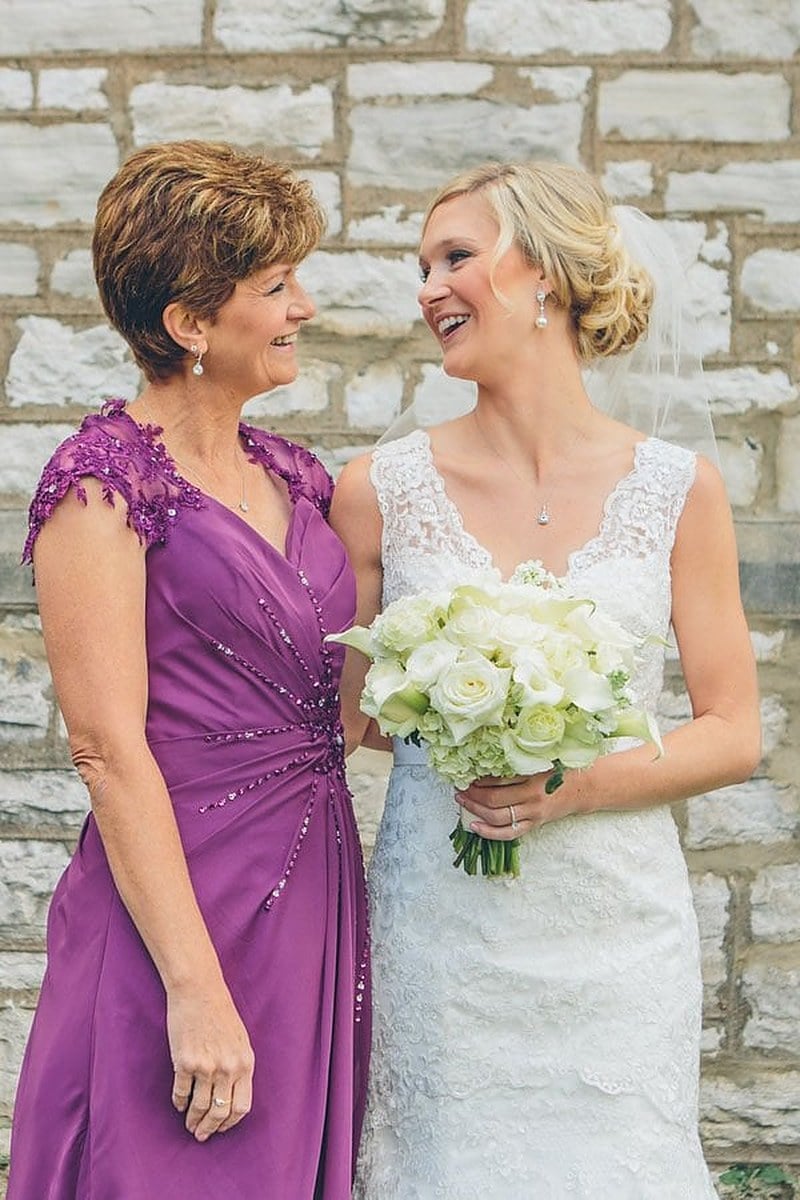
The etiquette is flexible here. Often a mother-of-the-bride will pay for her own hair and makeup. But your daughter might treat you instead if she is paying for a bridal package.
Looking for MOB style advice? Our mother of the bride dresses guide and our mother of the bride hairstyles roundup have you covered.
4. The Engagement Party
Bride’s parents, traditionally. And we just can’t state this enough: Anyone who is invited to ‘pre-wedding’ events gets invited to the wedding. Our engagement party etiquette guide covers the rest.
5. The Bridal Shower
This one surprises mothers: traditionally the mother of the bride does NOT host the shower (we answered that exact question in who hosts the bridal shower), though plenty of moms now pay for the room while the bridesmaids plan. The reason this sort of faux pas exists is because it was seen that if a mother hosts the shower, she is asking for gifts for her daughter. I know, I know, it’s a weird technicality, but it does exist.
Another thing to note: showers are usually for physical gifts. And if you buy something from the registry for the shower, some circles believe you then give cash for the actual wedding gift.
If you are paying for the shower, David’s Bridal puts the typical shower at $15 to $100 per guest, “with the total typically falling between $300 and $2,000 depending on your guest list size and choices.”
When there is no mother to host, brides who’ve been there were clear: “Anyone who OFFERS to host one, can…whether that’s bridesmaids, an aunt, mil, sister, friend, etc. Showers need not be expensive. It could be as simple as light refreshments in someone’s home.” Another: “Any relative or friend can host. It does not have to be a grand affair at a restaurant, but can be simple and in a home. Just some snacks and punch.”
6. The Reception (or One Piece of It)
Venue, food and bar were the bride’s family’s whole job on the old list. Now if couples want to pay for the majority of the wedding but still have parents contribute, it’s to have them pick ONE line item. “My partner’s parents wanted to help and we settled on letting them cover the photographer. Which was great because then we didn’t have to figure out or even know the actual final cost.” Another bride: “Rather then a number, maybe ask that if they want to help if there’s something specific they would want to pay for? I did this with my family, and they covered my dress and 1/2 of my alcohol.”
The other approach is a check. “I loved how my parents (mostly) gave us money. Wrote me a check, called it a wedding gift, and said ‘you’re on your own, let me know if you want our help but this is our wedding gift to you.'” One set of parents put it this way: “we want you to have the best day possible and we know you wouldn’t spend outside your means, so we are just increasing your means.”
The amounts people reported were all over the map. “My (bride’s) parents contributed $8K, and my now-husband’s parents contributed $5K. We covered the rest!” “They contributed 13K each. My husband and I paid for a third and each set of parents paid for a third.” “My parents gave $5,000 and the grooms side didn’t contribute financially but they helped a ton in other ways. We were grateful for both and neither contribution was expected.”
7. Your Guests
Whether you’re contributing or not, I believe your engaged children should ask if you want to invite guests. I believe that number goes up (within reason) when you are contributing financially. One couple shared their family arrangement: “We told MOB she can invite 10-15 folks as long as we knew them somewhat and they wouldn’t be a bore! We also emphasized that she can invite more since they’re paying. Everyone is happy, thankfully.”
Ideally, you want to invite people your daughter has met and has a connection to. “I capitulated a little on my wedding, allowed my parents to invite friends and family that I wouldn’t otherwise invite because I wanted them to enjoy themselves too.” From the other side: “My parents gave us a huge amount of money for our wedding and were upfront about the expectations…all of my parents and siblings must be invited…and any money not spent gets returned.” Being upfront about what you expect with your contribution is always helpful!
For more tips on how to build a guest list that works, read our wedding guest list dos and don’ts.
8. The Rehearsal Dinner Is Not Your Bill
Traditionally, this is what the groom’s family pays for or contributes to. And yes, if you have a rehearsal you should have a rehearsal dinner. If you are not having one (and you’re having a destination wedding) you can also throw a welcome party for out-of-town guests. If this is something you as MOB want to contribute to, some do. Our rehearsal dinner guide covers the timing of it all.
9. Corsages, the Officiant and the Rings
This is also traditionally what the groom’s side pays for, at least on paper. A guest on Reddit rattled off the old list from memory: “traditional groom’s family did the rehearsal dinner, plus liquor for the wedding, the bride’s bouquet, and corsages for mothers and grandmothers, and the honeymoon.” This now outdated set of rules on who pays for what was really for weddings in a different time, when they cost 1/3 of what they do today (if that) and things were being divvied up. At our wedding we didn’t follow this at all.
But if the couple is having corsages, be sure to tell the bride your dress color early. (Our corsage guide has the style options, too).
10. Tips, Cards and the Morning After
This is where it’s not money that’s needed, it’s time. While this job can also be handed off to the maid of honor, a lot of MOBs will assume the role of giving out the tip envelopes to vendors at the end of the night and also gathering the cards. One bride said: “I had my parents be in charge of the cards and gifts at the end of the evening so that someone that was not me was in charge of it.”
Our wedding tipping guide has the amounts, and our brunch wedding ideas work for the morning after.
11. Do You Still Give a Gift If You Paid for the Wedding?
Your contribution IS the gift, so there is no need to give a gift on top of your gift. And if you didn’t contribute financially, of course you can give a gift like you would any close family member. We walk through how much to give at a wedding in this guide.
12. How to Offer Money Without the Strings
Our favorite etiquette guru Lizzie Post says talking about money can, of course, be awkward, even when it’s family (or especially then!)
Money isn’t always the easiest thing for us to talk about. In etiquette, we’re trying to open that field up to find comfortable ways to talk about money.
Lizzie Post, The Emily Post Institute
She also said “it’s not uncommon to feel really nervous to ask someone, are you interested in contributing to the wedding?” So save your daughter the asking. Offer once, name the amount or specific item you’d like to pay for, and be clear about any expectations around it.
Brides have shared their thoughts around this too. “My mom is giving us a lot money for a wedding and is being so chill about everything decision wise just saying ‘it’s your day, do whatever makes you happy’.” Some couples, on the other hand, have had success showing their parents (and MOB) what is available to contribute to if they so desired. “We gave [our parents] a list of items in the budget and their costs so it was easier for the other parents to pick something that fit what they’d wanted to spend. My dad in particular was worried about not contributing ‘enough’ and this made it easier for him to see that his contribution was impactful. But it also meant he didn’t have to break the bank.”
One thing money does still buy when it comes to tradition? One line on the invitation. Lizzie Post shared: “whomever is contributing to the wedding is usually considered a host.” If you’re paying a meaningful share, etiquette still says your name should be on the invitation. For example:
Partner 1 name and Partner 2 name, together with their families, invite you to …
Partner 1 name and Partner 2 name, together with their parents Name & Name and Name & Name, invite you to …
If there is no financial contribution there shouldn’t necessarily be an expectation to have your name on the invite, but I still personally think it’s a really nice gesture.
What Your Daughter Will Actually Remember
Wedding planning is a great moment in time to spend with your daughter. You can actually read about the meaningful ways I personally involved my mom here. Remember it’s your daughter (and her partner’s) day, and you are there to help support her in any way you can, financially, emotionally, and everything else in between!
Some links in this post may be affiliate links, which means we may earn a small commission if you make a purchase through them. Thank you for your support!