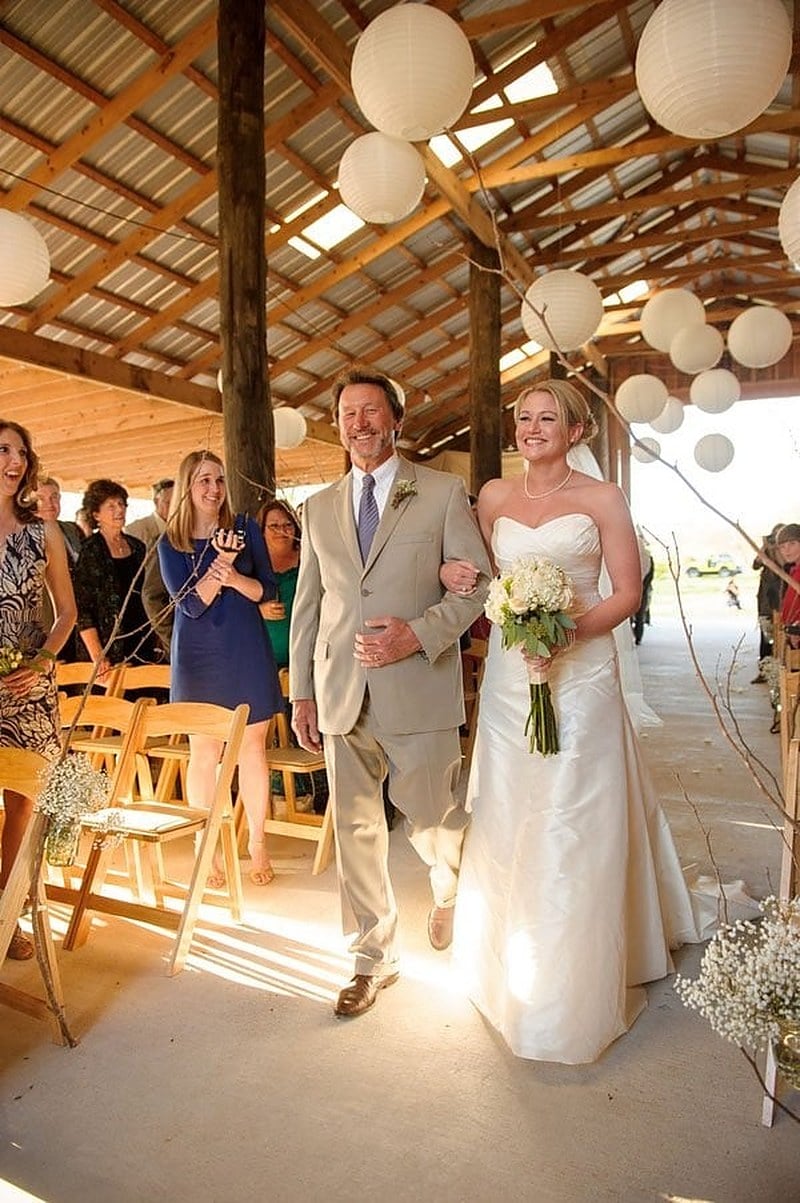
When you start planning your wedding, if you’re anything like me you start to think, “Hey! I could just do this on my own.” And then a wise friend or vendor will tell you “Are you out of your mind?” I’m not saying you need a wedding planner (you can read about the difference between a wedding planner and wedding coordinator here), but you absolutely, unequivocally need a wedding coordinator. They are the person who is going to make it so you, ideally, have nothing to worry about at your wedding. And even if something does go wrong, they take care of it so swiftly you are none the wiser.
When I interviewed Los Angeles planner Brooke Avishay of Orange Blossom Special Events for my Smart Wedding Planner, she summed it up perfectly: “you really need to have someone quarterbacking this event.” Her example still makes me laugh: “The emcee could introduce the bride and groom, but the bride’s in the bathroom. Who knows?” The wedding coordinator does, and she would be so tuned into the day’s schedule that she wouldn’t dream of letting the emcee introduce you at the wrong moment. They are there “making sure that all of that stuff is running smoothly,” she said.
And any bride who has gotten married knows this and tells every other bride-to-be how much having a wedding coordinator saved them from insanity. One bride who hired a month-of team put it this way. (And for those of you who don’t know, a month-of coordinator is actually what you hire for “day-of” coordination, and sometimes that can even be a few months before the wedding. I know, it’s confusing, and I think we need to do a whole separate post on it.)
We did not hear nor feel a single thing that might have gone wrong during our wedding – our coordinators dealt with all of that, and more, on their own. They just let us enjoy our day.
a happy bride via Reddit
So what does a wedding coordinator actually DO on your wedding day while you’re touching up your lipstick? A LOT, and most of it happens in the last ten minutes before the wedding ceremony music starts. Below are the 16 things a good coordinator is checking, roughly in the order they come up. No coordinator? Hand this list to the most organized person you know (more on that at the end).
1. The Correct Processional Lineup
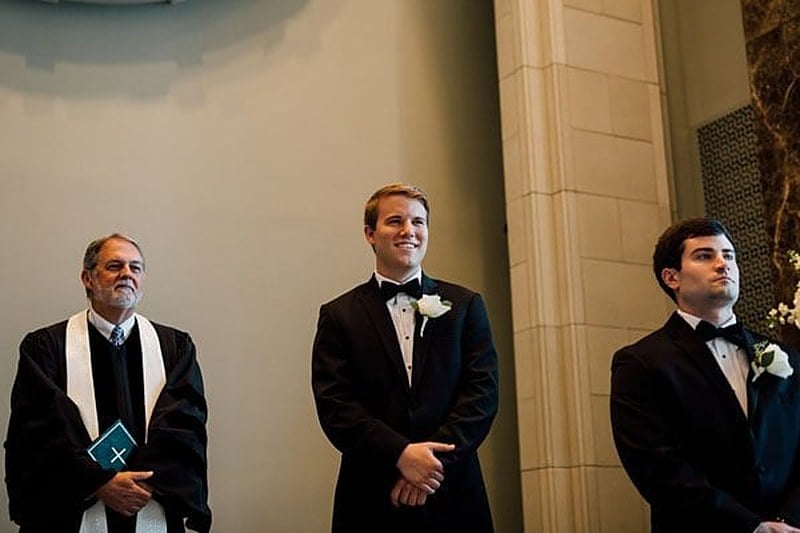
Everybody practiced this at the rehearsal, but chances are, on wedding day, everyone’s going to have forgotten how they were supposed to walk down the aisle. Your coordinator’s job is to get everyone in the hallway and get them in the right order so everyone’s coupled-up appropriately and spaced correctly. (Still deciding who walks when? Our guide to the wedding processional order lays out the options.)
2. Who Has the Rings
Believe it or not, it’s the coordinator’s job to ask who has your wedding bands. They may even make a special trip to make sure those babies are accounted for. This is all to make sure you or your partner don’t have an awkward moment at the altar when your officiant says to exchange rings. (More in our post on who holds the rings at the wedding ceremony.)
3. The Marriage License
The coordinator’s job is also to make sure your officiant has your marriage license and a pen, as it’s amazing how often these can be found back in the car (or not at the venue at all). One bride told the story: “if we had done it early on the wedding day with our coordinator, it would’ve been done properly lol (she helped me fill ours & the witnesses part out, then we had to meet up with the officiant and he messed his part up).” Without a coordinator, it’s very possible that your marriage license could be overlooked, and it must be present for your union to be legal.
4. The Mic Check (and the Names)
Your coordinator wants to make sure everyone can hear the vows. Also, if someone will be announcing your entry, your coordinator will want to make sure any tricky-to-pronounce names are properly announced. DJ Ian Gotler told me what happens otherwise: “You get that DJ who doesn’t know what they’re doing and they played the wrong first dance song, they mispronounced your dad’s name on the microphone, it gets off the rails real fast.” Your coordinator will make sure none of that happens.
5. The Music Cue
Your coordinator will make sure the right songs are being played at the right times. She will station herself halfway between the DJ and the aisle, make sure everyone is ready for the processional, and then give the musician or DJ a signal to end and begin songs. The schedule is nice, but things rarely work out exactly as planned. (We asked DJs for their best processional and recessional songs if you still need yours.)
6. The Start Time Cushion
The one rule you need etched in your mind while planning: Your actual ceremony start time should be about 15 minutes after your invitation time. Why? It’s common for guests to be both early and late, and you have to be prepared for both. The coordinator will help make decisions about whether or not to wait on the shuttle with the guests running late, or to start the ceremony without them.
7. The Reserved Rows
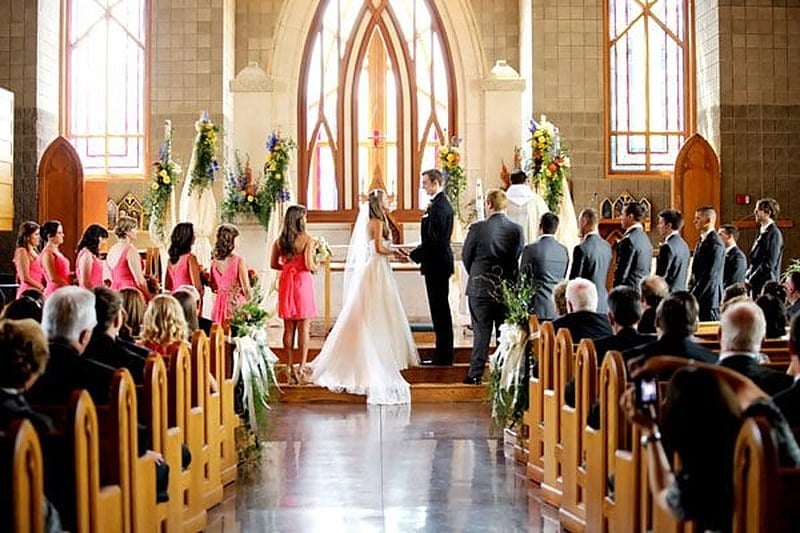
It is customary to save the first two rows for family. But it’s also customary for guests to ignore these unwritten rules and plop down wherever they see an empty seat. Coordinators keep a hawk-eyed watch over reserved seating, politely relocating guests who take a seat in your grandparents’ place, and making sure there are empty seats waiting when a parent or grandparent is being escorted down the aisle.
8. The Unplugged Announcement
Some venues do a great job of signage, but an announcement from your officiant is another helpful way to ensure guests will comply with an unplugged ceremony. One couple’s coordinator scripted it in a smart way: “Our officiant made an announcement about the unplugged ceremony, but let folks know that once everyone walked down the aisle, there’d be a minute for folks to take photos.” If you have that photo opportunity incorporated into the ceremony, be sure to note that on your timeline. If not, this announcement helps ensure no phone-filled hands appear in any of your processional photos.
9. Boutonnieres and Bouquets
Just before the music starts, a coordinator will remind your groomsmen where their boutonnieres go. We can’t stress enough: lapel, NOT pocket, and LEFT side, over the heart. She’ll also dry bouquets before they’re handed to the girls so nobody is plopping dew-drenched flower stems against dresses, and remind them to hold them at the hip, down low, so the dresses have their moment in the aisle shots.
10. The Dress: Bustle Down, Train Out, Veil Fluffed
Bridal shop owner Malinda Macari shared some advice on this. She told me this is why you bring someone to the final fitting: “you usually bring your person with you to help you learn the bustle, make sure all is good.” That person should absolutely be there on wedding day to bustle or un-bustle the dress just before the processional. Before the doors open, the coordinator will sneak a look from behind to make sure everything looks great, fluff the veil and give the train a once-over before the grand entrance.
11. The Emergency Kit Save
Straps that snap. Buttons that pop. Hems that rip. Emergencies happen, and thankfully, the wedding day emergency kit has your back. A planner on Reddit listed hers: “Pocket packs of tissues Mints Small scissors (the mustache trimmer ones are great) Silicone earring backs Chalk and/or baby powder for stains, especially oil based Setting spray and Q tips Safety pins, straight pins, good sewing kit Bobby pins and hairspray Curad blister bandages.” Another bride’s favorite trick from her coordinator’s tackle box: “We also learned that dental floss is stronger than most sewing thread.” My planner has a Wedding Day Essentials worksheet to help you create a kit of your own, too.
12. The Flower Girl and the Ring Bearer
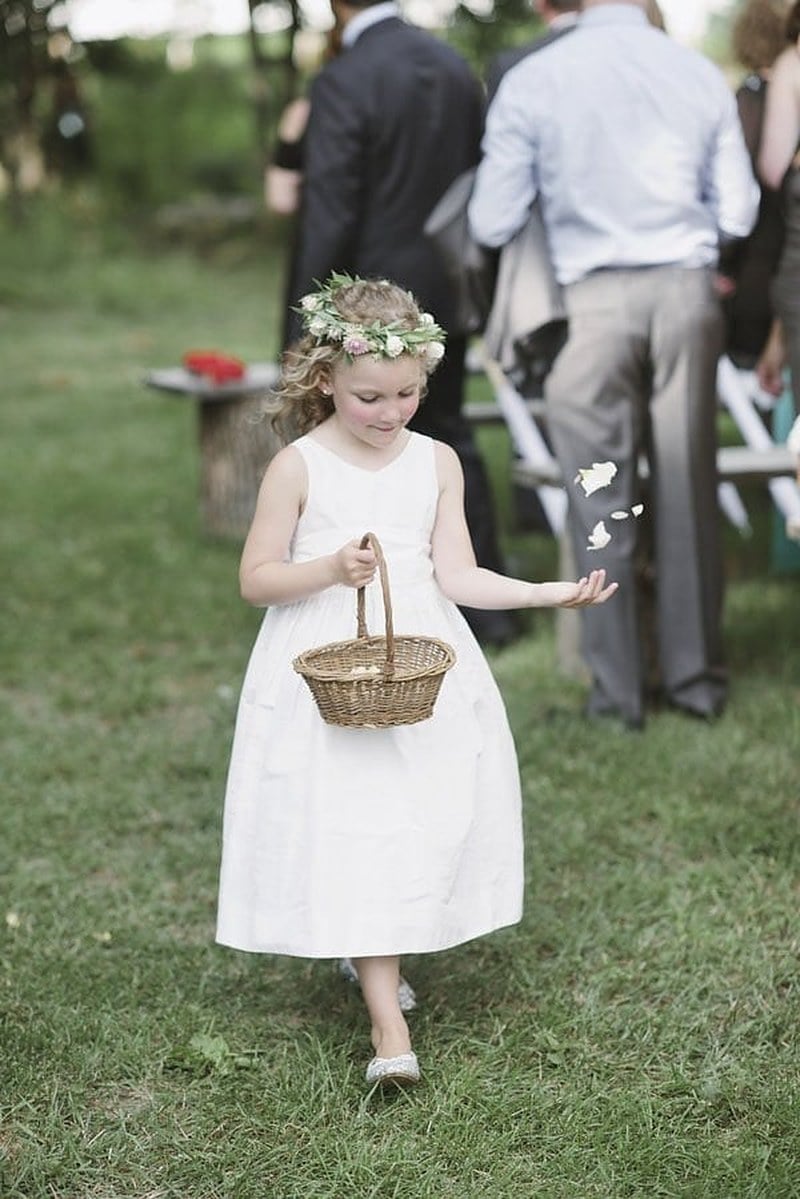
Kids can be unpredictable. They will NOT stick to the ceremony’s timeline. Your coordinator is the one crouched at the back of the aisle with the flower girl, holding the basket until the exact second it’s her turn. She’ll make sure one of the little one’s parents is seated somewhere easily visible, preferably at the end of the aisle, and she’ll have a back-up plan for escorting the child in if there are tears (usually a bridesmaid’s hand, or a quick parent pickup halfway down).
13. The Vows in the Right Pocket
It sounds silly, but vows go missing all the time. The groom takes his jacket off for photos and his vows are still in the pocket, or the bride wrote hers in her phone and the phone is now at 2%. That’s why my wedding day checklist says: “Vows (print an extra copy if possible).” Before you line up, your coordinator will ask both of you where your vows are, and she’ll keep that extra printed copy in her folder just in case. Tanya Pushkine, also known as The Vow Whisperer, who coaches couples on writing and delivering vows, uses those last minutes too. She told me: “very often, I practice with them right before the ceremony. It’s that one last little boost of confidence.”
14. Tissues for the Front Row (and for You)
Tissue packs should be in the pockets of the groom and both mothers, and within easy reach of the maid of honor. Your coordinator hands those out while she’s lining everyone up, and she’ll tuck one behind the officiant’s stand for you. From my planner: “If you find yourself crying during the ceremony, gently dab the tears with your fingers.” Don’t wipe away your tears, as this will remove your makeup.
15. Sun, Heat and Water
For an outdoor ceremony, your coordinator will check where the sun is going to be at the exact time vows are being said, and she’ll move the water station so guests pass it on their way to their seats. Programs can be handy sunshades for guests, so if it’s sunny and hot, she’ll have the ushers hand them out before guests sit down instead of leaving them on the chairs. (We covered more of these in things that make outdoor wedding guests miserable.)
16. The Moment You Asked For
A quote from my favorite photographer, Jon Lemon, about the requests that aren’t obvious: “Hey, I’m going to go talk to my godfather real quick and have a few words with him before the ceremony starts. I want to make sure you’re there with me.” A good coordinator will be on hand to locate your godfather and show the photographer which room to go into at exactly the right time.
What If You Don’t Have a Coordinator?
Professional wedding planner Maria Erickson of Walden and Plum & Ivy Events in Chicago bluntly advises that “everybody should always get a day of coordinator,” including for “weddings that are under 50 people.” If you’re not hiring a professional, select one person to serve as point of contact for the wedding. Even Brooke Avishay, wedding planner extraordinaire, told us that when her own dad got remarried, she planned the wedding but then “hired someone to run the day because I knew I couldn’t do it.” If she can’t do it, neither can you! Your job is to have the best day of your life, not be stressed. Always remember that, please.
Some links in this post may be affiliate links, which means we may earn a small commission if you make a purchase through them. Thank you for your support!