
Your guests are not going to tell you. That’s the thing nobody mentions when you’re deep in venue tours and cake tastings. Your aunt will smile, your college friends will post a lovely photo, and your new in-laws will say it was “just beautiful.” And somewhere in that polished recap, nobody will mention that they stood in the heat for 20 minutes with no water, or sat through four back-to-back speeches, or genuinely could not find the bathroom.
Guests are polite. They love you. They showed up. But certain wedding-day details have a way of quietly grinding on people in the background of what should be a fantastic night, and most of those details are completely fixable if you know what to look for.
None of this is about perfection. A wedding does not need to be flawless to be wonderful. But there’s a short list of friction points that come up again and again, across Reddit threads, wedding planner debriefs, and every honest post-wedding conversation that happens after the champagne has worn off. These are those things. And the good news is, fixing most of them costs nothing but a little forethought.
1. The Dead Zone Between Your Ceremony and Reception
If your ceremony ends at 3:00 p.m. and cocktail hour doesn’t start until 5:30, your guests are in no-man’s-land. They’re dressed up, they don’t know the area, and they’re too hungry to enjoy themselves and too far from their hotel to really relax. A gap of more than 60 to 75 minutes — where guests aren’t actively being hosted somewhere — is one of the most universally frustrating guest experiences a wedding can create.
The classic fix is using your cocktail hour to absorb the gap entirely. You take photos with your wedding party while guests are being fed, drinking, and mingling. They are having a great time. You are getting the portraits. Nobody is staring at their phone wondering what to do. This is the whole point of cocktail hour, and it works beautifully when planned correctly.
If your ceremony and reception are at different locations, build in a realistic travel buffer and have something waiting for guests the moment they arrive at the next venue. Even passed appetizers and music at the door makes a huge difference. A bar that opens 15 minutes before the official cocktail hour start? Even better.
Pro tip: Your wedding day timeline should account for this explicitly. If you’re doing a first look before the ceremony, you may be able to knock out most of your couple portraits early, which means you can actually enjoy your own cocktail hour instead of disappearing for an hour while your guests wait for you.
2. Too Many Speeches
Speeches are one of those wedding moments that feel sentimental to plan and genuinely draining to sit through when there are too many of them. Four toasts, back to back, during dinner, each running seven to ten minutes? That’s 30 to 40 minutes of guests sitting politely while their food gets cold and the dance floor stays empty. Even the most devoted maid of honor speech has a natural expiration point.
The sweet spot, according to wedding planners, is one to two speeches, each under five minutes. That’s it. If you want to include more voices, consider having some people speak at the rehearsal dinner instead, where the format is more relaxed and the stakes are lower. Your reception timeline runs more smoothly, the energy stays up, and nobody has to perform patience for 45 minutes.
It also helps to brief your speakers ahead of time. Not in a bossy way, but a genuine heads-up that the couple would love for speeches to be warm, short, and free of anything involving exes, embarrassing stories, or long lists of inside jokes that only land for three people in the room. Give them a guideline. They’ll thank you later.
Watch out for: The spontaneous open-mic situation, where the DJ asks if anyone else would like to say a few words. This can spiral quickly. Decide in advance who is speaking and stick to it.

3. No Water (or Non-Alcoholic Options) in Sight
This one surprises couples every time, mostly because they’re not thinking about it from the guest’s perspective. You’ve been in hair and makeup for hours, you had lunch, you’re hydrated. Your guests drove two hours, sat through a ceremony in formal attire, and are now at cocktail hour where the only beverages in sight involve alcohol. For guests who don’t drink, are pregnant, or are just thirsty, this is genuinely uncomfortable.
Water should be visible and accessible from the moment guests arrive. A simple water station or pitchers on cocktail tables costs almost nothing to set up and matters more than most couples realize. During dinner, water glasses should be filled and refilled without guests having to chase down a server. At outdoor summer weddings especially, this is not optional.
Beyond water, make sure there’s at least one appealing non-alcoholic option that isn’t just soda. A signature mocktail, a lemonade, flavored sparkling water, anything that feels like a real drink. Guests who don’t drink should not feel like an afterthought at your bar.
Best for: Outdoor summer weddings, daytime ceremonies, and any wedding where you know you have guests who are pregnant, sober, or traveling with kids.
4. A Ceremony That Runs Way Too Long
Thirty minutes is the ideal ceremony length for a non-religious wedding. That’s enough time for a meaningful processional, heartfelt vows, a reading or two, and a recessional that leaves guests genuinely moved. An hour-long ceremony that includes multiple readings, a sand ceremony, a unity candle, a personalized poem, and a ten-minute story about how you met in a coffee shop? That’s a lot to ask of people sitting in formal clothes, potentially in the sun or the cold, before they’ve eaten.
This isn’t about cutting the meaningful parts. It’s about being intentional with what you include. Choose the two or three elements that matter most to you as a couple and let those carry the ceremony. A 25-minute ceremony that is tight and intentional will leave guests more emotional than a bloated one that has people quietly checking their watches at minute 45.
Religious ceremonies that run longer are generally understood by guests who attend them regularly. But even then, making sure guests are seated comfortably, with clear programs and signage, goes a long way toward making the experience feel smooth rather than endless.
Smart move: Have your officiant do a run-through with you timed out. Most couples are surprised to find their ceremony is longer than they thought once it’s spoken aloud.
5. Unclear or Confusing Directions
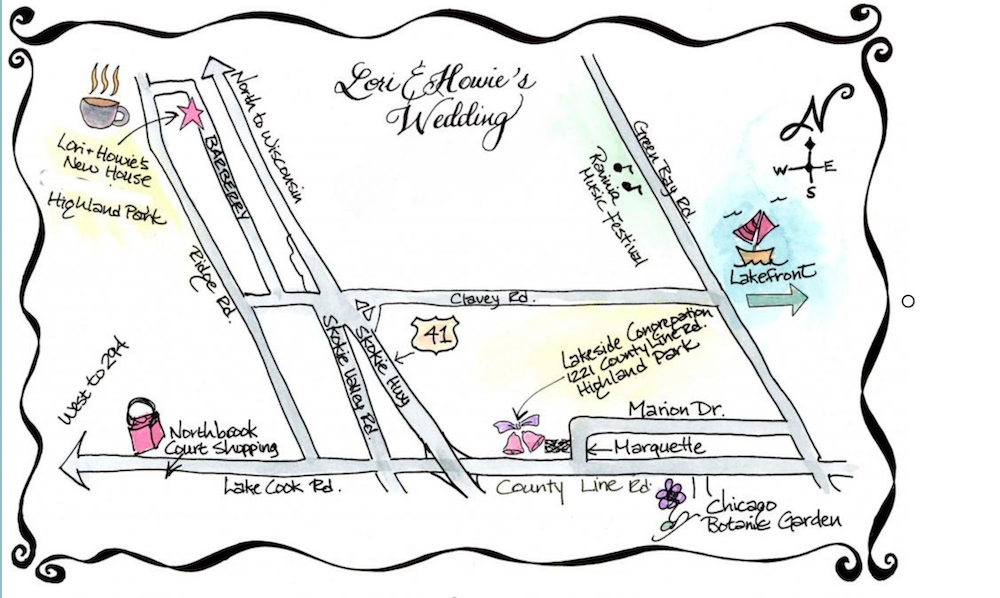
Nothing kills a guest’s excitement for your wedding like arriving stressed out because they couldn’t find the venue. GPS doesn’t always cooperate with rural barn locations, private estates, or venues that share a driveway with four other businesses. If your venue has any quirks — a hidden entrance, limited cell service, a parking lot that’s half a mile away, a driveway that Google insists isn’t a driveway — you need to communicate that clearly before the day.
Your wedding website is the best place to do this. Include the full address, written turn-by-turn directions as a backup, parking instructions, and a note about anything unusual. If there’s a shuttle or a specific entrance guests should use, say so explicitly. Don’t assume that because your venue sent a confirmation email with an address, guests are set.
If your ceremony and reception are at different locations, include directions for both — and note the distance and approximate drive time between them so guests can plan accordingly. Out-of-town guests especially appreciate knowing what to expect when they don’t know the area.
Pro tip: Add a short FAQ section to your wedding website covering parking, transportation, and directions. It takes 20 minutes to write and saves you a dozen “where do I park?” texts on the morning of your wedding.
6. Bad Seating Situations
A guest who walks into your reception and spots that they’ve been placed at the table furthest from the dance floor, surrounded by people they don’t know and can’t hear over the speakers, has already clocked that they’re at the “miscellaneous” table. You probably didn’t mean it that way. But they felt it immediately.
Seating is one of those details that takes real effort to get right, and it shows when you’ve thought it through. Guests who don’t know many people should be seated with someone who can draw them in. Elderly guests and those with mobility considerations should be near the front and away from speaker stacks. No one should be facing directly away from the ceremony setup or the head table.
You don’t have to make everyone happy — that’s genuinely not possible. But you can make sure nobody feels forgotten. A good rule of thumb: if you’re assigning tables, at least make sure every guest knows at least one other person at theirs. The seating chart mistakes that cause the most drama are almost always the ones that happen when couples don’t think through who’s sitting near whom, not just who’s at what table.
Watch out for: The “kids table” that’s so far from everything that parents spend the whole night craning their necks to check on their children. If you’re accommodating families with kids, give them a table with decent sightlines to the rest of the room.
7. Long Lines at the Bar or Buffet
A single bar station for 150 guests is a bottleneck that will have people standing in line for 10 to 15 minutes during peak moments, which is most of cocktail hour and immediately after dinner ends. That’s not a minor inconvenience — it’s a significant chunk of your guests’ experience standing in a line instead of celebrating.
The general rule is one bar station per 75 to 100 guests. If your venue or caterer is pushing back on that, at minimum make sure your bar is fully staffed during the first 30 minutes of cocktail hour, when demand is highest. Passing signature cocktails or wine through the room during that window can dramatically reduce bar congestion.
For buffets, stagger the release by table rather than letting everyone rush the food at once. Your caterer or DJ can manage this. Guests eat faster, the lines are shorter, and the food is actually hot for more people. It also gives you a natural rhythm to the room that makes the transition from dinner to dancing feel smoother.
Smart move: Ask your caterer and venue coordinator directly: at peak times with your guest count, how long is the estimated wait at the bar or buffet? If they hesitate, push for specifics. This is a logistics question they should be able to answer.
8. Forced Participation Moments
The bouquet toss that requires every single woman over 18 to stand in the middle of the dance floor. The garter removal that makes your grandmother visibly uncomfortable. The anniversary dance that singles out every unmarried guest by asking them to sit down one by one. These are the moments where guests stop having fun and start waiting for the moment to be over.
This doesn’t mean you have to eliminate all wedding traditions. If you love the bouquet toss, do it — but maybe frame it as something fun and optional rather than rounding people up by category. The moments that feel coercive are the ones guests remember as awkward. The ones that feel genuinely joyful and spontaneous? Those are the highlights of the night.
The same logic applies to group activities that require guests to perform in front of a crowd. Some guests are naturally outgoing and will love being pulled into a game. Others will spend the entire activity visibly wishing they were back at their table. Reading your crowd and giving people an easy out is a form of hospitality.
Best for: Couples who love tradition but want to keep the energy light: reframe participation moments as invitations, not requirements. “If you’d like to join us for the bouquet toss, come on out!” lands very differently than a DJ corralling every unmarried woman onto the floor.

9. No Signage (Anywhere)
Guests should never have to wander around a venue wondering where to go. Where is the cocktail hour? Where’s the ceremony entrance? Is the bar to the left or the right? Where are the restrooms? These are questions that should never need to be asked because the answer should be immediately visible.
Good venue signage is a genuine hospitality detail. A simple welcome sign at the entrance, directional arrows toward the ceremony or cocktail area, a bar sign, and a clearly marked restroom direction are the basics. If your venue has multiple spaces or an unusual layout, you may need more. This is especially true for outdoor weddings, farm venues, and any property where guests arrive to what essentially looks like a big empty field.
On the food side: if you’re serving stations, label them. If you have a dietary-friendly option, flag it. Nobody wants to interrogate a server about whether the pasta has gluten in it in the middle of your reception. Clear labeling takes five minutes to set up and eliminates a constant low-grade annoyance for a portion of your guests.
Pro tip: Walk your venue as a guest would, starting from the parking area. Where would you get confused? That’s where you need a sign.
10. A Dress Code That Requires a Decoder Ring
“Garden party chic.” “Black tie optional festive.” “Casual elegant.” These dress codes mean something different to every person who reads them, and the result is a reception where half your guests are in cocktail dresses and the other half showed up in sundresses and jeans. Some of them feel overdressed. Some feel underdressed. All of them checked their phone three times the morning of your wedding trying to figure out what you actually wanted.
Stick to dress codes that people actually understand: black tie, formal, cocktail attire, semi-formal, smart casual, or casual. If you have a specific vision (beach formal, bohemian, etc.), spell out what that means in plain language on your wedding website. “We’re getting married on the sand — think flowy dresses and linen suits rather than stilettos” tells your guests exactly what they need to know.
And if you’re getting married outdoors in summer or winter, include a practical note about the environment. Guests who show up in full formal wear to an outdoor afternoon ceremony in July are not going to be comfortable, and they had no way to know to plan for it.
Smart move: Add a “What to Wear” section to your wedding website with a sentence or two of context. It eliminates the guesswork and the texts.
11. Not Enough Food During Cocktail Hour
Cocktail hour is not just a drinks moment. It’s the bridge between your ceremony and your dinner, and for most guests, it’s been several hours since they’ve eaten. Passed appetizers that come around every 20 minutes, or a single cheese board for 100 people, are not enough. Guests will notice. Their experience of your entire reception will quietly shift based on whether they were comfortable and fed or standing around slightly hungry waiting for dinner to be announced.
The standard recommendation is five to eight passed hors d’oeuvres per person during a one-hour cocktail hour. If your reception runs later or your dinner service is delayed for any reason, plan for more. Stations (a raw bar, a cheese spread, a bruschetta display) supplement passed apps beautifully and give guests something to linger around, which also helps with the social flow of the hour.
One more thing worth mentioning: if your couple portraits are running long and cocktail hour extends past 60 minutes, communicate that to your caterer or venue coordinator in advance so food service can extend accordingly. Running out of appetizers at minute 50 when guests still have 30 more minutes to fill is not a great situation.
Watch out for: Cocktail hour setups where all the food is at one stationary station. Guests cluster, lines form, and half the room never sees the appetizers. Passed apps move through the room and reach everyone.
12. No Heads-Up About the Timeline
Guests are not mind readers. If dinner starts at 7:00, dancing starts at 9:00, and the last shuttle leaves at 11:30, they should know that going in. Not because they’re going to leave early, but because they can make informed decisions about when to grab a drink, when to catch up with someone, and whether they need to arrange a ride.
A simple summary on your wedding website — ceremony at 4:00, cocktail hour at 5:00, dinner and dancing at 6:00, reception ends at 10:00 — is genuinely useful information. For out-of-town guests especially, knowing the rough shape of the evening helps them plan around transportation, childcare, and flights the next morning. It also prevents the awkward mid-reception moment where someone quietly pulls you aside to ask if it’s okay to leave, because they had no idea what time things were wrapping up.
You don’t need to publish a minute-by-minute schedule. But a general outline takes the ambiguity out of the day for everyone attending, which is a small act of consideration that guests appreciate more than you’d expect. Knowing how long a reception should run can also help you plan a timeline that actually flows.
Pro tip: Your wedding planning checklist should include finalizing and distributing your day-of timeline to vendors and wedding party about two weeks out. Guests don’t need that level of detail, but the people running your day absolutely do.
13. Dietary Restrictions That Were Ignored
If you collected dietary restrictions on your RSVP and then didn’t actually communicate them to your caterer, guests will find out the hard way. The vegetarian who watches everyone else’s plated dinner arrive while they wait for a special meal that may or may not be coming. The guest with a gluten allergy who can’t eat anything on the buffet and has to quietly ask a server while trying not to make it a whole thing. These are real experiences that happen at real weddings.
If you ask for dietary needs, honor them. That means passing the information to your caterer with enough lead time for them to plan, confirming the accommodations at your final tasting, and making sure your venue coordinator knows which guests have specific needs so the right plates reach the right tables. It’s also worth flagging one or two items at each course or station that are vegetarian, vegan, or gluten-free, even if they’re not dedicated “special” meals.
Food is central to how people experience hospitality. A guest who couldn’t eat at your wedding will remember that, even if they’d never say so to your face.
Best for: All weddings, but especially those with buffets or family-style service where guests serve themselves and labeled options matter most.
14. A Packed Timeline With No Room to Breathe
There is such a thing as too much programming. A reception that has a formal moment scheduled every 15 minutes — grand entrance, first dance, father-daughter dance, mother-son dance, toast, dinner, cake cutting, bouquet toss, anniversary dance, surprise performance — doesn’t actually feel fun. It feels like watching a show. Guests spend more time watching than celebrating, and every scripted moment interrupts the natural social energy that was building.
The events that matter most — your first dance, toasts, cake cutting — take up maybe an hour total when timed well. That leaves three-plus hours of your reception for guests to actually talk to each other, dance, and enjoy the night. That’s the goal. An open dance floor with great music and a room full of people who feel relaxed and well-fed is the best party you can throw. You don’t need to fill every minute to make it feel special.
When in doubt, cut a scheduled moment before you add one. A well-built reception timeline has built-in buffer time for things that run a few minutes long, and intentional space for the night to flow naturally.
Smart move: Review your timeline and ask: if I removed one item, which would guests not even notice was gone? That item probably isn’t as essential as it felt when you added it.
So, What Actually Matters?
Most of these fixes don’t require a bigger budget. They require thinking about your wedding from your guests’ perspective: Are they fed? Do they know where to go? Are they comfortable? Are they having fun, or are they sitting through something? That shift in perspective is what separates a wedding that people talk about for years from one that was technically lovely but somehow hard to describe.
You don’t have to fix everything on this list. But if two or three of these resonated, that’s your signal to look more closely before the day arrives. The details your guests remember most are almost never the ones you spent the most money on. They’re the ones that made them feel like you were thinking about them.
Frequently Asked Questions
How long should a wedding ceremony be?
For non-religious ceremonies, 25 to 30 minutes is ideal. Religious ceremonies can run 45 to 60 minutes and are generally expected by guests who attend them. The goal is a ceremony that feels full and intentional, not one that runs long because no one set a guideline with the officiant.
How many speeches are appropriate at a wedding reception?
One to two speeches, each under five minutes, is the sweet spot. If you want more people to speak, consider moving additional toasts to the rehearsal dinner where the format is more relaxed. Keep total speech time under 15 to 20 minutes during your reception.
What’s the right amount of time between a ceremony and reception?
Ideally, there should be no unhosted gap at all. Your cocktail hour should begin within about 30 to 60 minutes of the ceremony ending, with guests actively fed and entertained from the moment they arrive at the next location. A gap longer than 75 minutes with no hosting is generally considered a significant guest experience issue.
Should I put the wedding timeline on my wedding website?
Yes. A general overview — ceremony time, cocktail hour, dinner and dancing, and approximate end time — is genuinely useful for guests making transportation, childcare, and lodging plans. You don’t need to publish every detail, but the shape of the day should be clear and accessible before people arrive.
Some links in this post may be affiliate links, which means we may earn a small commission if you make a purchase through them. Thank you for your support!



Some people just need to stay home…
Be happy you were invited! When you have your own (whatever) celebration, then do what makes you happy!
The music is too loud
These are great reminders
Well Done. Super excellent advice. Spot on Thanks much