Nobody leaves a wedding talking about the passed bruschetta. But a gorgeous grazing table overflowing with cheese, cured meats, and fresh fruit? That gets photographed before guests even find their seats, and it gets brought up three months later when they’re describing your wedding to someone who wasn’t there. Charcuterie displays have quietly become one of the most talked-about details of the modern wedding — not because they’re trendy, but because they genuinely make guests happy in a way that a standard appetizer round never quite does.
What most planning guides skip over is that the format matters as much as the food itself. A full grazing table is a completely different setup than individual cups on gold risers. A cart that comes to your guests creates a different experience than a themed display anchored to your decor. Get the format wrong and even the most beautiful spread underdelivers. Get it right and the food becomes part of the atmosphere — which is exactly what you’re going for.
Here are 11 real wedding charcuterie displays worth stealing, with the practical breakdown of what makes each one work, what to watch out for, and what to nail down with your caterer before you commit.
1. A Full Grazing Table as Your Cocktail Hour Centerpiece
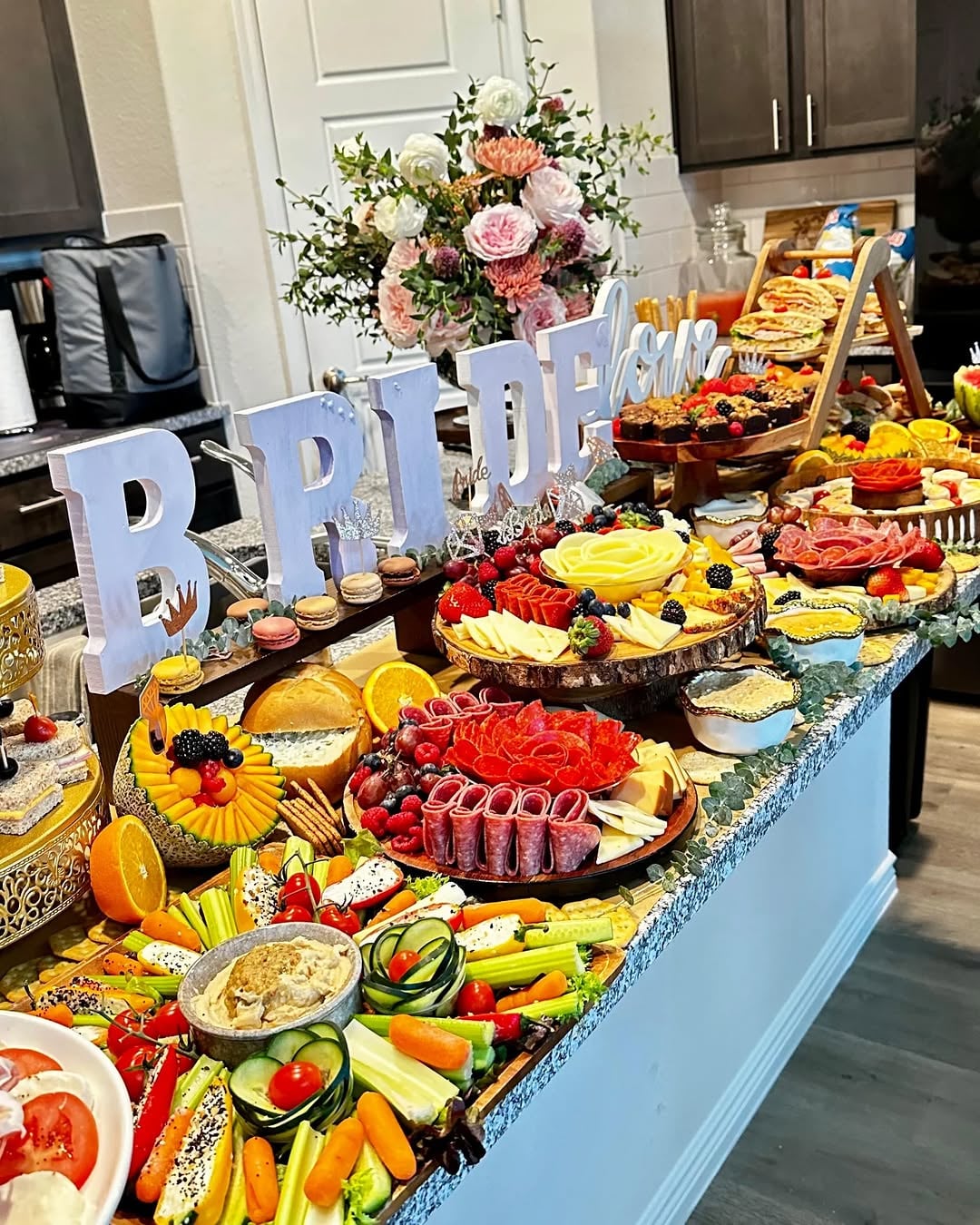
A full grazing table done right stops people in their tracks. It’s colorful, it’s generous, and it becomes part of the room rather than just the food service. Guests gravitate toward it, linger around it, and inevitably photograph it — and when it’s styled with a personal touch like “BRIDE” block letters and fresh florals, it becomes one of those details that feels like it was made specifically for this wedding rather than pulled from a catering catalog.
The key to one that holds up all night is structure. Work with your caterer to create defined zones — meats here, cheeses there, fruit and crackers filling the gaps — so guests can navigate it easily and it still looks intentional after it’s been grazed. Budget-wise, expect to spend $600 to $1,200 for 80 to 100 guests depending on your market and the quality of ingredients. That range is wide because local pricing and ingredient sourcing vary significantly, so get itemized quotes from at least two vendors.
The mistake that kills grazing tables is skipping the restocking plan. A table that looks incredible at 6pm and abandoned by 6:45 is a problem, and it will get photographed both ways. Ask specifically whether refreshing is included in the service agreement — not as a verbal “of course” but as an actual line item — and confirm the schedule before the day.
Smart move: Ask your caterer to design in sections so the table still looks curated even as it depletes. A well-zoned table that’s half-empty still looks intentional. A free-for-all table that’s half-empty just looks picked over.
2. Individual Charcuterie Cups on Tiered Gold Risers
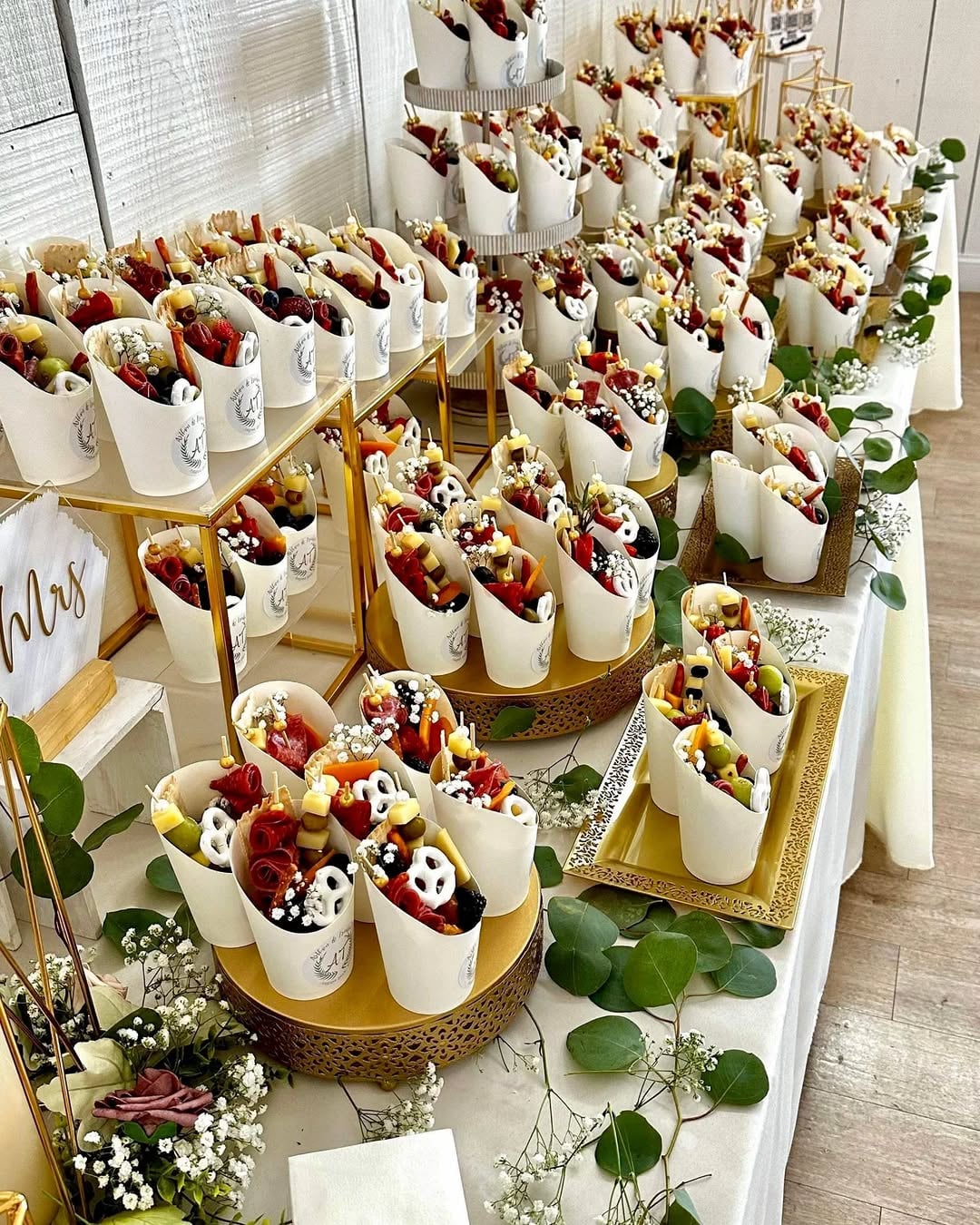
If a communal grazing spread makes you or your guests a little nervous from a hygiene standpoint, individual cups are the answer. Each guest grabs their own pre-portioned cup, nobody’s reaching over anyone, and the display still looks every bit as impressive as a full table — especially when the cups are arranged on tiered gold risers that add height and drama to the presentation.
For cocktail hour, plan one cup per guest plus about 10 percent extra. Each cup needs at least four or five items to feel like a real snack rather than a token gesture: a cracker or breadstick, a cube of cheese, a folded meat, something fresh like a grape or berry, and a briny accent like an olive or pickle. That combination covers enough variety that even picky eaters find something they want. The consistent look of matching cups on tiered risers also means this display holds up visually without anyone tending to it all evening.
One thing to get right is the vessel finish. Gold risers look gorgeous in a ballroom or upscale venue. In a barn or outdoor setting, they can feel out of place. Wood risers or natural materials work better for rustic aesthetics; clear acrylic reads as modern and clean. Match the hardware to the venue before you commit.
Best for: Any couple who wants a polished, self-serve setup that guests can grab easily without needing someone stationed at the display all night.
3. A Long Dark-Table Grazing Spread for Micro-Weddings
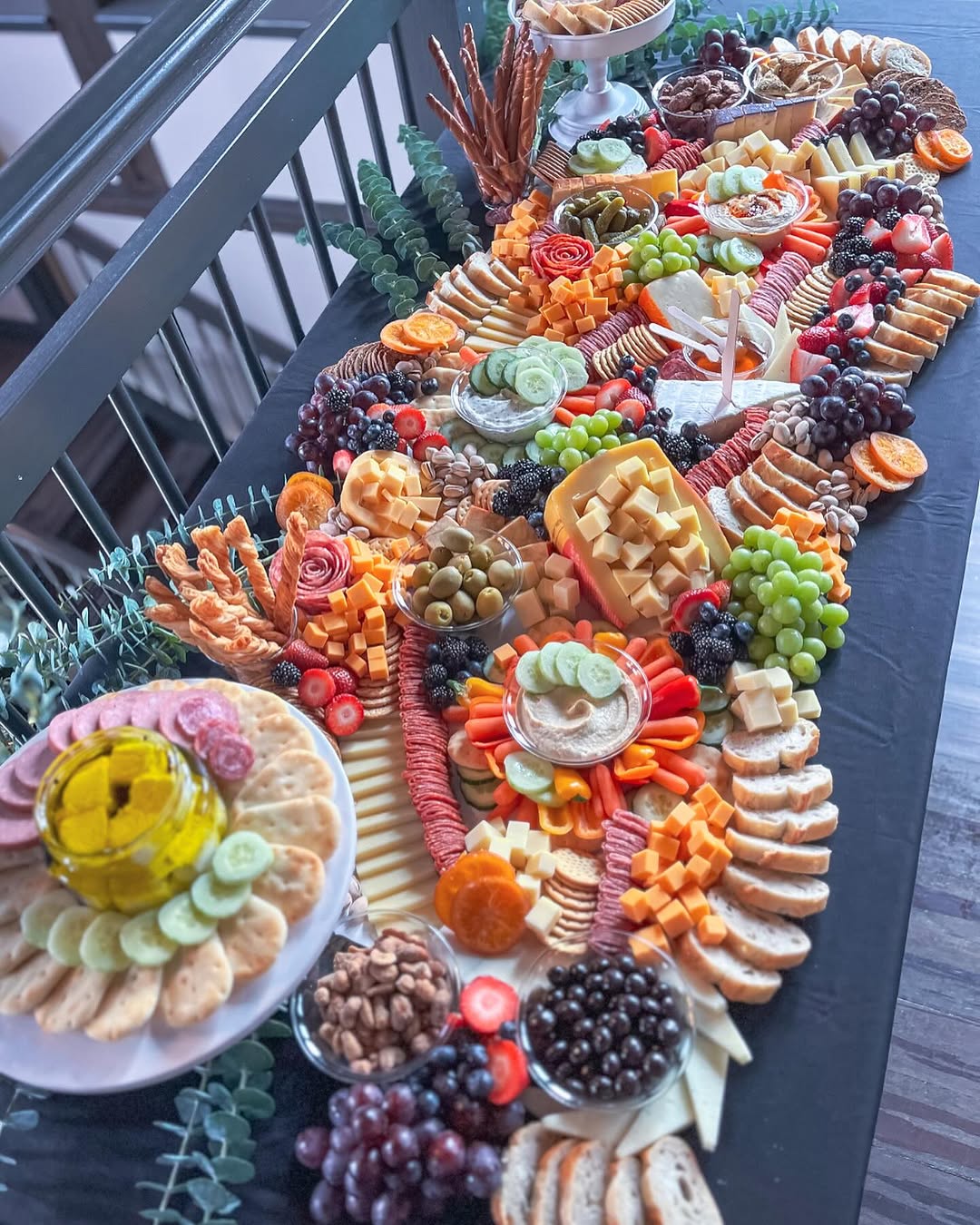
Smaller weddings have a specific food table problem: you want the spread to feel abundant and celebratory, not like a snack situation someone threw together. A long, densely packed grazing table on a dark surface solves this in the best possible way. The dark tabletop makes every color pop — the oranges, greens, and reds of the food practically jump off the surface — and the mix of boards, small bowls, and varied heights adds the kind of visual dimension that makes it look genuinely considered.
At a micro-wedding, the food table becomes a social gathering point in a way it doesn’t at bigger receptions. With a smaller group, people drift toward it, linger, and actually talk to each other while they graze. Lean into that: keep the spread accessible from both sides so it doesn’t become a one-direction buffet line, and include a few conversation-starting elements — an interesting cheese with a label, a dip nobody’s seen before — that give guests something to comment on.
Ask your caterer to use crescent and circular shapes when arranging the food groups rather than just filling in rows. It’s the difference between a table that looks thoughtfully styled and one that just looks full, and it costs nothing extra to ask for.
Pro tip: Skip the tablecloth and let the dark surface do the work. It photographs better, looks more intentional, and is one less thing to coordinate and clean up.
4. One Hot Element That Makes the Whole Spread Feel Like a Meal
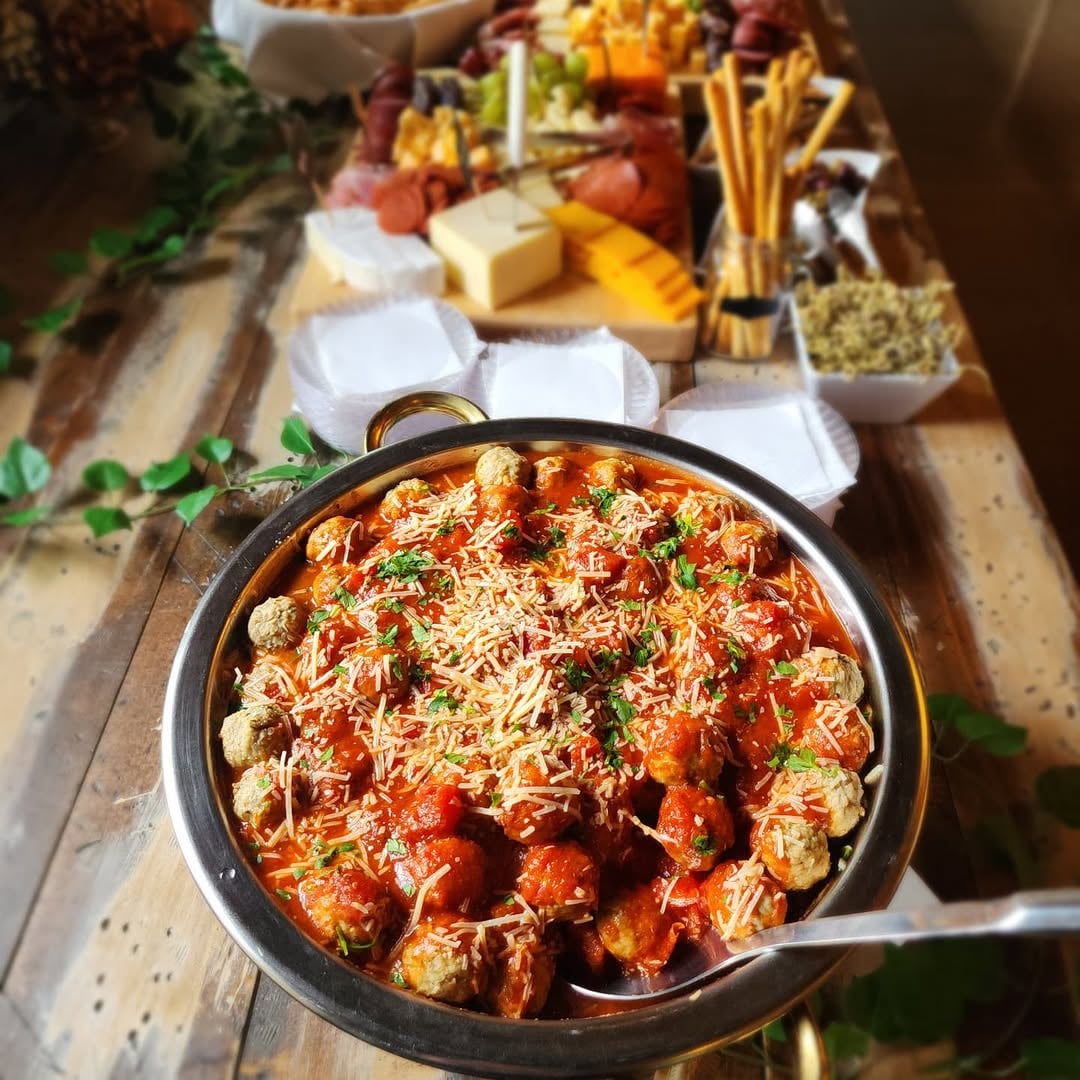
The most common guest complaint about charcuterie-only cocktail hours is that it didn’t feel like enough food. One hot element fixes that perception immediately. A small cast iron skillet of bubbling baked cheese or a warm dip placed at the center of a grazing spread changes the whole sensory experience — suddenly there’s something hot, there’s steam, there’s a smell that pulls people in. It signals that food is actively being prepared, not just sitting out.
This works especially well at fall and winter weddings, when guests walk in from the cold and want something warm in their hands immediately. It also gives the spread a clear focal point that reads well from across the room. The skillet or warm bowl becomes the anchor everything else is arranged around, which makes the whole display feel more intentional.
The timing piece is what makes or breaks it. A hot skillet looks incredible for about fifteen minutes before it cools down or gets picked clean. Build a rotation schedule into your catering agreement — one skillet visible and hot at all times, with replacements coming out of the kitchen on a regular cycle. It requires dedicated staffing but the effect on guest experience is significant.
Watch out for: Cast iron holds heat, which means it can scorch tablecloths and linen-covered surfaces. Make sure there’s a wooden board or trivet underneath, and confirm your caterer has a heat management plan before the day arrives — not day-of.
5. A Themed Grazing Table That’s Also Part of Your Decor
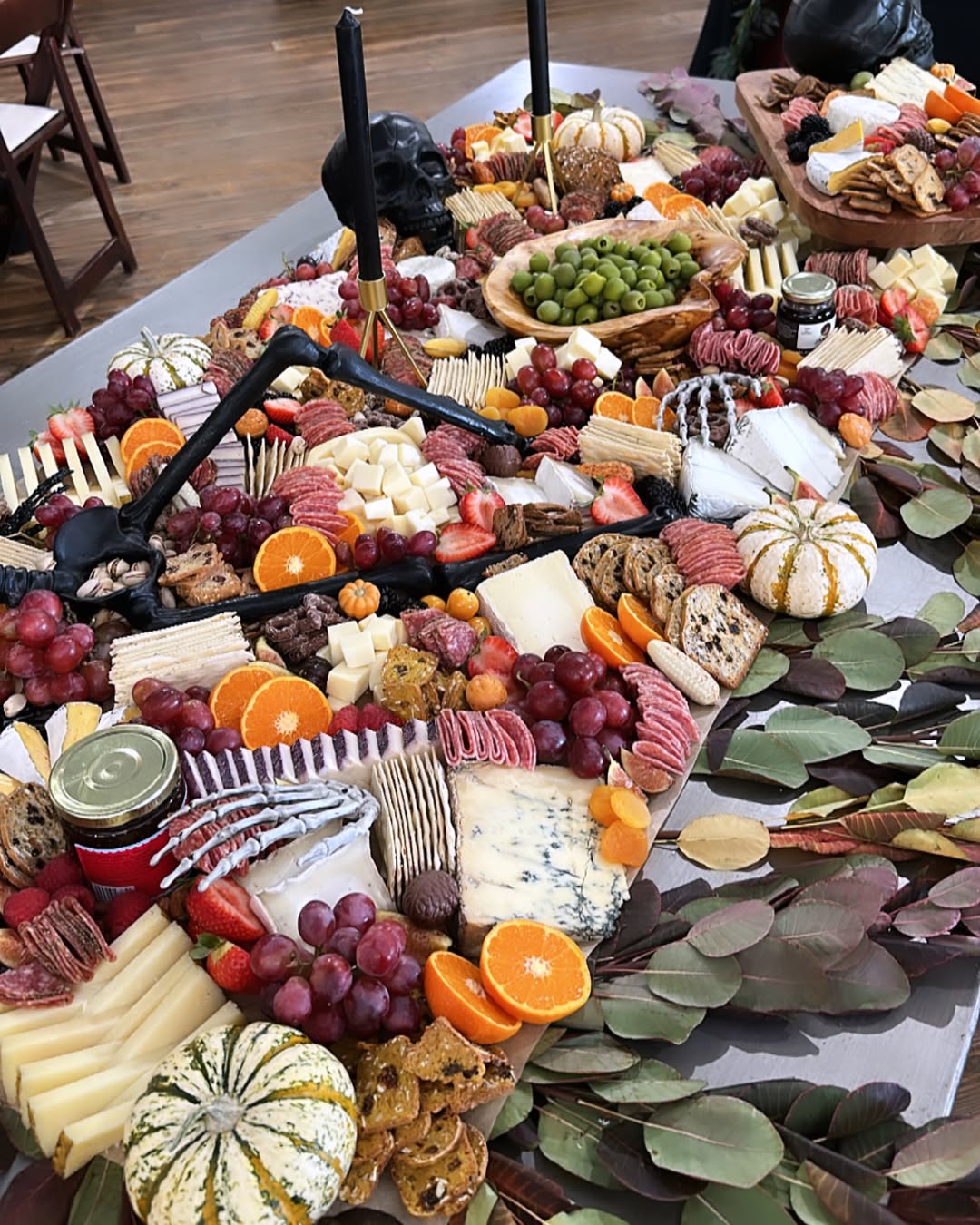
When the food and the decor are working together, the grazing table stops being a catering setup and starts being part of the room. This fall display uses deep purples, warm oranges, garland, and mini pumpkins to create something that looks like it was designed by your florist and your caterer in the same conversation — because at its best, it should be. The food choices reinforce the palette. The palette reinforces the season. The whole thing holds up as a visual installation, not just a place to get a cracker.
For weddings, this works best when the theme connects to your actual aesthetic rather than being layered on top of it. A green-and-white winter wedding can use rosemary sprigs and white-rind cheeses as both food and decor. A garden wedding can work in edible flowers alongside the florals already in the room. The food becomes part of the visual story without anyone having to explain it.
Talk to your planner about where this table lands in the room relative to everything else. A heavily styled grazing table next to a bare minimalist backdrop creates visual whiplash. Next to a wooden bar, a greenery wall, or a complementary texture, it feels like it belongs there.
Pro tip: Any non-edible decorative elements — pumpkins, florals, props — need to be obviously inedible or clearly separated from the food. One confused guest reaching for a decorative gourd is one too many.
6. An Outdoor Bridal Shower Display With Personalized Signage
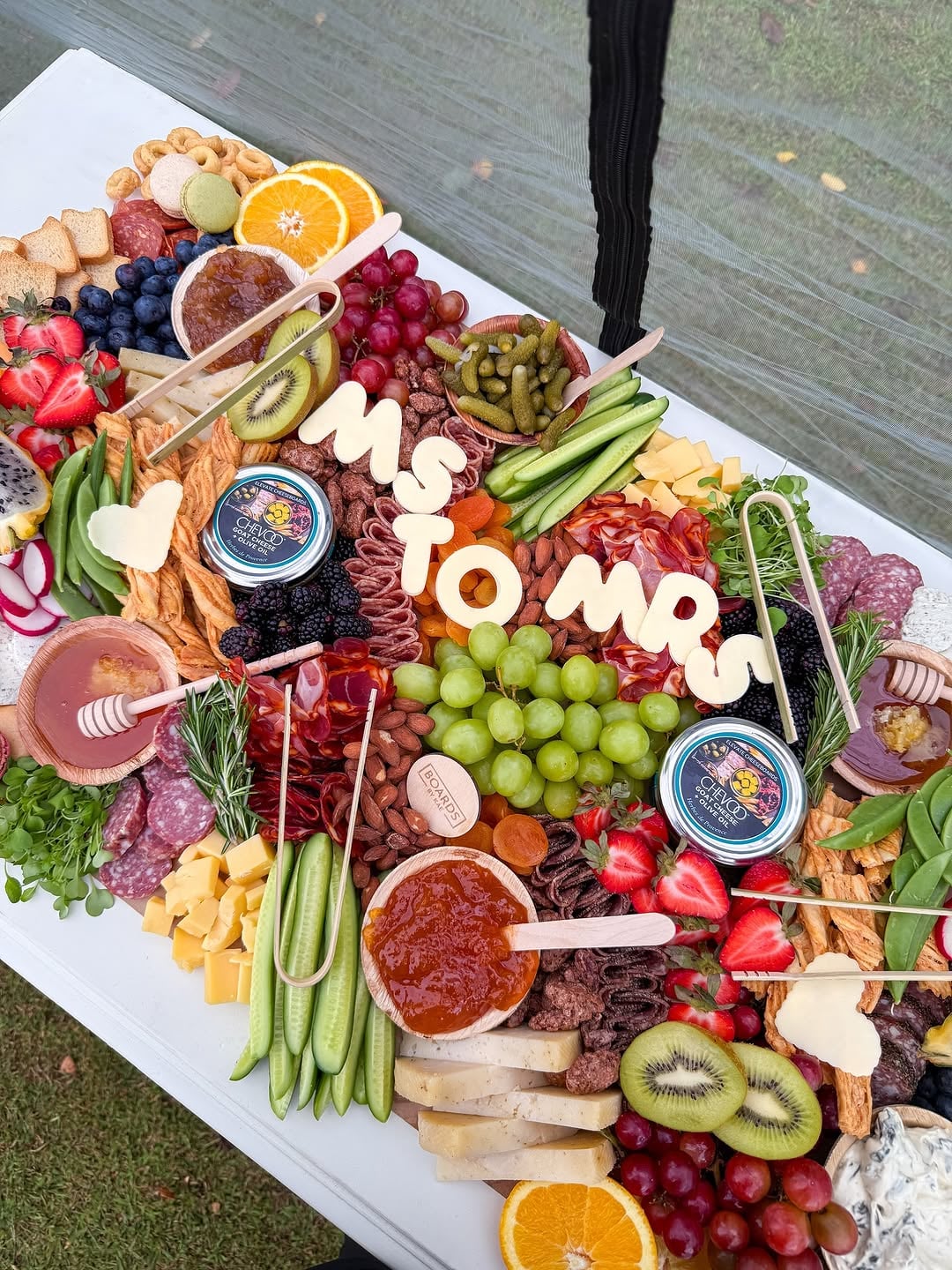
A personalized sign tucked into a charcuterie display is one of those small details that punches way above its cost. A custom name sign or a “MRS TO BE” prop takes up maybe six inches of table space, costs almost nothing, and immediately becomes the thing every guest at the bridal shower photographs and posts. It turns a beautiful food spread into a moment that belongs to this specific bride — which is the whole point of a shower anyway.
For outdoor displays, the layout matters more than people realize because guests naturally photograph food from above. Make sure colors are distributed across the whole surface rather than clustered in one spot — green grapes and bright strawberries scattered throughout rather than piled in one corner. That overhead view needs to look as deliberate as the side view.
Heat and sun are the real logistics challenge outdoors. Soft cheeses start to struggle after about 45 minutes in direct sunlight — they get soft, oily, and unpleasant fast. Set up in shade where possible, do the final setup no more than 30 minutes before guests arrive, and keep a cooler nearby so items can rotate in as the spread depletes.
Smart move: Stick to hard cheeses outdoors — aged cheddar, manchego, gouda. They hold their shape and appearance significantly longer in warm weather than anything soft or bloomy-rind.
7. A Charcuterie Cart That Comes to Your Guests
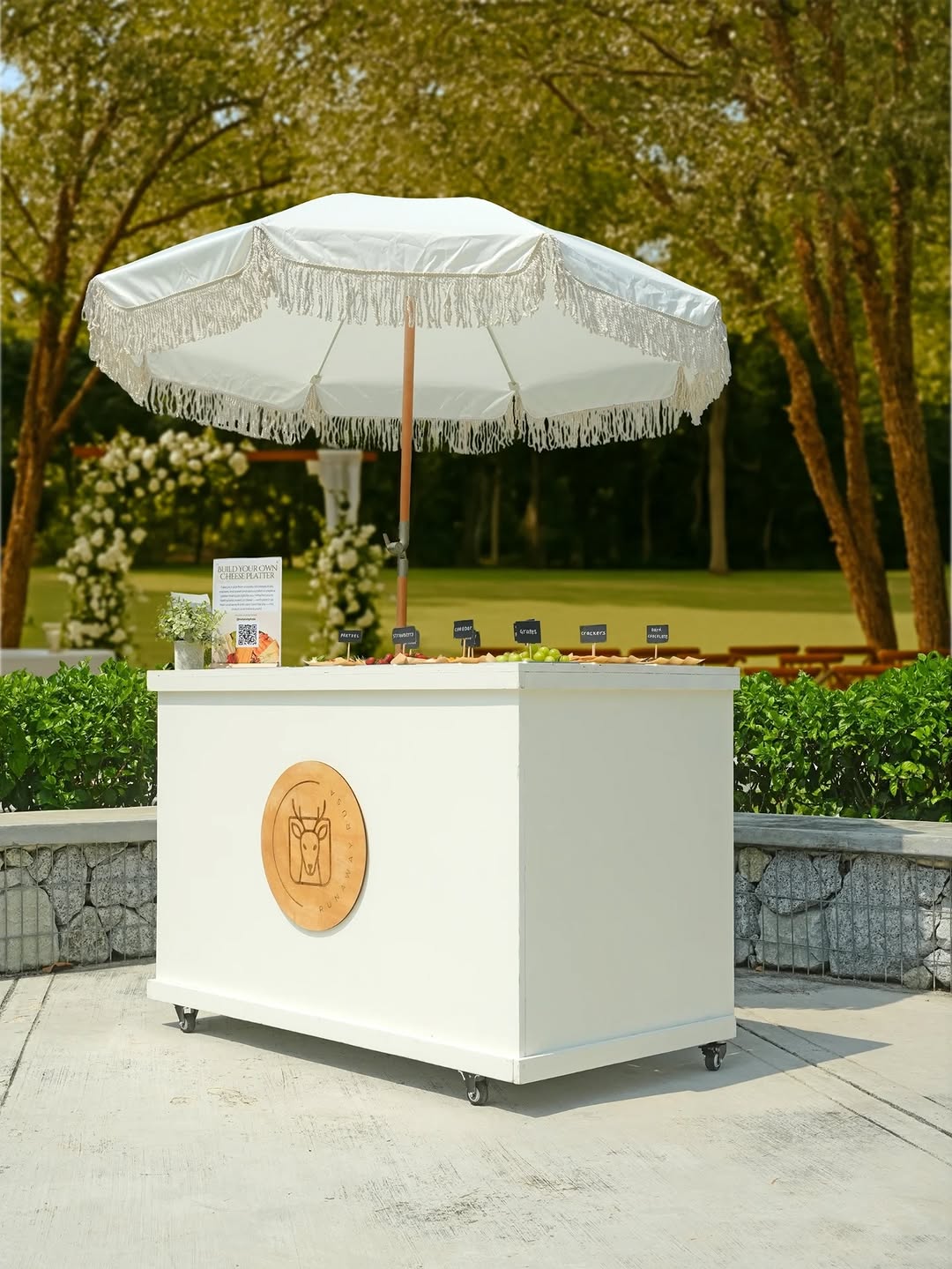
A charcuterie cart that circulates during cocktail hour is one of those details guests genuinely do not expect — and unexpected hospitality is memorable in a way that a beautiful stationary table never quite replicates. There’s something about being handed something beautiful rather than walking up to get it yourself that feels different. Guests remember being served, not just eating.
Before you book, get specific answers on the logistics: how many staff are working the cart, how long the service window runs, and whether servings are pre-assembled or built to order. A well-run cart can cover a cocktail hour for up to about 80 guests comfortably. Above that, ask the vendor how they scale — because “we’ll make it work” is not an answer.
Carts also double beautifully as a late-night exit moment: individually packaged servings handed to guests as they leave. A take-home charcuterie cup is genuinely more memorable than a candle or a bag of Jordan almonds, and the cost per unit is comparable to most traditional favor options.
Best for: Upscale venues where the level of service is part of the overall experience, and couples who want a food moment guests will actually describe when they’re telling someone else about the wedding.
8. A Charcuterie Cup Display Wall for Large Guest Lists
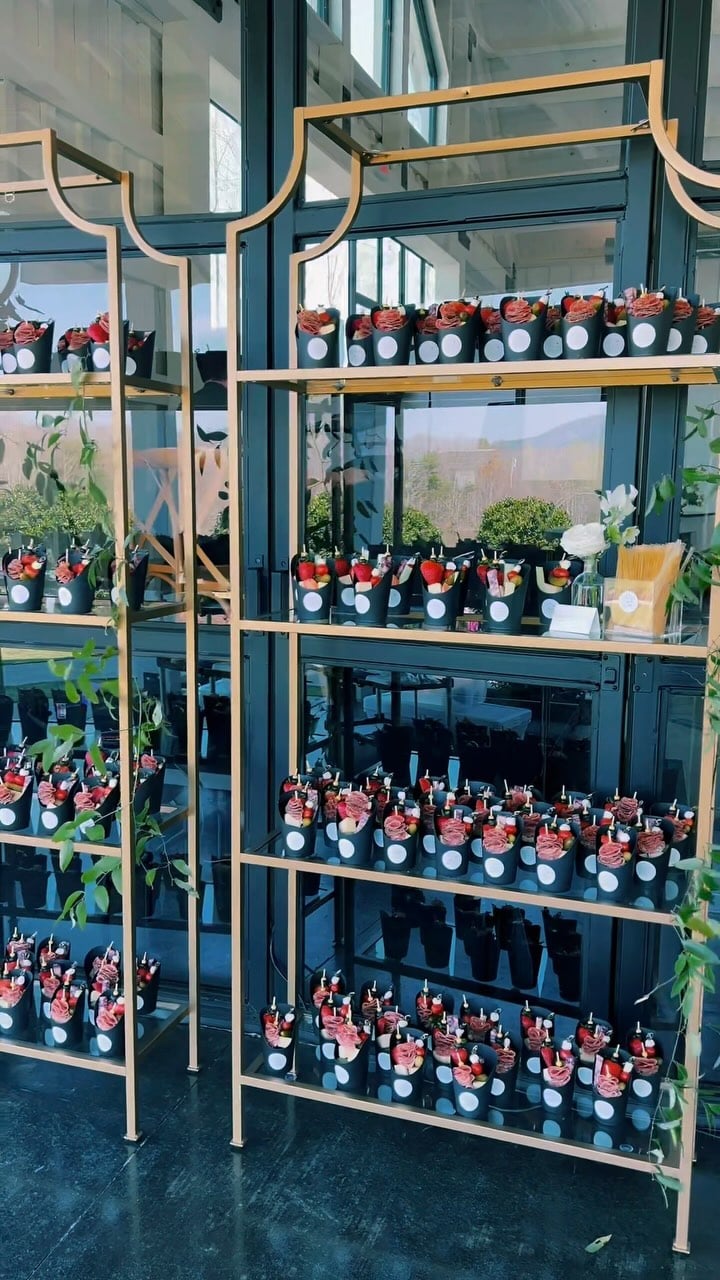
Once your guest list hits 100 or more, a single tray of individual cups is no longer a display — it’s a logistical shuffle. A floor-to-ceiling gold shelving unit loaded with cups on every level solves the scale problem and turns the whole thing into a visual installation that becomes one of the first things guests walk toward when they enter the cocktail hour. The repetition of identical cups in neat rows, framed by greenery on either side, looks polished and intentional from across the room.
The budget is real: at $8 to $15 per cup depending on your market and ingredients, 160 cups runs $1,280 to $2,400 before the display rental. It’s not a budget option. But compare it to a staffed grazing table at the same guest count — with the labor, the food loss on a communal spread, and the ongoing restocking — and the math is closer than it looks.
The greenery framing is what keeps this from looking like a catering rack that got dressed up for a wedding. It sits at the intersection of your florist’s and caterer’s domains, which means it tends to fall through the cracks unless you specifically get them talking to each other early. Put it on your vendor coordination list now, not two weeks before the wedding.
Smart move: Position the display wall at the entrance to the cocktail hour space. It’s the first impression of your catering, and first impressions shape how guests feel about everything that follows.
9. A Bridal Morning Brunch Board for the Getting-Ready Room
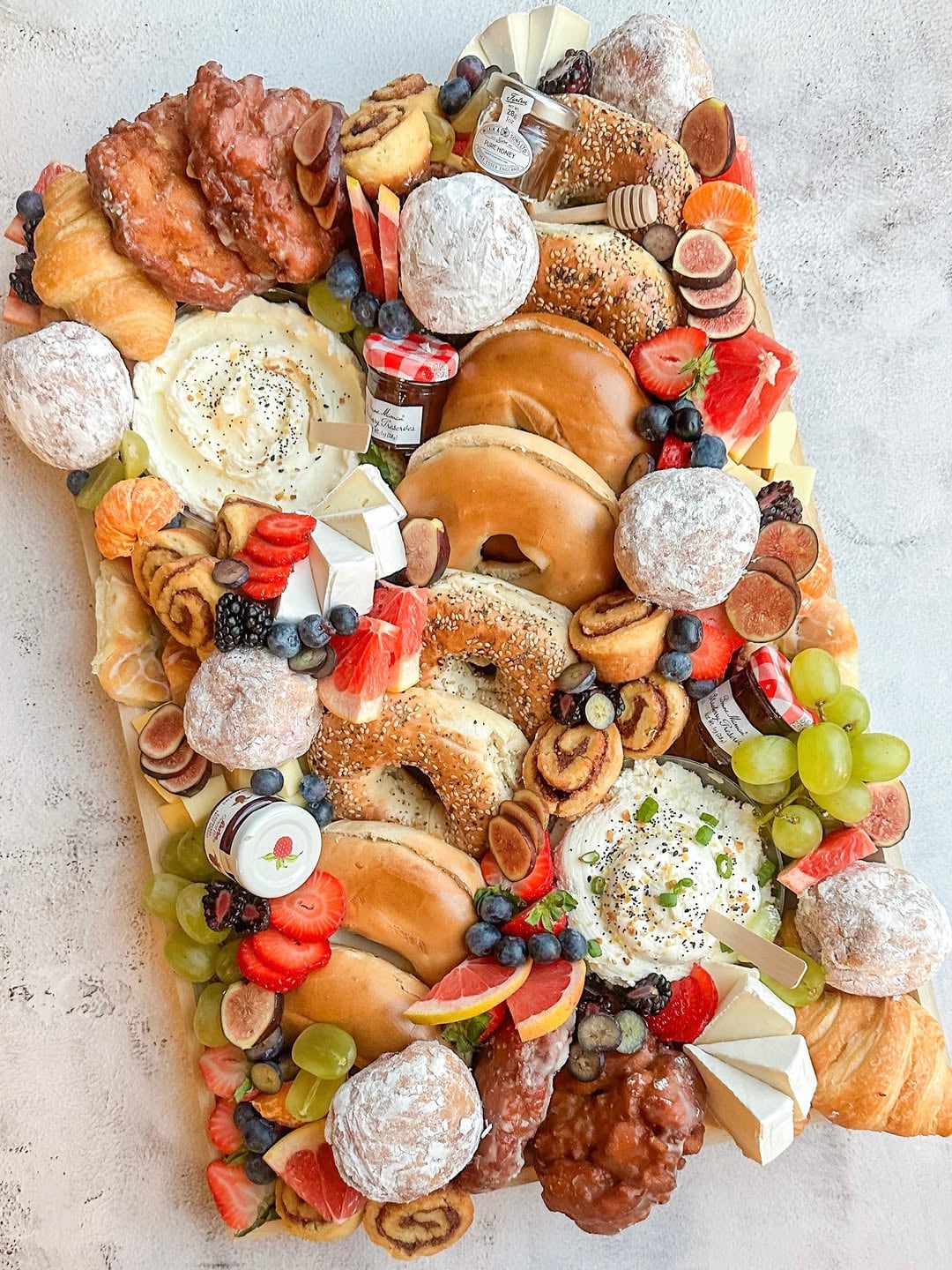
Most couples put exactly zero food budget toward the getting-ready morning and then wonder why everyone’s surviving on mimosas and half a granola bar before the ceremony. A bridal brunch board fixes this, feeds your actual people at the moment they need it most, and gives your photographer beautiful detail shots before the day has even officially started. It’s genuinely one of the best-value additions you can make to your wedding food budget.
The format that works best bridges sweet and savory — bagels and cream cheese next to fruit, pastries alongside prosciutto, little bowls of jam next to sliced cheese. When people are nervous and getting their hair done at 9am, they don’t want a heavy meal. They want to graze. Give them options and they’ll actually eat, which matters a lot when you have a long day ahead and a dress that needs to fit correctly.
Through a specialty caterer, expect to pay $150 to $350 for a party of 8 to 10. If a family member assembles it the night before, significantly less. Either way, it’s going to appear in your wedding photos whether you planned for it or not — so it’s worth making it look good.
Watch out for: Keep anything that stains — blueberries, dark jams, beet dips — away from wedding gowns and bridesmaid dresses. A beet stain on a white dress at 10am is a problem nobody needs on wedding morning.
10. A Branded Charcuterie Cone That Works as a Wedding Favor
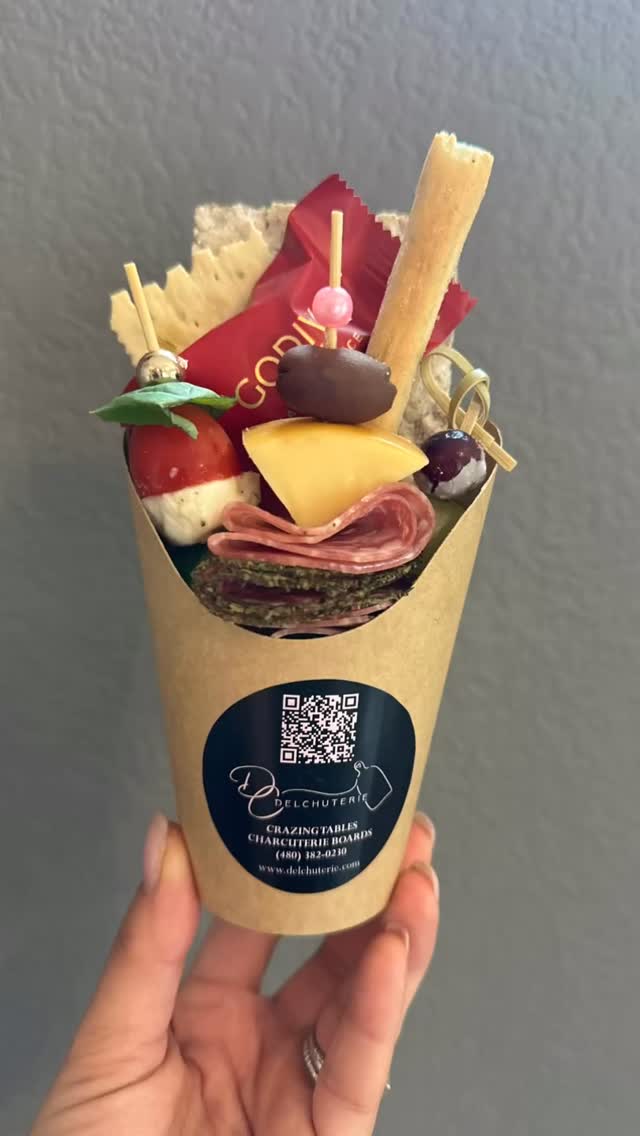
Most wedding favors end up in a hotel room trash can by midnight. A charcuterie cone gets eaten at the wedding, remembered fondly, and photographed — usually all three. Add a custom label with your names, wedding date, and a QR code linking to your photo gallery and you’ve turned a snack into an actual keepsake moment, which is more than a candle or a bag of mints has ever done for anyone.
The way a filled cone is naturally arranged — tall breadsticks at the back, folded meat in the middle, fruit tucked in at the top — looks like a tiny edible bouquet. It fits a wedding without anyone having to explain why, and it’s one of those details that makes guests hold it up and show the person next to them before they eat it. That’s the sign of a favor that’s actually working.
Branded labeling adds roughly $0.50 to $1.50 per cone over plain packaging depending on quantity and design. For 100 guests that’s a modest upgrade for something that shows up in photos and gets shared long after the wedding is over.
Smart move: Order your cone labels through whoever designed your invitations. Keeping the same font and style across your paper goods — invites, menus, favor labels — is one of those small coherence details that makes a wedding feel considered from start to finish.
11. Charcuterie Cones in a Row for a Grab-and-Go Cocktail Hour
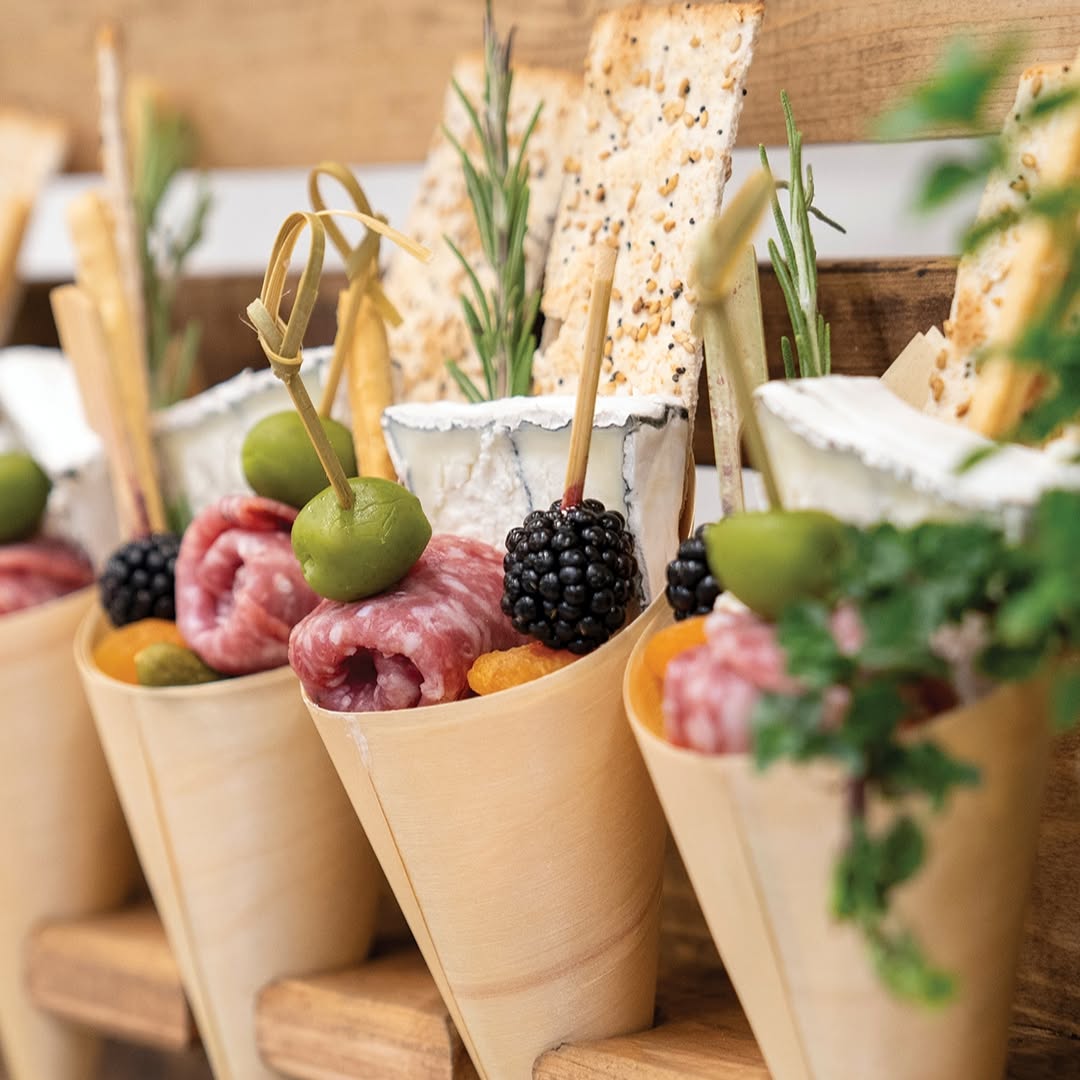
A row of filled charcuterie cones on a wooden board is one of those setups that looks like it took a lot of effort and actually runs itself. Guests walk up, grab a cone, and go — no serving utensils, no plates, no bottleneck, no staff needed to manage the table. The format is self-explanatory in the best possible way, which means it works smoothly during cocktail hour when people are moving around and you don’t want anyone standing in a line for a cracker.
A sprig of fresh thyme or rosemary tucked into the top of each cone is the detail that takes this from nice to genuinely polished. It adds color, it smells good when guests pick it up, and it costs almost nothing per unit. It’s the kind of small thing that makes guests assume the whole event was planned by someone who really knew what they were doing.
This format is also a great solution for venues where floor space is tight. A full grazing table needs real estate. A cone row can live on a narrow bar top, a console table, or a small cocktail station and still look like a deliberate, well-considered food moment rather than a compromise.
Best for: Tighter floor plans, venues with limited cocktail hour space, or any couple who wants a polished food presentation without the staffing and replenishment logistics of a full grazing table.
Some links in this post may be affiliate links, which means we may earn a small commission if you make a purchase through them. Thank you for your support!