You can tell within about thirty seconds of sitting down to dinner whether the wedding food was thought through or not. The plate either works for the format (the formalwear, the timeline, the toasts, the dance floor) or it doesn’t, and guests can feel the difference before they take their second bite.
These are the ten we’d steer you away from when you sit down with your caterer, plus the swaps that get you the same vibe without the catering crisis.
1. Sloppy Joes
The name tells you everything. They’re called sloppy because they cannot be eaten cleanly, and a bride in white satin or a groom in a rented tux has approximately zero margin for tomato-based mess. Add the dance floor, the photos, and the long line of hugs, and you’ve turned the meal into a stain risk for everyone in the room.
This isn’t a knock on the food itself. Sloppy joes are delicious (yum!), and there’s a reason they show up at every casual cookout in America. They just belong at a Tuesday family dinner, not a three-hour reception where half your guests are wearing rented or dry-clean-only clothes.
If you want that nostalgic, comfort-food feeling at your wedding, there are cleaner ways to get there. Slider-style pulled chicken or short rib on a brioche bun, cut small and assembled by the catering team, gives you the same flavor without the splash zone.
Better swap: Plated mini sliders eaten with a fork, or a build-your-own sandwich station with drier fillings (turkey, roast beef, brie and pear).
2. Spaghetti or Any Long Red-Sauce Pasta
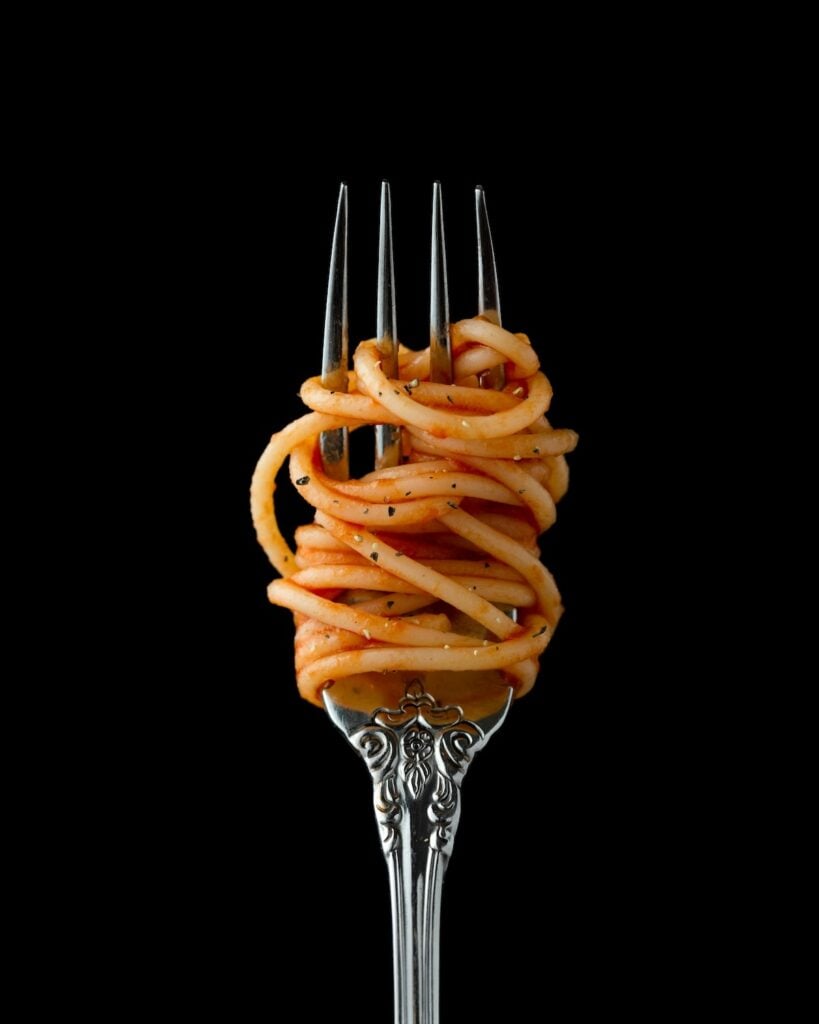
Anything that has to be twirled around a fork is going to defeat at least one guest at the table, and red sauce makes the splatter problem worse. A table of eight in dark suits and pale dresses, plus marinara, plus a slightly enthusiastic toast across the table, equals a few unhappy outfits by the end of the salad course.
Pasta absolutely works at weddings; the format just needs to change. Bite-sized shapes like penne, rigatoni, orecchiette, and gnocchi solve the twirling problem entirely. White and cream sauces (alfredo, brown butter sage, lemon cream) lower the stain risk by another order of magnitude.
Skip it: A plated spaghetti pomodoro entrée. The food is great, but the night gets messier than it needs to.
3. Soup as a Seated Course
This one is a logistics issue more than a flavor one. Plated soup is a beautiful idea on paper and a nightmare in execution. By the time bowls reach the back tables, the soup is lukewarm. Servers can only pour-at-table for so many guests before the front-of-room bowls have already cooled down. There’s also the spill factor: a soup spoon in a moving room with chiffon dresses creates a story you didn’t want.
If you love the idea of a soup course, a passed shot-glass amuse-bouche during cocktail hour pulls off the same trick without the timing risk. Think tomato-basil shooters with tiny grilled cheese skewers, butternut squash with a sage chip on top, or miso with a single shrimp dumpling. Guests get the experience in thirty seconds, standing up, with napkins close by.
Pro tip: Anything that requires perfect temperature for 150 plated guests is a logistical bet you don’t need to take.
4. Whole Lobster, Crab Legs, or Anything That Needs a Cracker
The trouble with whole lobster and crab legs is the tools they require. The minute your menu has guests cracking, prying, digging, or dismembering at the table, your timeline slows by twenty minutes and your photos start including a lot of bibs.
Lobster at a wedding can work beautifully, it just needs to be served pre-shelled. Lobster rolls on soft buns, lobster tails removed from the shell and plated with drawn butter, crab cakes, surf-and-turf with the tail already extracted. All the wow without the wrestling.
Watch out for: Any seafood dish where the guest has to do the prep work themselves. Photographers will quietly tell you these courses produce the worst candid photos of the entire night.
5. Saucy Wings and Bone-In Ribs
Rib joints and wing places exist for a reason, and that food rules at a sports bar. The eating experience just doesn’t translate to a venue with linen napkins, white tablecloths, and a first dance scheduled in forty minutes. You end up with sauce-coated fingers, a pile of bones on every plate, and the inevitable smudge near someone’s collar that shows up in every group photo.
You can bring this energy to your wedding without the casualties. Try boneless short rib glazed and plated, or sticky chicken thighs cut off the bone before service. A late-night station can absolutely include wings, because by 10 p.m., when the dancing has loosened things up and the formality dial is already low, the sauce is part of the fun.
Better swap: Save the messy proteins for late-night or rehearsal dinner. Reception dinner stays cleaner.
6. Hot Dogs
Even at the most laid-back wedding, a hot dog as the dinner protein lands wrong. It’s the one food where the price ceiling and the perceived effort don’t match what guests expect at a wedding meal, even from guests who know you well and are firmly on team casual.
If you want the same handheld, comforting, fun energy, there are options that scale up for the occasion: gourmet sausages with three condiment bars, mini cheeseburger sliders, or banh mi and Cubano stations. You get all the personality without the “wait, did they just give me a hot dog?” moment.
A hot dog cart at midnight, after dinner and dancing, is a different conversation entirely. Guests in hour six love a late-night hot dog. The trick is keeping the hot dog on the late-night menu where it belongs.
Pro tip: Anything you’d grab at a baseball game is a cocktail hour or late-night food, not a reception dinner food.
7. Heavy-Garlic and Raw-Onion Small Plates Right Before Toasts
This one rarely shows up on a list, but caterers will quietly tell you about it. Garlic shrimp, raw onion bruschetta, and chimichurri-heavy beef skewers are all great dishes worth eating at the right moment. Cocktail hour, an hour before close-talking toasts and a long line of hugs, is not that moment.
Save the big aromatic flavors for entrees and sides, where the breath impact gets averaged across an hour of dinner and water. For passed apps, lean toward neutral or mild flavors: cheese tartlets, prosciutto-melon skewers, mushroom toasts, and mini quiches.
Watch out for: Cocktail hour menus that sound great on paper but turn into a breath situation by the time the first toast starts.
8. Sushi Sitting Out at Room Temperature
Sushi looks gorgeous on a buffet, with the colors and the artistry doing all the visual work. It’s also a food-safety issue when raw fish sits out for ninety minutes during cocktail hour in a warm room. Most catering teams will rotate the sushi to keep it cold, but a few won’t, and the result is at best off-tasting fish and at worst a few sick guests.
If you love the idea of a sushi moment, do it as passed bites that come straight from a refrigerated prep area, or as a live nigiri station where a chef hands each piece directly to a guest. Both keep the temperature in check, and both look better than a static buffet anyway.
Skip it: Static sushi displays without temperature control. The risk doesn’t justify the look.
9. Powdered Sugar Desserts on the Dance Floor
Beignets and donut walls are having a moment, and we get the appeal. The photos are great, kids love them, and they feel fun and a little unexpected. The catch is that powdered sugar gets everywhere: the bride’s black velvet wrap, the groom’s lapel, three flower girls’ faces in every photo for the next half hour.
Position the station thoughtfully and you can keep these on the menu. Set up powdered sugar desserts in a contained spot, ideally outside or near a doorway, with plenty of napkins and a clear path away from where people are dancing. Or swap to a glazed or chocolate-finished version that gives you the same nostalgia and handheld factor without the white cloud.
Better swap: Glazed mini donuts, churros with a dipping sauce, or a beignet station physically away from the dance floor.
10. Anything That Needs Two Hands and a Cocktail
Cocktail hour fails when the food fights the drink. There are skewers where the meat doesn’t slide off the stick, tacos that fall apart on the second bite, and salads served in tiny cups with forks that get lost halfway through. If a guest needs both hands plus a drink plus a napkin to navigate one bite, the food was designed wrong for the format.
Passed apps should be one-bite, one-hand, no plate required. Crostini, deviled eggs, mini grilled cheese, arancini, tartlets, and dumplings all fit the bill, anything that can be eaten in a single motion while the other hand is holding a champagne flute. Cocktail hour is for mingling, and food that demands logistics ends with a lot of guests just drinking instead.
Pro tip: If you can’t eat it without setting your drink down, it doesn’t belong on the cocktail-hour tray.
So, What Actually Matters?
A good wedding menu lets your guests actually enjoy themselves: eat without strategy, sit through dinner without a stain check, and end the night talking about the dancing instead of the one course that derailed.
When you’re building your menu with your caterer, run each dish through three quick filters. Can it be eaten in formalwear without consequences? Does it hold up logistically across 100+ plates? And does it match the moment in the timeline (cocktail hour, dinner, late-night)? If a dish passes all three, keep it. If it fails one, see if a cleaner version of the same idea would pass.
The best wedding meals are the ones where everyone got fed, no one ruined an outfit, and the dance floor opened on time.
Wedding Menu FAQ
What’s the most common wedding food regret?
Caterers and planners report the same two issues over and over: a menu that ran cold because it was overcomplicated, or a menu that didn’t account for guest logistics (slow shellfish, messy proteins, foods that fought the dance floor).
Is it tacky to serve casual food at a wedding?
Not at all. Burgers, tacos, BBQ, and pizza all work great when the format is intentional (food trucks, late-night stations, themed receptions). Tackiness comes from a mismatch between food and moment, not from the food itself.
Should we offer a vegetarian option?
Yes. Roughly 10 to 15% of US adults eat plant-forward, and most weddings will have several guests who need it. A solid vegetarian entree (not just “the salad without chicken”) signals that you thought about everyone.
Some links in this post may be affiliate links, which means we may earn a small commission if you make a purchase through them. Thank you for your support!