

As soon as you get engaged, everyone wants to talk about the wedding. The dress, the venue, the guest list, the cake tasting, whether you’re doing a first look. It’s the fun part, and we could talk about it all day (we kind of do). But somewhere between booking the band and redoing the seating chart for the fourth time, there’s a whole other set of conversations that tend to slide to the bottom of the list. The ones about the actual marriage.
When you shop links on our site, we may earn a small commission at no cost to you. Learn more.
We have a relationships section in our Smart Wedding Planner all about this, because premarital counseling sessions will often discuss topics such as how to effectively communicate with your partner, spirituality, money management, in-laws, and children (whether or not you want to have them, and if you do, how you want to parent them). You don’t have to sign up for counseling to cover that ground. But you do have to cover it. From annoying habits you discover after moving in together and arguments that always come up, to family issues that may arise during wedding planning and after, it’s so important to take the time to focus on what you can do now to have a healthy relationship after your wedding day.
I think these are questions I would have had before getting engaged, honestly. Money, kids, dealing with family, how do they feel loved? How do they show love? What do conflicts look like? How tidy are they in their home? All big things that can make or break a marriage.
— via Reddit.com
None of these have to happen in one sitting, and none of them have to be scary. And a little proof they’re worth it: a study by Markman, Stanley, and their colleagues found that couples who did some kind of premarital education were about 31% less likely to divorce. Here are the nine we’d put at the top of your list, plus a few real numbers and what couples on Reddit had to say.
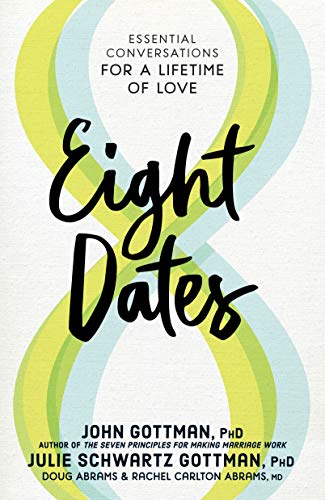
Eight Dates: Essential Conversations for a Lifetime of Love
If you only do one thing on this whole list, make it this. It’s the Gottmans (the married pair who have studied couples for decades) turning all nine of these talks into eight actual date nights, with the questions printed right there so neither of you has to play therapist. We’d start with the money date and let dinner run long.
When I interviewed Lesli Doares, a licensed marriage and family therapist and author of Blueprint for a Lasting Marriage, she put the stakes in a way that stuck with me:
Every romantic relationship you’ve been in before this one has ended. So what are you going to do differently to keep this one going?
— Lesli Doares, licensed marriage and family therapist
1. Money, and How You Each Handle It
This is the big one, and the one couples skip the most. Not the wedding budget (we’ll get to that), but how the two of you handle money once it’s the same money. Who’s carrying debt. Whether a saver is about to marry a spender. Whether you want joint accounts, separate accounts, or some mix of the two. One bride on Reddit listed it out the way I would: “Priorities and values when it comes to finances, household responsibilities, etc. short and long term goals to see how you’re both thinking and what will be next.”
Money is the thing couples fight about most (the APA’s 2024 report has it tied with health as the top stressor for adults under 35), and usually it’s a surprise that sets it off, not the number itself. So skip the surprise. Tell each other the actual numbers, what you owe, what you earn, what you’ve got saved. Our guide says it best, and it’s just as true for the marriage as it is for the wedding: sit down with your partner and realistically talk about how much you can COMFORTABLY spend (and how much of that you actually WANT to spend). That’s often easier said than done, especially when you and your partner each need to have equal say.
I’ll add a personal note here: I really appreciate that my husband and I are on the same page when it comes to money and finances. We are, and always have been, very open about money, and I believe it’s one of the strongest parts of our communication. I’m not one of those “hide your shopping bags” women, but it also helps that I don’t really shop much, LOL.
Ask each other: What’s a normal amount to spend without a heads-up? $50? $500? You’ll be surprised how far apart the answers can be.
2. The Wedding Budget, and Who’s Actually Paying
The good part about the wedding budget? You’re already practicing the money talk, whether you meant to or not. When family pitches in, the money tends to arrive with the best intentions and a string or two attached.
Settle on your number before you fall for a venue, and figure out who’s chipping in and what that money comes with. Most couples now pay for at least part of the wedding themselves, so a lot of this is yours to decide. Our guide to who pays for what and our breakdown of what a wedding really costs are both worth reading together first.
Don’t skip this: Run your numbers through our wedding budget tool before you book anything.
3. Whether You Want Kids (and What “Yes” Really Means)
Almost everyone answers “do you want kids?” and stops there, but the follow-ups are where couples actually differ: how many, how soon, and who slows down at work when they arrive.
When my now-husband and I started dating, I think we were on our third date when I brought up kids. I was at the stage where I knew that if we weren’t on the same page about it, it was something I wanted to know sooner rather than later. And I think that’s key advice. I would do it way before you’re even in the “we’re serious” boat. This is something you should ideally do early on in your relationship, and that applies to all of the big life questions on this list.
So go past the headline now, while it’s still hypothetical. If one of you is a firm no and the other a firm yes, that’s the whole conversation right there, and a 2024 LendingTree analysis pegs the cost of raising one kid to 18 at about $303,418, before anyone even says the word college.
4. How You’ll Split the Work at Home
This one never makes the wedding to-do list, and then it runs your whole life. It usually slides onto one person without anybody deciding it should, which is how the resentment starts.
Expectations to me are the bugaboos of relationships. Just because somebody says, “This is what a wife or a husband now is.” It’s like, “That’s up to you guys to decide what that means.”
— Lesli Doares
A wife should not be expected to do 100% of cooking and cleaning, regardless of how many hours she works. The household is a shared responsibility.
— via Reddit.com
So talk about who actually does what, from the cooking and cleaning to the dentist appointments and noticing you’re out of toilet paper. That last bit even has a name now, the mental load, and Pew found in 2023 that wives in equal-earning marriages still do about 4.5 more hours of it a week than their husbands.
Why it matters: You can renegotiate chores forever. The resentment from one of you assuming 50/50 and the other never doing it is the part that sticks.
5. In-Laws and Family Boundaries
You’re not only marrying your partner. You’re marrying into their family, and they’re marrying into yours. Wedding planning is a sneak preview of how that’s going to go: who wants to be involved, who handles not getting their way, and how well the two of you back each other up when it gets tense.
You cannot leave your partner to deal with them… the traditional marriage ceremony, “Forsaking all others,” that means everybody who is not your partner. That means your mother, your kids, the dog, it doesn’t matter who it is. Anybody but your partner.
— Lesli Doares
…Discuss what type of information you’re willing to share with your parents (and this might be different per set). Do you seek their advice on finances, major life decisions, and interpersonal issues? Do you inform them of big decisions before you make them or afterward, if at all?
— via Reddit.com
I’m close with my mom (we talk constantly), so I know how easy it is to let family into every single decision. We have a whole guide to bonding with your mom during planning, and I love that part. But the two of you are the team now, and where the lines go is something you draw together. Start with one that’s already come up, like whose family gets the first holiday, and work out the rest from there.
6. Religion, Faith, and Family Traditions
If you practice different faiths, or one of you practices and the other doesn’t, this is a now conversation, not a ceremony-planning one. And if kids are on the table, how you raise them in a faith is one of the biggest agree-early questions there is. It’s the kind of thing a marriage class is built to surface, which is exactly why spirituality sits right on that premarital counseling list.
I would take a marriage class – our church offered one. We talked about religion, politics, finances, debt, children, time spent with family, housing, savings, sex frequency expectations, goals, 5 year plan expectations – the class was extremely helpful.
— via Reddit.com
Ask each other: A year from now, what does a holiday look like at our place? That one question usually surfaces a few things you didn’t realize you’d both assumed.
7. Careers, Ambition, and Where You’ll Live
Whose job comes first if you can’t both win? Picture one of you getting an offer in Denver the same month the other makes partner in Chicago. That’s a rough conversation to have for the very first time with a deadline hanging over it.
This one is hard to plan for ahead of time, because who knows where you’ll both be in your careers by then. The key is knowing that whatever decision you end up faced with, you weigh all the factors and never assume one thing or another, or that one person’s job is more important than the other’s.
Say it out loud: If a dream job meant moving across the country, would we go, and who would it be hardest on? You don’t have to want the same things. You just both need to know where the other one stands.
8. How You Fight
Every couple argues. The couples who do it well have worked out how to disagree without it turning into a war. How do you each cool off? Does one of you need to walk away while the other wants to hash it out on the spot? What’s off-limits when you’re angry, even in the heat of it? If you’ve never talked about it, you’ll be writing those rules mid-fight, which is the worst time to write anything.
Relationships are all about communication, communication, communication. And that’s just the base level. Because we can’t resolve stuff if we can’t talk about it.
— Lesli Doares
This is where a few premarital counseling sessions earn their keep, even if you two rarely fight. Actually, especially if you rarely fight, because as one bride explained, “We need someone independent to ask us the questions we haven’t thought of and question our answers.” Even if your religion doesn’t require it, a few sessions can help ease any anxieties, questions, or other issues you may have going in. And some states will even knock a few dollars off your marriage license fee if you do.
My husband and I found a couples counselor and told her we wanted to do a few premarital sessions. I think we did 4? It was enormously helpful in terms of guiding the way we handle conflict and helping us negotiate stickier issues (ie money and religion). Highly recommend.
— via Reddit.com
9. The Unromantic Paperwork
Nobody gets engaged dreaming about prenups and beneficiary forms. But some of the least romantic conversations are the most loving ones, because all of them come down to protecting each other. Talk about whether you want a prenup, who you’d each want making decisions if something happened to one of you, and your basic health histories, family medical history included.
My personal way of protecting against divorce is making sure that your marriage is in good shape, versus trying to protect it on the back end.
— Lesli Doares
Don’t skip: A prenup is really just a conversation about what’s fair, written down while you both still like each other. If you’re not sure where you land, our guide on whether you really need a prenup is a good place to start, and our marriage license guide covers the paperwork you’ll need either way.
You will not get through all nine of these in one weekend, and please don’t try. Pick one, bring it up over dinner, and let the rest come when they come. You’re just trying to go into your marriage already knowing the answers to the questions that trip so many couples up later, instead of finding out the hard way once the confetti’s been swept up.
Going into a marriage with a strong foundation is crucial and communication is a big one people struggle with.
— via Reddit.com
If you want a little help getting through the list, the relationships section of our Smart Wedding Planner is the one that started it. Have the talks now, then go right back to arguing about the seating chart. That part’s allowed to be the fun part.


This is really helpful, thank you!
I think you should break some of the categories down. For example, when talking about Careers, Ambitions, & Where You’ll Live is a large chunk of important details. I think it would be beneficial to make that into 2-3 categories to break it down a bit simplier.
We planned on getting married nine years ago but never have enough funds. So, we’re getting close now and I’m trying to think of all these little details that are crucial to a relationship.
Thank you.