The internet has convinced an entire generation of brides that DIY-ing their wedding is either a genius money hack or a fast track to a nervous breakdown. The truth, as usual, is somewhere in the middle — and it depends entirely on which projects you take on.
Here’s the real math that nobody talks about: DIY doesn’t automatically save money. When you factor in materials, tools you don’t own, multiple failed attempts, and the hours of labor (your time has value, even if you’re not billing for it), some projects end up costing more than hiring a professional. The bride who spent $50 on supplies and six hours making a certificate folder that “the inside looks like trash” — her words, from a wedding forum — learned this the hard way.
But some DIY projects? They’re genuinely worth it. They save real money, add personal touches that matter, and — critically — can be done well in advance so you’re not hot-gluing anything at 1 AM the night before your wedding. We dug through Reddit threads, wedding forums, and real bride recaps to find the projects that consistently get the “glad I did this” stamp of approval. Here’s what actually made the cut.

1. Welcome Sign
This is the single most recommended DIY project across every wedding forum, and for good reason. A professional calligrapher or sign maker will charge $150–$400+ for a welcome sign. An acrylic board from Amazon, a paint pen, and a YouTube tutorial? Under $30. And it’s one sign. One. You make it once, weeks before the wedding, and you’re done.
The key is keeping it simple. Hand-lettered text on acrylic, a framed print on an easel, or painted text on a thrifted mirror all look polished without requiring actual calligraphy skills. If your handwriting is truly terrible, buy a digital template from Etsy for $5–$10, print it at FedEx on heavy cardstock, and frame it. Nobody will know the difference, and your sign will look cleaner than most hand-lettered versions anyway.
Smart move: Practice your lettering on paper first, then on the actual board. Buy an extra board in case you mess up — they’re cheap enough that a backup is worth the peace of mind. Do this project at least two weeks before the wedding so you’re not rushing.
2. Signage in General (Seating Chart, Bar Menu, Programs)
Once you’ve made one sign, you’ve basically unlocked the skill set for all of them. The bar menu, the seating chart, the ceremony program sign, the “cards and gifts” sign, the “please sign our guest book” sign — these are all the same project in slightly different sizes. Vendors charge per sign. You’re paying for materials once and reusing the same pens, the same technique, the same aesthetic across everything.
Brides on Reddit and WeddingWire forums consistently say signage was their most satisfying DIY because the savings are obvious, the results look professional, and none of it needs to happen day-of. You can make all your signs over two weekends and cross a major décor category off the list entirely.
Pro tip: Keep a consistent look across all your signage — same font style, same color palette, same frame or board material. That visual cohesion is what makes DIY signs look intentional rather than cobbled together. Etsy template shops often sell bundles with matching designs for welcome signs, bar menus, seating charts, and programs.

3. Invitations and Stationery
Custom wedding invitation suites from a stationer can easily run $500–$1,500+ for printing alone. The DIY alternative that real brides swear by: buy a digital design template from Etsy ($10–$40), customize it with your details using Canva or the seller’s editing link, and print it at a quality local print shop on nice cardstock. Total cost for 100 invitations, RSVP cards, and envelopes? Usually $100–$200, depending on paper quality.
The trick is in the paper. Don’t print on regular printer paper at home — that’s how DIY invitations end up looking like DIY invitations. Spend the extra money on linen, cotton, or heavyweight matte cardstock at a print shop. One bride on a wedding forum mentioned that she couldn’t find affordable cotton matte paper but switched to linen matte, and the texture actually made the invitations feel more expensive. Small upgrades like wax seals, vellum wraps, or printed envelope liners add a high-end feel for minimal cost.
Watch out for: Underestimating print shop timelines and costs. Get quotes from 2–3 shops before committing. And if you’re doing digital RSVPs through your wedding website, you can skip printing response cards entirely — that alone saves on both printing and postage.
4. Simple Bud Vase Centerpieces
This one comes with a massive caveat: simple bud vases, not elaborate floral arrangements. The brides who report the biggest DIY wins with flowers are the ones who kept it intentionally minimal — three to five small vases per table, one to three stems each, using hearty flowers from Costco, Trader Joe’s, or a wholesale supplier. Total cost for 15 tables? Often under $200, versus $1,000+ from a florist.
The flowers that work best for DIY are the ones that are forgiving: roses, carnations (the good fluffy kind, not the gas station kind), baby’s breath, eucalyptus, and dried flowers. Avoid hydrangeas, peonies, and anything delicate that wilts fast or bruises easily — those need professional handling and climate control that you probably don’t have access to the day before your wedding.
Smart move: Buy your vases from Dollar Tree, thrift stores, or Facebook Marketplace wedding resale groups. Brides who’ve already gotten married are practically giving this stuff away. One WeddingWire user sourced all her vases from Goodwill over several months for under $20 total, then did Costco roses for the whole reception for about $120.
Watch out for: Overcomplicating it. The moment you start trying to replicate a florist-level cascading arrangement with wholesale flowers and no training, you’ve crossed the line from “smart DIY” to “stressful DIY.” Bud vases work because they’re supposed to look simple.

5. Escort Cards and Table Numbers
Escort cards are one of those things that feel like they need to be fancy, but they really don’t. Guests look at them for approximately three seconds — long enough to find their table number, and then they move on with their lives. That’s not a knock on your beautiful calligraphy; it’s just the reality of how escort cards function. Which makes them a perfect DIY candidate.
Avery tent cards (the printable kind you can buy in bulk) are a favorite hack among budget brides. You can print them at home on a laser printer, and they cost roughly $10 for 100 cards. For a more polished look, print flat cards on cardstock and use small holders or clips. Table numbers are even easier — print them on cardstock, frame them in matching frames from the dollar store, done. One bride spent about $10 on her entire escort card setup using this method.
Pro tip: The major advantage of DIY escort cards is flexibility. When RSVPs shift at the last minute — and they will — you can reprint individual cards in five minutes instead of calling a calligrapher with changes two days before the wedding.
6. Spotify Playlist for Ceremony and Cocktail Hour
You absolutely need a professional DJ or band for your reception. The dance floor is not the place to trust an iPhone and a Bluetooth speaker. But for the ceremony processional, recessional, and cocktail hour? A curated Spotify playlist through a decent speaker is a totally legitimate move that can save you $300–$500 on extended musician or DJ hours.
Build three playlists: one for ceremony pre-seating music (30 minutes of soft background), one with your specific processional/recessional songs cued up in order, and one for cocktail hour (60–75 minutes of upbeat but not overwhelming music). Designate one reliable person — not a bridesmaid who’ll be in photos — to hit play at the right moments during the ceremony.
Watch out for: Bluetooth speaker quality matters. A $20 speaker will sound like a $20 speaker, and your ceremony audio should not have that tinny, echo-y quality. Rent or borrow a proper portable speaker (JBL PartyBox or similar) or ask your venue if they have an aux input to their sound system. Test it at the venue beforehand.

7. Photo Booth Setup
Hiring a photo booth company runs $500–$1,200 for a few hours. A DIY version using an Instax camera, a backdrop, and some props costs about $75–$150 total (the bulk of that is film). Guests love it just as much — sometimes more, because Polaroids feel more personal and nostalgic than a digital booth with branded overlays.
Set up a small table near the dance floor with 2–3 Instax cameras, plenty of film, a cup of markers, and a sign asking guests to take a photo and leave it in a guest book or drop box. You can add simple props if you want — oversized sunglasses, a few funny hats — but don’t over-produce it. The charm of a DIY photo booth is that it’s casual and fun, not corporate.
Smart move: Buy more film than you think you need. Guests will burn through it faster than you expect, especially after the bar has been open for a couple of hours. Budget for about 1.5 photos per guest to be safe.
8. Favors (But Only If It’s Already Your Thing)
Here’s the honest truth about wedding favors: most of them get left on the table. The monogrammed koozies, the Jordan almonds in tulle, the personalized bottle openers — a solid percentage of guests don’t take them home. So if you’re going to DIY favors, either make them consumable (people take food) or make them something you already know how to make well.
The DIY favors that get rave reviews are always tied to an existing skill or hobby: homemade jam from a bride who actually cans, cookies from a couple that bakes together, hot sauce from a groom who grows peppers, small candles from someone who already makes them. These work because they’re genuinely good, they feel personal, and the labor is manageable because you already have the skill and the equipment.
Watch out for: Starting a brand-new craft just for wedding favors. If you’ve never made candles before, your wedding is not the time to learn at scale. The math on 150 anything is different from the math on 10 — materials, time, drying/cooling/setting time, packaging, and transport all multiply.

9. A Dessert Spread Instead of a Custom Cake
A multi-tier custom wedding cake from a professional baker easily costs $500–$1,000+. A small cutting cake (one tier, simple design) from a local bakery runs $50–$100. The difference? You get your cake-cutting photo, your guests get dessert, and nobody knows the cake they’re eating came from a different source — or from multiple sources.
The dessert table approach is a legitimate crowd-pleaser: order a small cutting cake for the ceremonial moment, then fill a table with an assortment of desserts from your favorite bakeries, grocery stores, or even family recipes. Donuts, cookies, brownies, pies, macarons — the variety is the feature, not a compromise. Couples who’ve done this on Reddit consistently say guests loved having options more than they would have loved a slice of fondant-covered vanilla cake.
Pro tip: Don’t attempt to bake your own wedding cake unless you are a skilled, experienced baker. A homemade dessert table of cookies and brownies? Totally doable. A homemade three-tier decorated cake that needs to survive transport and sit in a warm room for four hours? That’s a different skill set entirely. Know the line.
10. Getting-Ready Spread and Welcome Bags
The getting-ready setup is one of the easiest and most appreciated DIY touches — and it requires zero crafting ability. Put together a spread of snacks, water, juice, and maybe a bottle of champagne for the bridal suite. Bagels, fruit, cheese, crackers, granola bars. Pick it up the morning of and set it out. It costs $40–$60 and it means your bridal party (and you) actually eat something before a day when eating will be nearly impossible.
Welcome bags for out-of-town guests follow the same logic: a paper bag, a bottle of water, a snack, a local treat or two, maybe a printed itinerary card, and a couple of Advil packets. Done. No custom tote bags. No hand-stamped logos. Just practical stuff that guests genuinely use after a long drive or flight. Keep it useful, keep it simple, and spend under $10 per bag.
Best for: Brides with a lot of out-of-town guests or a wedding party that’s getting ready together for several hours. This is the kind of “DIY” that’s less about crafting and more about thoughtfulness, and it makes a bigger impression than you’d expect.
11. Bridesmaid Proposal Boxes
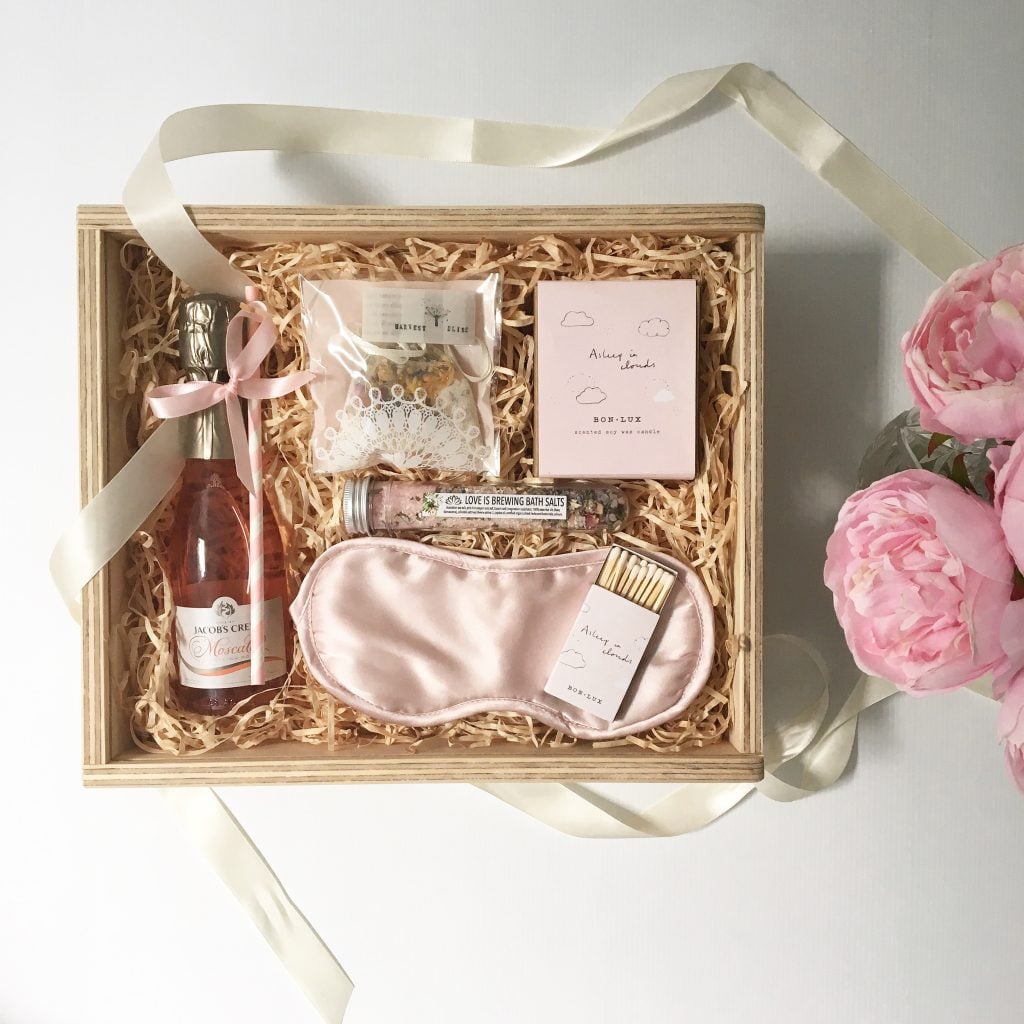
Pre-made bridesmaid proposal boxes from retailers run $30–$50 each, and they’re usually filled with generic items that no one really wants — a mini champagne bottle, a cheap pair of socks with “bridesmaid” on the sole, and a candle that smells like a department store. For the same price per box (or less), you can put together something that’s actually personal.
Buy plain gift boxes in bulk. Then fill each one based on what that specific person likes: their favorite candy, a face mask they’d actually use, a mini bottle of their go-to drink, a handwritten note. The personalization is the whole point — it shows you know them, not just their role in the wedding. This is one of those DIY projects that costs about the same as buying pre-made but lands ten times better.
Smart move: Don’t stress about making every box identical. In fact, they’re better when they’re not. A box tailored to each bridesmaid feels more like a gift and less like a party favor.
12. Card Box
Wedding card boxes are one of those things that cost $40–$80 to buy, and absolutely do not need to. A thrifted vintage suitcase, a wooden crate from a craft store, a simple acrylic box — any of these work, and most brides already own something that could serve the purpose. This is a project that takes about 15 minutes and saves you from buying a single-use item you’ll never use again.
The only functional requirement is that it needs a slot for envelopes and ideally some level of security so cards aren’t easily accessible to anyone walking by. A lid with a cut slot, or a box with a narrow opening, does the job.
Pro tip: Check Facebook Marketplace wedding resale groups. Brides sell their card boxes for practically nothing after the wedding. You can often find one that matches your aesthetic for under $15, skip the DIY entirely, and resell it yourself afterward.

13. Having a Friend Officiate
This isn’t a physical DIY project, but it’s one of the most universally praised “DIY” decisions in the wedding space. Getting a close friend or family member ordained online (it takes about five minutes in most states) and having them officiate your ceremony adds a layer of meaning that no hired officiant can replicate. They know your story. They know your inside jokes. They know why this matters.
It also saves $300–$800 on officiant fees. And couples consistently say it was one of the most memorable parts of the entire day — both for them and for guests. The ceremony feels less like a formality and more like a real conversation between people who love each other.
Watch out for: Not every state accepts online ordination equally. Check your local marriage license requirements before assuming this is a done deal. Some states require the officiant to be registered with a specific organization or county. Do this research months in advance, not the week before.
What You Should NOT DIY
Just as important as knowing what’s worth doing yourself is knowing where to stop. The projects below consistently get flagged by real brides as DIY regrets — either because they cost more than expected, took dramatically more time than planned, or produced results that fell short of what a professional would have delivered.
Elaborate fresh flower arrangements. Bud vases with hearty stems are one thing. Trying to replicate a florist’s cascading centerpiece with wholesale peonies and no training is another. Fresh flowers are perishable, fragile, and harder to arrange than they look. This is the DIY that causes the most night-before meltdowns.
The wedding cake. A dessert table of cookies and brownies? Go for it. A multi-tier decorated cake that needs structural support, fondant work, and temperature management during transport? Leave it to a baker.
Hair and makeup. Your everyday makeup routine is not wedding photography makeup. Professional makeup is formulated, applied, and set to last 12+ hours under lights, tears, and humidity. This is not the place to save $200.
Photography and videography. Your talented friend with a nice camera is not a wedding photographer. Professionals know how to shoot in bad light, manage group photos efficiently, capture candids without being intrusive, and deliver edited files on a timeline. This is the single worst place to cut corners.
Anything that requires day-of assembly. If a DIY project can’t be fully completed before the wedding day, seriously reconsider it. The morning of your wedding should involve getting ready, not assembling centerpieces in a parking lot. If it needs to be set up at the venue, assign it to someone who is explicitly not in the wedding party.
At the End of the Day…
The best DIY wedding projects share three things in common: they can be completed well before the wedding day, they look good even if they’re not perfect, and they save meaningful money compared to hiring out. The worst ones are the projects that require professional-level skill, day-of execution, or scale that turns a fun afternoon craft into a second job.
Pick one to three projects from this list. Do them well. Do them early. And give yourself permission to hire professionals for everything else. The goal isn’t to DIY your entire wedding — it’s to DIY the things that make sense so you can spend your budget (and your sanity) where it actually matters.
FAQs
Does DIY-ing your wedding actually save money?
It depends entirely on the project. Simple projects like signs, stationery, and escort cards almost always save money because the materials are cheap and the skill level is low. But more complex projects — especially those involving fresh flowers, food, or anything requiring specialized tools — can end up costing as much or more than hiring a professional when you factor in materials, failed attempts, and the value of your time. The key is choosing projects where the DIY version is genuinely simpler and cheaper, not just theoretically possible.
What is the easiest wedding DIY project for non-crafty brides?
A welcome sign using an Etsy template printed at a local print shop and placed in a frame on an easel. It requires zero crafting skill, takes about 30 minutes including print shop time, costs under $30, and looks completely professional. After that, escort cards printed on Avery tent cards are the next easiest — you can print them at home and they cost about $10 for 100 cards.
How far in advance should I start wedding DIY projects?
Start at least two to three months before the wedding for most projects, and finish everything at least two weeks out. The only exception is fresh flowers, which need to be purchased two to three days before and arranged one to two days before the wedding. Give yourself more time than you think you need — wedding DIY projects almost always take longer than the Pinterest tutorial suggests, especially at scale.
Should I DIY my wedding flowers to save money?
Only if you keep it extremely simple. Bud vases with one to three hearty stems each (roses, carnations, eucalyptus, baby’s breath) from Costco or a wholesale supplier are a well-tested DIY approach that genuinely saves money — often $800+ compared to a florist. But attempting elaborate arrangements with delicate flowers like peonies or hydrangeas without experience is where most brides run into trouble. If you want lush, complex florals, hire a florist. If you’re happy with simple and pretty, DIY flowers can work beautifully.
Where can I find cheap supplies for wedding DIY projects?
The top sources recommended by real brides include Dollar Tree for vases and candle holders, Costco and Trader Joe’s for bulk flowers, Etsy for digital design templates, Facebook Marketplace wedding resale groups for secondhand décor, Goodwill and thrift stores for vases and frames, and Amazon for acrylic sign boards and craft supplies. Wedding resale groups are especially valuable — brides regularly sell their signage, card boxes, vases, and décor at steep discounts after their wedding.
How many DIY projects is too many for one wedding?
The consistent advice from experienced brides and planners is to limit yourself to one to three DIY projects, and no more than one “big” project (like flowers or a dessert table). Every additional DIY project adds to your pre-wedding workload and stress level. The brides who report the most regret are the ones who tried to DIY everything — invitations, centerpieces, favors, signage, dessert, and décor — and ended up exhausted before the wedding even started. Pick the projects with the best effort-to-impact ratio and let professionals handle the rest.
Some links in this post may be affiliate links, which means we may earn a small commission if you make a purchase through them. Thank you for your support!