She loves your son. She wants to love you. And she is working very hard to make a good impression while simultaneously planning a wedding, managing her own family’s expectations, navigating a relationship with someone she’s known for a fraction of the time you have, and trying not to say the wrong thing.
That last part, not saying the wrong thing, is doing a lot of heavy lifting. Because the truth is, there are things your new daughter-in-law is thinking, feeling, and hoping for that she will probably never say out loud. Not because she’s being dishonest. Because she’s being careful. She doesn’t yet know where the safe ground is with you, how you’ll react, or whether raising something will make things better or worse. So she stays quiet, hopes you’ll figure it out, and carries it alone.
This article is written for the mother-in-law who wants to close that gap. Not the one looking to be validated in a conflict, but the one who wants to understand what her daughter-in-law needs, and who’s wise enough to know that asking directly isn’t always possible when the relationship is still new and the stakes feel high for everyone.
None of these are accusations. They’re the things that come up again and again in real conversations between daughters-in-law, on forums, in therapy, in late-night texts to their best friends, that almost never make it directly to the mother-in-law herself. Reading them is a gift you’re giving your relationship before it needs fixing.
1. She’s Not Trying to Take Your Son
If your daughter-in-law could say one thing and trust you’d really hear it, it might be this: “I’m not trying to take him away from you.” This is the one underneath almost every other tension in the mother-in-law and daughter-in-law relationship, and it almost never gets said directly. She feels it when you seem hurt by changes in your son’s schedule. She feels it when a comment comes out wrong, something small that implies she has made him different, less available, less yours. And she has no idea how to address it without making it worse.
“My MIL has always been rude to me, saying things in the past like I stole her son from her […] that his family is scared of me.”
The fear of losing a child to a marriage is completely understandable and deeply human. What your daughter-in-law needs you to know is that she is not in competition with you. The love your son has for her is not subtracted from what he has for you. A man who loves his wife well doesn’t love his mother less, he often loves her more, because a good marriage makes people more generous and more whole.
What she is hoping for is not to replace you. She is hoping to add to the family you’ve built, not dismantle it. The more she feels like you’re on the same team, the more space she’ll naturally create for you, because she won’t feel like the relationship with you is something she has to manage and defend against.
What helps: When you signal, through your words and your actions, that you want them to succeed as a couple, she relaxes. And a relaxed daughter-in-law is an open one.
2. She Notices When You Only Talk to Him
There’s a small request she’d make if it didn’t feel pushy: “Talk to both of us, not just to him.” This one comes up constantly in real conversations between daughters-in-law, and it’s almost never raised directly with the mother-in-law. When you call your son with concerns, suggestions, or requests that affect both of them, and he comes to her with “my mom was wondering if…”, it puts her in a position she didn’t ask for. She either agrees and feels like she had no say, or she pushes back and becomes the person standing between your son and what you want.
“You text him about the holiday weekend. You text him about the rehearsal dinner menu. You text him about my own bridal shower. By the time any of it reaches me, the plans are already locked. I’d rather be in the loop while it’s being decided.”
She doesn’t want to be that person. Nobody does. But when decisions that affect her household, her schedule, her life go through back channels, it creates a dynamic where she’s always the one saying no to things she was never asked about. That’s not a fair position, and over time it builds resentment that has nowhere to go because the original conversation never involved her.
Your son and his wife are a unit now. When you communicate with him about something that involves both of them, you’re communicating with both of them. That doesn’t mean you need to CC her on everything or lose your private relationship with your son. It means that decisions, plans, and requests that affect their shared life should go to them together, or at minimum, your son should know you’re asking something that requires her agreement too.
What helps: When you want to invite them for a holiday or suggest a visit, text or call them both, or ask your son to check with her before confirming. It’s a small gesture that communicates enormous respect.
3. The Drop-By Visits She Dreads
One thing she’d ask for, if she felt she could: “Please don’t just drop by.” This is one of the most commonly cited sources of tension in new daughter-in-law relationships, and it’s almost universally undiscussed because it feels rude to raise. Dropping by unannounced might be how things worked before they were married, your son’s home was more fluid, schedules were more flexible, and the intimacy of family meant the door was always open. That dynamic shifts when he has a partner.
“It’s massively intrusive to randomly turn up unannounced and expect someone’s attention for two hours.”
Her home is her space. Her routines are her own. She may be in the middle of working from home, or having a hard day, or simply not emotionally prepared for a visit she didn’t know was coming. An unannounced visit requires her to immediately shift into a mode of hospitality and presentation that can feel exhausting when it’s unexpected, even if she loves you, even if she’s happy to see you once she’s had thirty seconds to adjust.
The ask isn’t “don’t come.” It’s “let us know you’re coming.” A quick text the day before, or even an hour before if it’s truly spontaneous, makes the difference between a visit she welcomes and a visit she endures with a smile while internally counting the minutes. One without the other is hard to tell apart from the outside, which is exactly the problem.
What helps: A simple “Would it be okay if I stopped by Saturday?” removes all the friction. She almost always wants to see you. She just needs the choice to be hers.
4. She Doesn’t Need You to Defend Him
She’d never say it to your face, but she’s thinking it: “Your son is not perfect, and I don’t need you to protect him.” When conflict arises in a marriage, and it will, as it does in every marriage, the instinct to defend your child is completely natural. What feels protective from your side can feel like a closed door from hers. If she ever comes to you with something difficult about your son, or if you’re aware of a conflict in their relationship, the response she is hoping for is not a defense of him. It’s a witness.
“When we’re disagreeing about something at dinner and you jump in to defend him before he’s even answered, I learn that this family treats him as the version of himself who can do no wrong. Which means anytime I bring up something that’s hard for me, I’m bringing it up against the whole room.”
What she needs to know is that you see her. Not that you’ll take her side over your son’s, she doesn’t want that, and it wouldn’t serve anyone. But that you understand her perspective has validity, that you won’t automatically assume she’s the problem, and that your love for your son doesn’t require you to see her as the obstacle to his happiness.
The daughters-in-law who feel safest with their mothers-in-law are the ones who know that if they ever had to say something hard, they would be heard rather than immediately countered. You don’t have to agree with her or side against your son. You just have to be open to the possibility that he’s not always right and she’s not always wrong, and let that show.
What helps: When a conflict comes up in conversation, resist the first impulse to explain or defend. Ask questions first. Listen fully. Your son is lucky enough to have you in his corner, she just needs to know she has a corner too.
5. Her Family’s Traditions Matter Too
One hope she’s holding onto through every holiday: “My family’s traditions matter too.” Holidays, birthdays, family rituals, she comes from a family that has its own version of all of these, and those traditions are just as meaningful to her as yours are to you. She is navigating, probably more than you realize, the delicate work of honoring two sets of family traditions simultaneously. That balancing act is often invisible because she does it without making a fuss, trying not to upset anyone, trying to make everything work for everyone except possibly herself.
“I do things that aren’t convenient for the sake of his family’s traditions. For example, we stay the night at MIL’s house every Christmas Eve on an air mattress.”
When she and your son choose to spend a holiday with her family, it is not a rejection of yours. It is not a ranking. It is two people doing their best to be present in both of their families’ lives with the limited time and emotional bandwidth that any couple has. Every choice to be somewhere is not a choice against somewhere else.
What she hopes for is a mother-in-law who asks rather than assumes, who says “what are you thinking for Thanksgiving this year?” rather than “you’re coming for Thanksgiving, right?”, and who receives the answer with grace even when it’s not the one she was hoping for. That graciousness is what makes her want to say yes the next time.
What helps: Treat the holidays as something to plan together, not something to claim first. Flexibility from you makes flexibility from her much easier to offer back.
Also Read: Wedding Etiquette & Advice: What Every Bride and Her Family Should Know
6. Why Wedding Criticism Feels Personal
If she could explain how the comments feel, she’d put it this way: “When you criticize my wedding choices, it feels like you’re criticizing me.” Wedding planning is one of the most loaded periods in any new mother-in-law and daughter-in-law relationship. Opinions come from everywhere, but the ones from your son’s mother carry a particular weight, because she is trying very hard to make a good impression on you at exactly the moment when she has the least bandwidth to absorb criticism.
“My MIL had disliked many of the decisions we made (venue, date, clothing, flowers, etc.) which had caused some fights.”
A comment about the flowers, the venue, the invitation wording, the guest list, delivered as a helpful suggestion, may land as a judgment about her taste, her values, or her family. Not because she’s being oversensitive, but because wedding planning is deeply personal, and she is already managing the anxiety of creating a day that represents who she and your son are together. Unsolicited opinions add to that weight, even when they’re well-intentioned.
What she wishes she could tell you is that she hears your opinions more loudly than most. A passing comment that you’d have preferred a different venue can echo for days. This isn’t a complaint, it’s information. It means your relationship with her matters enough that your approval registers. The question is what you want to do with that.
What helps: Save opinions for when they’re asked for. When she shows you something she’s excited about, lead with genuine interest before anything else. The wedding is theirs, your job in that planning process is to be someone she’s glad to have in the room.
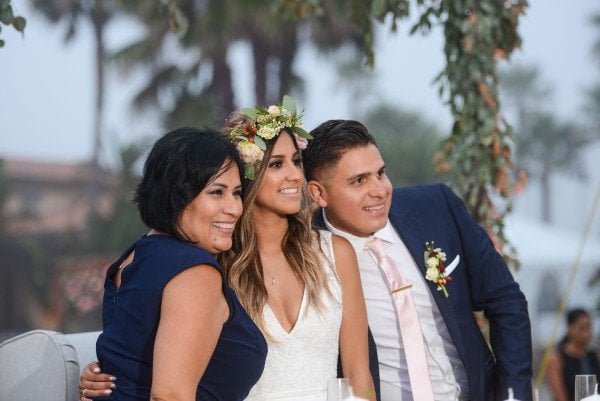
7. She Wants to Know You Too
She’d love for the curiosity to run both ways: “I want to know you, not just be known by you.” In many new mother-in-law and daughter-in-law relationships, the flow of personal information runs in one direction. The mother-in-law knows a great deal about the daughter-in-law, through her son, through observation, through the natural accumulation of information over years. The daughter-in-law often knows much less about the mother-in-law as a person in her own right: her history, her friendships, her life before she was someone’s mother.
“You’ve asked me about my job, my parents, where I grew up, whether I want kids. I still know almost nothing about you. What were you like at 28? What was the hardest year of your marriage? I’d love to know you back. I’m waiting for you to invite me to ask.”
What she hopes for is a genuine reciprocal relationship, not just a benevolent assessment. She wants to know what you were like when you were her age. What you were afraid of. What you loved about the early years of your marriage. What you wish you’d known. The relationship she is hoping to build with you is not a performance, it’s a friendship, the particular kind that can only exist between two women who love the same man and want him to be happy.
That friendship requires vulnerability from both sides. When you share yourself with her, not just your opinions or your preferences, but your actual self, she is more likely to share herself with you in return. And that reciprocity is what closes the distance that can otherwise sit between even well-meaning mothers-in-law and daughters-in-law for years.
What helps: Invite her into things that have nothing to do with your son. Coffee, a walk, a show you both want to see. Let her see who you are outside of the context of his mother. She’s hoping to find a person she’d choose to know regardless, and she probably can, if you give her the chance.
8. She’s Trying Harder Than You Realize
On the days it feels one-sided, this is what runs through her head: “I’m trying as hard as you are.” This one is perhaps the most important and the least visible. From inside the relationship, it can feel like the effort is not equal, like you are reaching out, making accommodations, being generous, and not receiving the same energy in return. What may be less visible is how much she is doing that you don’t see. The times she encouraged your son to call you when he otherwise wouldn’t have. The way she spoke about you to her own family. The moments she stayed quiet about something that bothered her because she didn’t want to create conflict. The effort she makes to be present at family events even when she’s tired or anxious about how it will go.
“Most of what I do for this relationship happens before we even arrive at your house. I’m the one reminding him to call you on a Tuesday. I’m the one planning the dinner menu around what you can and can’t eat. I’m the one picking out the gift and rehearsing what to say so I don’t put my foot in my mouth at the family party. By the time you see us walk in the door, the work is already done. The effort is there. It’s just mostly invisible from where you’re sitting.”
She doesn’t say any of this because it would sound like scorekeeping, and she doesn’t want it to be that. But the quiet effort she puts into this relationship is real, and the fear that it’s not enough, that she will never quite be what you hoped for your son, is something she carries more often than you might expect.
What she needs to hear occasionally, if you mean it, is that she’s doing a good job. Not as a wife, you don’t have a window into their private life. But as a daughter-in-law. As a person. As someone who is trying to build something good with you. That kind of acknowledgment costs nothing and means more than most mothers-in-law realize.
What helps: Tell her, specifically, something you appreciate about her. Not a general compliment, something real and observed. She will remember it for a long time.
9. How Marriage Changed Your Son
She’d want you to understand the difference: “I’m not trying to change him, but he has changed.” One of the most common sources of quiet tension in the mother-in-law and daughter-in-law relationship is the changes she observes in her son after he marries. New priorities. Different rhythms. Choices that wouldn’t have been made before. The instinct, the human, understandable instinct, is to look at his wife and see a cause.
“He’s not the same person at 32 that he was at 22, and I didn’t do that. He started getting up earlier, going to the gym, calling his sister more, drinking less, talking more about feelings. Some of that started before I met him. None of it is me dimming him down to control him. He’s becoming a grown adult, and that’s what was supposed to happen.”
What’s much more likely is that he changed because he grew up. Because a committed partnership asks things of a person that single life doesn’t, compromise, presence, the daily practice of putting someone else’s needs alongside your own. The version of your son that exists in a loving marriage is often more thoughtful, more patient, and more capable than the one who left home. His wife didn’t take something from him. She helped him become more of himself.
She wishes she could say this directly when she senses the unspoken accusation. She almost never does, because she knows how it would land. But the belief that she has made him worse, less close to you, less his family’s, it stings in a way that’s hard to shake, especially when she knows how hard she has worked to do the opposite.
What helps: Notice the ways he has grown rather than cataloging the ways he has changed. Credit the marriage, including both of them, with the good things you see in him. That reframe matters more than it might seem.
10. She Needs You on Their Side
When things get tense, what she most needs to hear is: “I need you to be on our side.” Not her side over your son’s. Not anyone’s side in a conflict. Their side, the side of the marriage. The thing she needs to know, and what makes the biggest difference in whether she feels welcomed by you or perpetually on trial, is that you are rooting for this marriage to succeed. Not just because it’s your son’s marriage, but because you want her to be happy in it. Because you understand that their happiness together is connected, not separate.
“When you make a comment at dinner about how ‘in our day, women didn’t go back to work after the baby came,’ the first thing I’m doing is watching to see what he says. The second thing I’m doing is filing away that you’re not rooting for us. I know marriage has hard years. I need to know you’re someone who hopes we make it through them.”
A mother-in-law who is clearly invested in the success of the marriage, who talks about the couple with warmth, who doesn’t create situations where one partner is pitted against the other, who handles her own hurt feelings privately rather than making them a tax on the relationship, is one that a daughter-in-law can relax around. And a daughter-in-law who can relax around her mother-in-law is one who will bring her son home more often, call more frequently, and open the door wider than she might otherwise dare.
The relationship between a mother-in-law and daughter-in-law is one of the most consequential in a family’s long-term happiness, and it is almost entirely shaped by whether it feels safe. Safety comes from knowing that the other person wants you to win, not against her, but alongside her.
What helps: Say it out loud, occasionally and specifically. “I want you both to be happy.” “I’m so glad he found you.” “I’m on your team.” She is waiting to hear it, and it never stops mattering when she does.
11. She Doesn’t Know What to Call You
There’s an awkward little question she’s been sitting with: “I don’t know what to call you.” This one seems small but it is bigger than it looks. What does she call you? Mom feels presumptuous and like she’s overstepping. Your first name feels too casual for someone she’s still getting to know in this new context. Some version of “Mrs. [Last Name]” feels stiff. She has no idea what you want, and she’s worried that whatever she defaults to will be wrong.
“Part of me wants to call them Mr. and Mrs. Last name but that feels super formal. It feels weird / too casual to call them by their first name, like ‘oh hey Jim.’ They’re not my parents so I wouldn’t call them ‘mom and dad.’ We won’t have kids for a few years so I can’t call them grandparent names.”
The solution to this one is entirely in your hands: tell her. Simply and directly, early in the relationship, let her know what feels right to you. Not as a demand, but as a gift, one less thing for her to manage. And if “Mom” feels right to you, offer it explicitly rather than waiting for her to volunteer it. She may want to say it but be waiting for permission she doesn’t know how to ask for.
Some mothers-in-law don’t mind and some have strong feelings. Either is fine, the only problem is leaving her to guess. A guessing daughter-in-law will almost always default to nothing, which means awkward verbal gymnastics to avoid addressing you at all, which is its own kind of distance.
What helps: Bring it up once, warmly, early. “I hope you’ll feel comfortable calling me [name], whatever feels right to you.” Done. She will be relieved for years.
12. She’s Afraid You Don’t Like Her
And underneath all of it is the one she’s most scared to say: “I’m scared you don’t like me.” This is the one she would never say, not in a thousand years. But it lives just underneath the surface of most new daughter-in-law relationships with some regularity, especially in the early years. She is watching for signals, in how you speak to her, how you respond when she shares something, whether you make eye contact when you’re all together, whether the welcome feels genuine or performed. She is reading the room constantly, often more than you know.
“I read every text from you twice. I rehearse what I’m going to say before family dinners. Some days I wonder if you’d have preferred the girl he dated before me. If you don’t like me, everything in this family gets harder, and I can’t tell yet either way.”
The fear that she doesn’t measure up, that you wish your son had chosen differently, that you are tolerating her presence rather than welcoming it, is one of the loneliest things a daughter-in-law can feel. It makes every interaction feel like a test she might be failing, and it makes the relationship feel provisional in a way that’s exhausting to live with.
Most mothers-in-law who generate this fear don’t intend to. They’re reserved. Or busy. Or they express love in ways that don’t translate easily. Or they’re also nervous about getting it wrong. The gap between what they feel and what they communicate is the problem, not the feeling itself.
If you love her, or if you’re working toward it, or even if you simply respect her and are glad your son chose her, let it show. Warmth doesn’t require performance. It requires specificity: notice something real about her and say it. That’s enough. That is all she needs.
Also Read: Mother of the Groom: What to Wear, What to Do, and What to Avoid
What It Comes Down To
The mother-in-law and daughter-in-law relationship is one of the most important and least discussed in a family’s life. It shapes how holidays feel, how comfortable your son is in his own marriage, how close you’ll be to future grandchildren, and whether this woman, who loves your son and is building a life with him, moves toward you or away from you over the years.
None of the things on this list require perfection. They don’t require you to agree with all her choices, to have no feelings of your own, or to perform a closeness that isn’t real yet. They just require being open to her, curious about who she is, generous in interpreting her actions, willing to say the things that make her feel like she belongs in this family rather than adjacent to it.
She is hoping to love you. Give her something to work with.
Frequently Asked Questions
Why is the mother-in-law and daughter-in-law relationship so complicated?
Because both women love the same person and are each adjusting to a fundamental shift in their relationship with him. The mother is navigating her son’s transition from her primary family to his new one. The daughter-in-law is navigating entrance into a family with its own history, dynamics, and expectations. Both are doing this under social pressure to get it right, often without a clear template for what “right” looks like. The combination of high stakes and unclear rules is a reliable recipe for tension, even between people of genuine goodwill.
What do daughters-in-law most commonly wish mothers-in-law understood?
Research and real-world conversations consistently surface the same themes: that they aren’t trying to take their son away, that unsolicited opinions about their choices feel like criticism, that unannounced visits are harder than they appear, and that they need to feel like they belong in the family, not just that they’re tolerated in it. The desire to be liked and welcomed, rather than assessed and accommodated, comes up more than almost anything else.
How can a mother-in-law build a better relationship with her daughter-in-law?
Start by asking rather than assuming. Ask what kind of involvement is welcome rather than inserting yourself and waiting to be redirected. Make time for her as an individual, not just as part of a couple. Be specific with your appreciation, “I noticed how you handled X and I thought it was really thoughtful” does more than a general compliment. And say out loud, when it’s true, that you’re glad your son found her. Most daughters-in-law are waiting for that sentence and have never heard it.
What if the relationship is already difficult?
It’s rarely too late, and the first move almost always makes the difference. A genuine acknowledgment, not an apology for things that were never intentional, but a simple “I want us to have a good relationship and I’m not sure I’ve always made that easy”, opens more doors than most people expect. People rarely refuse genuine openness. And if the relationship has years of difficulty behind it, even one conversation that feels different can shift the energy significantly. Start where you are, not where you wish you’d started.
TRENDING NOW: Things the Mother of the Groom Should Never Do on the Wedding Day
Some links in this post may be affiliate links, which means we may earn a small commission if you make a purchase through them. Thank you for your support!