

Weddings are full of moments that exist because they’ve always existed. Nobody questioned them, they got added to the timeline, and here we are decades later — watching a grown man remove a piece of lace from under his new wife’s dress in front of her grandmother while a DJ plays something deeply inappropriate. Nobody planned for this to be the moment. It just happened, because it’s tradition.
The thing about traditions is that most of them started for a reason that no longer applies. The “giving away” of a bride literally meant transferring legal ownership of a woman from her father to her husband. The white dress was Queen Victoria’s fashion choice in 1840, not a timeless universal standard. The receiving line existed when families genuinely didn’t know each other and formal introductions were socially necessary. The world has changed considerably since then.
In 2026, couples are asking one question about every element of their wedding: does this actually add something to our day? Not “is this expected?” Not “will someone be upset if we skip it?” Just — does this mean something to us, and does it make the day better for the people we love? If the honest answer is no, it’s going, and wedding planners everywhere are relieved.
None of this is an argument for abandoning every tradition. Some are genuinely beautiful and worth keeping precisely because they mean something. The exchange of vows, the first dance, the moment a bride walks toward the person she’s choosing — these things are powerful because they’re real, not because they’re obligatory. The goal isn’t a tradition-free wedding. It’s an intentional one.
Here are 18 wedding traditions that are officially on the way out in 2026 — why they got there, what couples are doing instead, and how to decide which ones are actually worth keeping for yours.

1. The Garter Toss
According to The Knot’s 2026 Future of Marriage report — which surveyed nearly 2,000 engaged couples — 67% say the garter and bouquet toss are officially out. Wedding planners who have been in the industry for a decade report seeing the garter toss at fewer than 20% of weddings now, down from near-universal just fifteen years ago. That is a dramatic decline for something that was once considered a reception staple.
The reason for the decline isn’t complicated. The tradition — groom removes a piece of lingerie from beneath the bride’s dress in front of all their guests, then flings it at a group of single men — reads very differently when you describe it plainly to someone who’s never seen it. Guests increasingly find it uncomfortable to watch. Brides find it uncomfortable to participate in. And the energy it creates in a room is rarely the one a couple is going for in 2026.
The tradition also has no meaningful symbolism that survives inspection. It dates back to a medieval belief that owning a piece of a bride’s clothing brought good luck, which led guests to literally tear at her dress after the ceremony. The garter toss was the civilized compromise. Knowing that doesn’t make it less awkward — it arguably makes it more so.
What couples do instead: Skip it entirely and use those five minutes for another song on the dance floor. Nobody has ever left a wedding wishing there had been a garter toss.
2. The Traditional Bouquet Toss
The bouquet toss has better survival odds than the garter — around 50% of weddings still include some version of it — but the traditional execution is fading fast. The specific ritual of rounding up all the single women in the room, calling attention to their unmarried status via DJ announcement, and having them compete for flowers as a proxy for “who’s getting married next” is the part that’s dying. It singles out guests based on relationship status in a way that feels presumptuous, and the underlying message — that catching the bouquet is a consolation prize for not being married yet — hasn’t aged particularly well.
Many single women at weddings actively dread it. They either feel obligated to participate when they don’t want to, or they opt out and feel conspicuous doing so. Neither experience is what you want for your guests during what’s supposed to be a joyful part of the evening.
The visual of the moment — a crowd of women halfheartedly reaching for flowers while others duck out of the way — is also rarely the reception memory anyone is chasing.
What couples do instead: The “passing of the torch” has become genuinely popular — the bride presents her bouquet to a couple she knows is engaged, as a wish of good luck. Others gift the bouquet to a mother, grandmother, or someone in the room celebrating a meaningful anniversary. Both versions are intentional rather than obligatory, and both tend to produce a more genuinely emotional moment than the toss ever did.
3. “Bride’s Side, Groom’s Side” Ceremony Seating
This tradition made complete sense when two families were genuine strangers being formally united for the first time. It created a physical map of the social landscape. In 2026, most couples have overlapping social circles, blended families, mutual friends who’ve known both of them for years, and guests who genuinely don’t fit cleanly on one side or the other. Rigidly separating them into two opposing camps creates an awkward geometry that makes the ceremony feel more adversarial than celebratory.
There’s also a practical issue: guest counts are rarely perfectly balanced between sides. Enforcing the tradition often means one section is packed and the other is half-empty, which looks odd in photos and makes it harder for guests to find seats near people they actually know.
Plenty of couples now simply direct guests to sit wherever they’d like. Some use welcome signs with phrases like “choose a seat, not a side.” The result is a warmer, more integrated atmosphere where people can sit next to who they actually know rather than who they’re supposed to know.
Smart move: If you have significantly more guests on one side, open seating also solves the visual imbalance problem without any awkward redirecting by ushers at the door.
4. The Receiving Line
The receiving line — couple stationing themselves at the ceremony exit while every single guest files past for a handshake, a hug, and a brief exchange — originated as a formal introduction ritual when families often didn’t know each other. At a modern wedding where the couple knows everyone in the room and has presumably already spoken to most of them, it becomes a long, slow queue that keeps 150 people from getting to cocktail hour for 45 minutes while the couple has the same ten-second conversation on repeat until their faces hurt from smiling.
From a photography standpoint, it’s also one of the biggest timeline killers at the post-ceremony window — the couple spends their golden portrait time standing in a line instead of getting the shots they invested thousands of dollars to capture. Photographers quietly dread it for exactly this reason.
For very large weddings where couples genuinely don’t know many guests personally, there’s still an argument for a short version. For the average modern wedding, there are better ways to connect.
What couples do instead: Table visits during dinner, where the couple moves through the room at their own pace and has genuine conversations rather than assembly-line ones. It covers the same ground, feels infinitely more personal, and doesn’t create a bottleneck at the ceremony exit.
Also Read: 18 Outdated Wedding Etiquette Rules You Can Finally Stop Following in 2026
5. “Who Gives This Woman?”
Walking down the aisle with your father is a genuinely beautiful tradition when it’s meaningful to you — and for many brides, it absolutely is. The part that’s becoming outdated is the specific ceremonial language of “who gives this woman to be married?” The phrase originated in a legal and social context where women were transferred as property from father to husband, with a dowry often exchanged in the process. That context has not aged gracefully.
Many brides who deeply love walking with their father still find the specific phrasing uncomfortable when they stop to think about what it literally means. The good news is that the two things — honoring the father-daughter walk and retiring the ownership language — are completely separable.
Many officiants now simply omit the question entirely while keeping the processional intact. Others have reframed it as “who supports and celebrates this marriage?” — answered by the whole congregation with “we do.” The walk remains. The sentiment of love and support remains. It’s just the property transfer language that’s being retired.
Best for: Any bride who wants to honor a meaningful relationship without the dated framing. A quick conversation with your officiant can solve this entirely — there are many graceful ways to handle it.
6. The Unity Candle (and Its Many Variations)
Unity candles, sand ceremonies, rope braiding, love letter and wine box rituals, puzzle pieces — when these traditions were new, they felt fresh and symbolic. Now, having been done at a significant percentage of weddings for the past two decades, they can feel more like a box being checked than a genuine moment. Wedding officiants report that fewer than 15% of ceremonies include any unity element today, down from near-universal a decade ago.
The other practical reality: unity rituals add time to the ceremony. Ceremonies are generally getting shorter in 2026, not longer, as couples prioritize a crisp, emotional experience over a lengthy program. Every minute spent on a sand ceremony is a minute that could go toward your vows, a meaningful reading, or simply the silence that follows an “I do” — which often lands harder than anything else in the ceremony.
None of these are inherently bad. If one genuinely resonates with you as a couple — if the imagery of two flames becoming one actually means something to you — do it well and do it intentionally. The problem is stacking two or three of them into a ceremony because they seemed nice on Pinterest.
Watch out for: Unity rituals that are logistically complicated on the day. Sand ceremonies with children from previous relationships can be genuinely beautiful. They can also result in sand going everywhere and a toddler refusing to participate. Build in a realistic mental picture of how it actually unfolds before you commit.
Also Read: How to Write Heartfelt Traditional Wedding Vows for Your Ceremony

7. Identical Bridesmaid Dresses
The era of bridesmaids in perfectly matching dresses — same color, same cut, same fabric, same silhouette regardless of body type, personal style, or the fact that nobody looks good in dusty rose taffeta — is firmly on its way out. “All the bridesmaids wearing the identical, solid color dress is less common as couples opt for more personal wedding party attire,” says Lindsey Nickel of Lovely Day Events. “Couples are really embracing making the wedding feel like their own wedding and personalizing as much as possible.”
The practical reality is that a single dress rarely flatters everyone equally, rarely gets worn again no matter how many times the bride insists it will, and often costs the bridesmaid a significant amount of money for something she actively didn’t want. The guilt around this has been festering in bridesmaid friend groups for decades and is finally being addressed by couples who’d rather their friends look and feel good than match perfectly.
Mix-and-match within a color family, choosing a fabric and letting each person pick their own silhouette, or giving bridesmaids a palette and full freedom — all of these approaches result in a more relaxed, genuine-looking wedding party that photographs beautifully precisely because everyone actually looks like themselves.
Watch out for: Going too unstructured without giving enough direction. “Pick something you love in blush” results in twelve wildly different interpretations of blush. Show a specific color swatch or palette reference so the range stays cohesive even when the styles vary.
8. The Traditional Guest Book
A book full of signatures and one-line messages that ends up in a cabinet and is never looked at again. The traditional guest book has quietly disappeared from most modern weddings — not because the impulse behind it was wrong, but because the format doesn’t actually deliver on what it promises. Nobody frames their guest book. Nobody reads it on anniversaries. It becomes a thing you have to figure out what to do with.
The alternatives that have replaced it are genuinely better. A piece of signable art — a custom illustration of the venue, a map of the city where you met, a botanical print — that guests sign around the border becomes actual home decor. A Polaroid album where guests stick their photo next to a handwritten note creates something you’ll actually revisit. A display of the couple’s engagement photos where guests write on the matting gives you something frameable and personal.
Digital platforms where guests can upload photos and messages taken throughout the day have also become popular — they capture the wedding as guests actually experienced it, not just a line of text in a book.
Pro tip: Whatever format you choose, designate someone — a bridesmaid, a family member — to gently encourage guests to sign or contribute. Without someone guiding people to the table, even the most beautiful guest book alternative gets ignored in the cocktail hour shuffle.
9. Rice and Confetti Exits
The rice toss started as a fertility blessing — throwing grain at newlyweds to wish them abundance and prosperity. The confetti shower was the cheerful modern update. Both are on the way out in 2026, largely for practical reasons: most venues have explicitly banned them due to cleanup costs, rice is a genuine slip hazard on hard surfaces, and balloon releases have faced widespread criticism for environmental impact and bird safety.
The tradition itself isn’t wrong — the grand exit moment is genuinely fun and photographs beautifully. It’s the specific materials that are being reconsidered as venues tighten their restrictions and couples become more mindful of the environmental footprint of a wedding that already generates significant waste.
The good news is that the alternatives are actually better. Sparkler exits produce some of the most dramatic and beautiful wedding exit photos taken anywhere. Ribbon wands create the same visual energy as confetti without a single piece ending up in a storm drain. Dried flower petals are biodegradable, beautiful, and smell wonderful. Bubbles work for daytime outdoor ceremonies. Some couples skip the formal exit entirely in favor of a private last dance — just the two of them on an empty floor — which consistently produces the most emotionally resonant images of the entire night.
Watch out for: Sparklers near fabric. Brief your photographer on the logistics beforehand so everyone knows the choreography. A sparkler exit requires coordination to execute well — and a fire safety check on what your venue actually allows.

10. The Mandatory First Dance Spotlight
The first dance itself is not going anywhere — it’s a genuinely lovely tradition that most couples still want and most guests appreciate. What’s changing is the expectation that it must be a formal, extended spotlight moment where the entire reception stands in a circle watching two people perform a slow dance for three to four uninterrupted minutes. For couples who aren’t natural dancers, or who simply aren’t comfortable being watched that intensely, it can be genuinely stressful in a way that shows on their faces and in the photos.
The choreographed first dance — couples spending months learning a routine to surprise their guests — had a moment on YouTube and has since settled into something that works beautifully for some couples and feels completely forced for others. The guests who enjoy it most are usually the ones who would have enjoyed watching those specific people do anything together. For everyone else, the surprise wears off quickly and the remaining two minutes can feel long.
Many couples now do a shortened first dance — thirty seconds to a minute — before the floor opens to everyone. Others transition partway through the song from a couple’s dance into a family dance into a full floor open. Both approaches preserve the emotional beat of the first dance while releasing the pressure of sustaining it longer than it naturally wants to go.
Best for: Every couple, whether you love dancing or avoid it. A sixty-second first dance that ends with everyone rushing the floor creates more energy than a four-minute performance that ends with polite applause.
11. Back-to-Back Parent Dances
Father-daughter dance followed immediately by mother-son dance — two separate formal spotlight moments, sequentially, before anyone has eaten dinner. For families where both of these relationships are deeply meaningful and both parents genuinely want the moment, this is absolutely worth keeping. For everyone else, it’s often two dances where one would have sufficed, scheduled at a point in the evening when guests are hungry and the energy needs to move toward the dance floor, not away from it.
The assumption baked into the tradition — that every couple has both a present father and a present mother with whom they have a dance-worthy relationship — also doesn’t hold for a significant percentage of modern families. Complicated family dynamics, absent parents, stepparents, same-sex couples, and couples who were raised by grandparents or other family members all create situations where the traditional two-dance sequence either doesn’t apply or requires awkward navigation.
Many couples are replacing it with an anniversary dance — all married couples start on the floor, the DJ asks them to leave based on years married, and the last couple standing wins a small token. It brings the whole room in, celebrates lasting love, and is consistently one of the most emotionally resonant five minutes of any reception that includes it.
Smart move: If one parent dance is meaningful to you and the other isn’t, do one. The symmetry isn’t required. A single genuine moment beats two obligatory ones every time.
12. The Mandatory White Dress
White wedding dresses are a relatively recent convention — Queen Victoria popularized the look in 1840, before which brides simply wore their best dress in whatever color they happened to own. The association of white with purity came later and is increasingly irrelevant to the way modern couples think about their wedding. In 2026, brides are embracing color more enthusiastically than at any point in modern wedding history.
Blush, champagne, ivory, sage, soft blue, deep red, pearl gray, warm cream — all are appearing regularly on ceremony aisles and in bridal editorials. Non-traditional silhouettes, jumpsuits, two-piece sets, and dramatically non-white gowns are no longer niche choices. They’re mainstream. The only tradition worth keeping from the white dress era is wearing something that makes you feel extraordinary on the day. The color is entirely your call.
Second looks for the reception — a shorter dress, a jumpsuit, a different gown for dancing — are also firmly mainstream now, giving brides something ceremonially appropriate for the aisle and something they can actually move in for the dance floor. Both choices photograph beautifully and serve completely different moments of the day.
Pro tip: If you’re considering a color other than white, check with your photographer about how your choice will read in photos against your venue backdrop and floral palette. Some colors that look stunning in person can be tricky in low-light reception photography. A quick conversation before you commit to the dress saves potential surprises later.
13. Canon in D for the Processional
It was the default processional song for so long that it became almost inaudible — background music rather than a meaningful choice. Couples who chose it rarely chose it because it moved them. They chose it because it was what processionals sounded like. Wedding musicians now report that it has virtually disappeared from modern ceremonies as couples choose songs that actually mean something: a piece of music from a significant moment in their relationship, something that captures the exact feeling they want as they walk toward each other, or a completely unexpected choice that tells their guests something true about who they are.
Your processional song is one of the most emotionally loaded moments of the entire ceremony. The guests are watching the door. The groom is watching the door. Every person in the room stops what they’re doing when that music starts. Use it intentionally. Whether that means a string quartet arrangement of a pop song you both love, a classical piece with genuine personal significance, or something completely unexpected — the specificity of the choice is what makes it land.
Smart move: Pick your processional song based on how it makes you feel when you hear it, not how it sounds as a “wedding song.” The right song will be immediately obvious when you find it.
14. “Something Old, Something New, Something Borrowed, Something Blue”
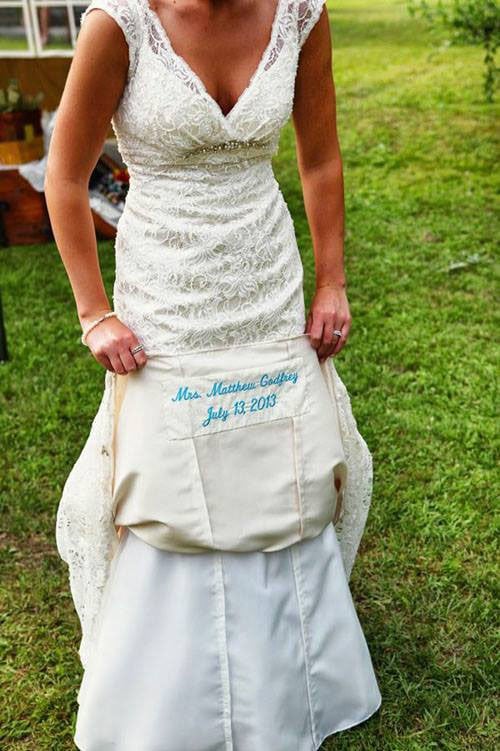
The rhyme started in Victorian-era Lancashire, England — each item was believed to ward off the evil eye or bring specific kinds of luck on the wedding day. The borrowed item was meant to confuse evil spirits into thinking the bride was someone else. The blue was for fidelity. The original rhyme ends with “and a sixpence in your shoe” for prosperity — a detail almost universally omitted today, which tells you something about how traditions evolve.
Nobody explains the evil eye origin at modern weddings. The ritual has survived almost entirely on momentum and the vague sense that it’s something brides are supposed to do. Many do it and love it, particularly when the items are genuinely meaningful — a piece of jewelry from a grandmother, something borrowed from a close friend who’s already married, a detail chosen with real intention. What’s fading is the sense that it’s required, that the day is somehow incomplete without checking all four boxes.
If it resonates for you and the items you choose actually mean something, do it with full intention. If it feels like a last-minute scavenger hunt the morning of the wedding, let it go. A marriage is not made or broken by the presence of something blue.
Best for: Brides who want a ritual that connects them to the women in their family who came before them. When the borrowed item is your grandmother’s ring and the something old is a piece of your mother’s dress, the tradition becomes genuinely moving. When it’s a blue hair tie grabbed from a bridesmaid’s wrist, it’s just a superstition.
15. The Formal Rehearsal Dinner
Traditionally a formal seated dinner hosted and paid for by the groom’s family — at a restaurant or private venue, with a proper menu and assigned seating — the rehearsal dinner has loosened considerably in 2026. Many couples are replacing it with something that actually reflects how they live: a backyard cookout, a pizza-and-wine night at someone’s home, a group booking at a favorite casual restaurant, or an intimate gathering with just immediate family rather than the full extended guest list.
The financial reality has driven a lot of this shift. Rehearsal dinners can approach the per-plate cost of the wedding reception itself for a smaller group, which means many couples are essentially funding two expensive events in two consecutive nights. When the couple is paying for their own wedding, a formal rehearsal dinner can feel like a significant spend for an event that isn’t the wedding.
What the rehearsal dinner is fundamentally for — bringing both families and the wedding party together the night before, releasing some of the tension, and giving the couple a moment to breathe and feel supported before the big day — doesn’t require a formal format to achieve. A relaxed evening where people actually talk to each other often does more for the wedding day atmosphere than a seated dinner with place cards.
Watch out for: Going too casual without communicating it. If out-of-town guests are expecting a dinner and arrive to a casual backyard setup, manage expectations on the wedding website or in a direct communication beforehand. Guests can embrace any format when they know what to wear and when to show up.
16. Asking Permission to Propose
The tradition of a man asking his future bride’s father for “permission” to propose originated in an era when daughters were literally the legal and financial responsibility of their fathers until marriage transferred that responsibility to a husband. It was not a romantic gesture — it was a property negotiation. That origin has not prevented it from persisting, and for some families the conversation has evolved into something genuinely meaningful: not asking permission but honoring a relationship, sharing news before the proposal, expressing respect for the family.
The version that’s becoming outdated is the literal permission-asking — the framing that a father’s approval is a prerequisite for a proposal that involves two adults making a decision about their own lives. It’s also completely heteronormative in its original form and doesn’t naturally accommodate same-sex relationships, couples where the bride is closer to her mother than her father, or any of the blended family dynamics that describe a significant portion of modern families.
Many couples are replacing it with a simple conversation after the proposal — sharing the news personally with key family members before it goes public. Others are doing pre-proposal conversations with both sets of parents, not to ask permission but to share excitement and give family a heads-up. The impulse toward connection and respect is lovely. The specific “asking father for permission” framing is the part that doesn’t translate.
Smart move: If the sentiment matters to you, have the conversation — but frame it as sharing your intentions and expressing love for the family, not as asking for permission to make a decision that’s yours to make.
17. The Veil Over the Face
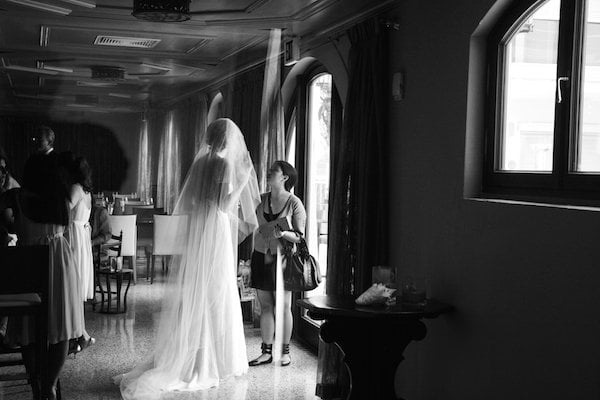
The blusher veil — covering the bride’s face until it’s lifted at the altar — is one of those traditions that divides couples right down the middle. For some brides, the unveiling moment is one of the most powerful of the entire ceremony, and they wouldn’t trade it. For others, it’s impractical (it disrupts hair and makeup, limits visibility, and most brides have already done a first look anyway), slightly symbolic in ways they’d rather not engage with, and more trouble than it’s worth.
The original meaning — covering the bride to prevent the groom from seeing her and backing out before the ceremony was complete, rooted in arranged marriages — is rarely what couples are thinking about today. But the practical issues are real. If you’ve done a first look, covering your face for the processional so your groom can see you “for the first time” again at the altar creates a slightly odd continuity. And if your headpiece is elaborate, adding a blusher on top can make the whole look feel heavier than intended.
Whether you wear one is entirely a personal and aesthetic choice. What’s changing is the sense that not wearing one is somehow incomplete or less traditional. A beautiful cathedral veil without a blusher is fully a veil. A bride without a veil at all is fully a bride.
Pro tip: If you’re on the fence, try it both ways at your hair and makeup trial and take photos. The decision is much easier when you can see it rather than imagine it.
18. Monogrammed Napkins and Personalized Everything
There was a period — peak approximately 2010 to 2018 — when the ideal wedding involved the couple’s initials or wedding date on as many surfaces as possible. Napkins, koozies, glassware, the dance floor decal, the welcome sign, the favor bags, the cocktail stirrers. The monogram was everywhere, and it was supposed to feel personal. What it actually felt like, in hindsight, was a brand identity rather than a celebration.
The personalization trend has not died — it’s evolved. Modern personalization is more specific and less ubiquitous. A custom illustration of the couple’s dog on the cocktail napkins is personal. A custom song lyric printed on the ceremony programs is personal. Twelve items with the same monogram on them is a logo rollout. The difference is the presence of a real story versus the presence of initials.
Guests also don’t take personalized items home. Monogrammed koozies, engraved bottle openers, and custom glassware with someone else’s initials all get left on the table or discarded in the parking lot. If you’re going to spend money personalizing something, spend it on something that tells a story guests will actually want to hear — and ideally on something they can eat before they leave.
Watch out for: The gap between what feels personal to you as the couple and what feels personal to your guests. Your initials feel personal to you. A detail that references something specific about your relationship — a place, a song, an inside reference — feels personal to everyone in the room who knows you.
So, What Actually Matters?
The test for any tradition is simple and worth applying to every item on your wedding timeline: does this add something genuine to our day, or are we including it because it never occurred to us that we had a choice? Most couples who thoughtfully skip traditions they didn’t actually want don’t regret it. Most couples who keep traditions out of obligation without examining why — those are the ones who look back at photos of the garter toss and wonder what they were thinking.
That said, the goal here is not a tradition-free wedding. The exchange of vows, the first dance, the walk down the aisle toward the person you’re choosing — these things are powerful because they’re real moments of genuine emotion, not because they’re obligatory checkboxes. Keep the traditions that move you. Build on them. Let go of the ones that don’t. Your wedding will be better for both decisions.
The weddings that feel most alive are the ones where every element — from the processional song to whether there’s a bouquet toss — was a real decision made by two specific people rather than a default inherited from a template. That intentionality is what guests feel when they walk in, even if they can’t name exactly what’s different. And it’s what you’ll feel when you look at the photos twenty years from now.
Frequently Asked Questions
Which wedding traditions are most couples skipping in 2026?
The garter toss tops the list — The Knot’s 2026 survey found 67% of engaged couples consider it officially out. The traditional bouquet toss, receiving lines, bride-and-groom seating separation, identical bridesmaid dresses, and unity candle ceremonies are all declining significantly. Wedding officiants report unity rituals at fewer than 15% of ceremonies today, down from near-universal just a decade ago.
Is it rude to skip wedding traditions?
No. Traditions are customs, not requirements, and guests almost never notice what’s been left out. They notice what’s there and how the day feels. A wedding shaped by two specific people’s genuine tastes and values will always feel more alive than one assembled from a checklist of expected moments — and that’s what guests remember and talk about afterward.
What’s replacing the traditional guest book?
Signable art pieces that become home decor, Polaroid photo albums with handwritten notes alongside each photo, illustrated maps where guests mark their hometowns, and digital platforms where guests upload photos and messages from the day itself. Any option that actually gets used and revisited after the wedding beats a book of signatures sitting in a cabinet.
Do we have to have a first dance?
No — but most couples who skip it entirely say they wish they’d at least done a short version. The first dance as a couple is one of those genuinely meaningful moments that photographs beautifully and gives the reception a clear emotional opening. What you don’t have to do is sustain it for four minutes under a spotlight. A sixty-second first dance that transitions into opening the floor to all guests creates more energy and less pressure than a formal performance — and it gets everyone dancing faster.
What traditions are still worth keeping in 2026?
Any tradition that genuinely means something to you. The exchange of vows and rings will never be outdated. Walking down the aisle toward your person is still one of the most emotionally powerful moments in a ceremony. Cultural and religious traditions that are authentic to your background add real depth and meaning. The question isn’t which traditions are in or out — it’s which ones you’d actually miss if they weren’t there. That’s your answer.
How do we decide which traditions to keep and which to skip?
Go through your timeline with your partner and ask about each element: would we miss this if it weren’t there? If the answer is a clear yes, keep it. If the answer is “no, but we feel like we should do it,” that’s your cue to let it go. If you disagree on something, that’s worth a real conversation — sometimes a tradition matters deeply to one person and not at all to the other, and there’s usually a way to honor that without forcing either position.
TRENDING NOW: Wedding Etiquette & Advice: What Every Bride Should Know in 2026
Some links in this post may be affiliate links, which means we may earn a small commission if you make a purchase through them. Thank you for your support!




Hello!
As a grandmother with weddings coming up in the family, I found this article interesting and helpful. May I add a couple of items?
If the couple are planning a church wedding, they need to talk to the pastor about everything that will be going on in the ceremony. Just recently, our bishop has thrown out the candle-lighting ceremony. It was never a part of the wedding rite, and doesn’t need to be added. If other bishops have done the same, that could be a reason for the decline in use. But if a couple doesn’t know… they may be preparing for something that can’t be done. The parish may also have a dress code. Not every parish, but it usually comes from something that happened before at a wedding that shouldn’t happen again. A parish may say no bare shoulders or plunging necklines or leg slits that leave little to the imagination. I have discovered that long sleeves is coming back into style. Bridesmaids, too. Modesty is best all the way around. I know there are people, who think you need a simple brunch with the wedding party the day of the wedding so everyone eats–important. Unfortunately, many of these brunches are including alcohol. No! A former pastor was walking from the rectory to the church for a wedding in a couple of hours. The groomsmen were pulling a couple cases of beer from the trunk of the get-away car. One even asked Father if he wanted one! Father was so glad he saw this. If he smelled any alcohol on any of the wedding party, that person(s) would be eliminated from the ceremony. If he smelled it on the bride or groom, the wedding would be off. Need clear-headed consent for a wedding. I know this article is about traditions that don’t fit anymore. But one more thing, please…the veil goes all the way back to Abraham and his tent. His home that also welcomed the stranger. When Jacob and Rachel were married, Rachel wore a veil. Jacob pulled up the veil and covered himself with it so the two were under the veil. It was their own private tent. I really don’t care if a bride wears a veil or not, but the original meaning gets all warped down through history. When the meaning is gone, the tradition fades away. Just be careful what new tradition replaces the old tradition.
Thank you for this really good article.
Cherie
This article makes me very sad. I’m only mid 40’s, not even some 90 year old old fashioned lady. But come on.
People giving up on time honored wedding traditions. The more and more people give up on other traditions, and the closer we get to a time where it’ll just be more and more “elopements”. Pretty soon a real wedding will be something ‘outdated’ and ‘cringy’.
And articles like this that attempt to show different honored traditions as not ‘in style’, ‘not trendy’, or ‘uncomfortable’ is just ridiculous and another step in the wrong direction towards people going ‘oh, well I was going to do this out that bit now that I read that is not cool… I’m not going to’. And it snowballs.
My guest count was 500+ people. If I had a receiving line no one would have eaten.
Every person is different. This list is ridiculous. I had married women try to catch my bouquet.
How about wearing dresses that are made for certain jobs be put on the list? It’s not shut shaming it’s ” ain’t no one wanna see that especially you grandma.”
It’s really up the the bride and groom what they want. Your opinion shouldn’t matter to them at all.
The other reason totally skipped over in regards to asking the father for permission is that rarely is the decision to get married a rational one. She sees him as her answer to everything and completely ignores the potential new husbands serious faults. The father can exercise his Godly duty as protector of his family by vetting potential mate with a calmness, level headed Ness and a neutrality she won’t have
Yuck! According to this article all the fun things are out. Why bother with a wedding if all the traditions are removed? Why bother getting married at all if you don’t believe in tradition? Just shack up!
You have totally missed what a wedding is……..so terribly sad
We went to a wedding for a close rlative where we were not spoken to by either bride or groom. We went to shower and wedding and gave a gift to each. We went to this damn wedding and spent money on a hotel room. I would have rather stayed home and cleaned the bathroom. There’s I also that thing about our time. Forgive me if a receiving line inconveniences the happy couple, but they need to, make it must, greet their guests – all their guests, not just their friends.