
Let’s start with the beige dress.
Is there anything wrong with wearing beige to your son’s wedding? No. But ask a mother of the groom why she picked it and you’ll usually hear some version of “I didn’t want to be in the way.”
Spend ten minutes on a wedding forum and you’ll see why. The mother of the groom is the subject of a lot of vent posts. But when one mom wrote in to thank the brides who had helped her, the reply she got is the one I’d print out: “Mothers and mother-in-laws can get a bad rap here sometimes but there are plenty of considerate, generous ones including you and ours. Unfortunately you just hear more about the problems.”
There is a LOT of room between disappearing and taking over (and the moms who find it are the ones the couple talks about for years, in a good way!). Here are 14 mistakes that start long before the wedding day. For the day itself, we have a separate list of things the mother of the groom should never do on the wedding day.
1. Buying Your Outfit Before Asking About the Wedding
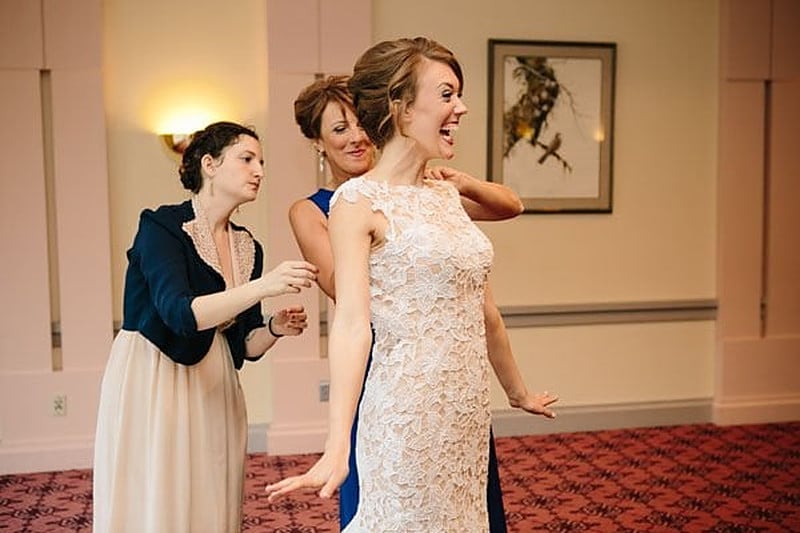
Before you fall in love with a floor-length sequined gown, ask the couple what you’re dressing for. In my planner, my advice to couples about their parents goes like this: “Ideally your parents can pick an outfit that makes them feel fabulous and fit with your vision. To do that, communication is key! They can choose a color that’s complementary to your wedding party, or another color that you/they love. Have them send you a photo of potential outfits or better yet, go shopping with them! This is a great excuse to spend time together during the busy wedding planning process.”
So ask about the dress code, the venue, the season and the colors. Then send a photo before you buy. One mom shopping for a black tie optional wedding posted her pick and got a fast education from the brides: “It looks too casual to me.” And: “For black tie (versus formal), you are looking for a gown in a more luxe material. Think ‘what would I wear to a Hollywood award show or a super fancy fundraising gala.'” The most useful reply said exactly what I would have: “Take pics of you trying on a few and send your favorites to your son or his fiance to ask their opinion, if you’re not sure it fits their dress code.”
Start about six months out. Special orders and alterations take time, and you don’t want to be panic-buying whatever shows up by Friday. (Our favorite mother of the groom dresses are a good place to start looking.)
2. Choosing a Color That Is Almost White

This isn’t the moment to debate whether your dress is “oyster” or “antique pearl.” When I asked Lizzie Post of the Emily Post Institute about guests and pale colors, she gave me the clearest rule I’ve heard:
I do think that a really, really pale pink blushes, violets, lavenders, very pale colors are okay. I would try to choose something a little deeper in hue, not so close to that white, white cream, super pale beige, just why? You’ve got to have a different dress you could wear on this one particular day. If it’s white with flowers or pattern on it, it’s totally fine. The more white it is, the less, I would hope it would look like the wedding… Like a wedding dress.
Lizzie Post, The Emily Post Institute
Some couples don’t care at all, and a few even ask the family to wear white. Great! Just get that yes before you cut the tags.
3. Treating Your Contribution Like a Down Payment on Control
In my planner I tell couples to clear this up early: “If you DO receive any financial contributions, you may want to clarify if there are any assumptions around what that means. For instance, if your parents have offered to pay for a wedding planner, photographer, or even your dress, will they want to have a say in which vendor you choose or style you select? Do they have expectations around how many guests they will be able to invite? It’s best to talk to them about this in the beginning.”
You can save them the awkward ask by saying it first. Lizzie walked me through exactly how this conversation goes: “Your mother pipes up and says, oh, I really want to buy your dress, I just, I want to do that. My dress wasn’t special. I want your dress to be special. That’s the time to say, oh mom, that’s so generous of you to offer. Let me ask you, do you have any thoughts about… Do you need the dress to be your style or are you hoping to just… Do you have stipulation, certain styles, things like that, or is it free rein.”
Here’s what the couple is worried about, in one bride’s words: “I would hate to let her pay for florals at my wedding and then hold it over me or make her feel like now she has the right to comment and judge the other parts of the wedding that she didn’t help pay for!”
Want a say in the flowers? Say so before the check clears. Wedding planner Brooke Avishay of Orange Blossom Special Events told me the cleanest version: “in an ideal world, whoever’s contributing to the wedding will give the couple the funds in the beginning, whatever flat rate it is, and then the couple will start their first joint bank account together with these funds and use it to pay for the wedding so that it’s just streamlined and in one place and someone’s not questioning decisions they’re making about spending.” (We cover the old rules and the new ones in who pays for what in a wedding.)
4. Assuming You Own the Rehearsal Dinner
Traditionally the groom’s family hosted it. Today it can be either family, the couple or some combination, so ask before you reserve the private room for 75. Brooke told me this is actually where planners like to point moms: “A lot of times, we have the moms focus on the rehearsal dinner or the brunch. So they have something to focus on that’s not the wedding, so that the couple can be the ones in charge of making all those decisions.”
If you do host, it doesn’t have to be a second reception. Tacos, pizza, a backyard barbecue, or cocktails and heavy appetizers are all welcoming. (Lots more ideas in our rehearsal dinner guide.)
5. Handing Over Your Guest List Like It’s Final

Your list is a request. Here’s how I explain the math to couples in my planner: “Once you have your ‘dream list,’ you would typically ask each of your parents who they want to invite. Traditionally, parents who are contributing financially get more invites, but in general you would split the guest list count between you and both sets of parents. (IE: If you’re inviting 100 people, you would get 50 then your and your partner’s parents would each get 25.)”
So if the couple gives you 25, treat it as 25. In the same section I tell couples: “Our general rule is if we haven’t met someone in person, they don’t get invited.” Send your list in priority order with full names and mailing addresses, and flag who could move to a second round if RSVPs open up space.
And please don’t tell anyone they’re invited before the couple confirms it. One bride’s email to both sets of parents ended with a line I’d steal: “PS We have a strict guest list based on our ‘budget/venue size’ so please don’t spill the beans before we get ‘save the dates/wedding website/family & friends email’ out.”
6. Competing With the Mother of the Bride
You don’t need to spend the same amount, host the same number of parties or get the same number of assignments. Brides ask about this constantly, and the answer is usually as simple as this reply: “What is your mother wearing? It’s nice for the MOB and MOG to sort of coordinate.” You’re about to be family. Act like it.
7. Sending Ideas Faster Than the Couple Can Politely Decline Them

One venue link is a suggestion. Forty-seven links, three Pinterest boards and a daily “Just a thought…” text is a second job for the couple.
Ask how they want help. Brooke actually looks for ways to include moms who want in: “if I know that their moms really want to be involved, I’m going to try to make my couple’s lives easier and I’m going to make efforts to loop in that mom whenever I can, because I know it’s going to make her feel great. I’m going to invite her to some extra things or tell my couple when they should invite her to some extra things.” Her favorite? The cake tasting, because “a lot of people in this generation of people getting married are not crazy about the wedding cake, but their parents are.”
If they pass on your idea, let it go. When one bride’s future mother-in-law kept calling her ideas dumb, the advice she got was that her fiancé needed to make clear “that her criticizing all your ideas or calling them dumb means that mom will no longer receive any information regarding the plans.”
8. Going Around One Partner to Get the Answer You Want
If your son says no, don’t ask his partner separately hoping for a yes. If his partner answers, don’t call your son to overrule it. The brides on Reddit are blunt about this: “His/her mother = he/she handles mom.” And: “This is on your fiancé to talk to his mother. And if he cannot stand up for you here then expect that he won’t be able to stand up to his mother during your marriage, either.”
Marriage and family therapist Lesli Doares, who I interviewed for my planner, coaches couples to handle exactly this as a unit:
You don’t want to go in and say, ‘Oh my god your mother is like a bulldozer.’ As opposed to, ‘You know, I understand this is important to your mom, but what’s important to us?’ And this is one of the first times you’re really going to set yourself as an official unit.
Lesli Doares, marriage and family therapist
So when you get one answer from the two of them, that’s the answer.
9. Assuming Every Tradition Has to Happen

Traditions are options, not debts. If the mother-son dance matters to you, say so early and help pick the song. Then let them decide.
The reverse is true too. Your traditions may be new to them. When a bride was upset that her future mother-in-law planned a shower without asking, the top reply was this:
One of the most important things to learn when you get married, is to realize that families do not always share the same customs and traditions. Also remember that most things are not done with malice. In her family and social circle, in may be custom for the MOG to host a shower for her family and friends.
a bride on Reddit
Another reply took your side even more directly: “Can you look at it as she is so proud you are going to be her daughter-in-law and wants her friends to meet you? Can you look at it also as a generous thing to do for you?”
10. Making the Getting-Ready Room About You
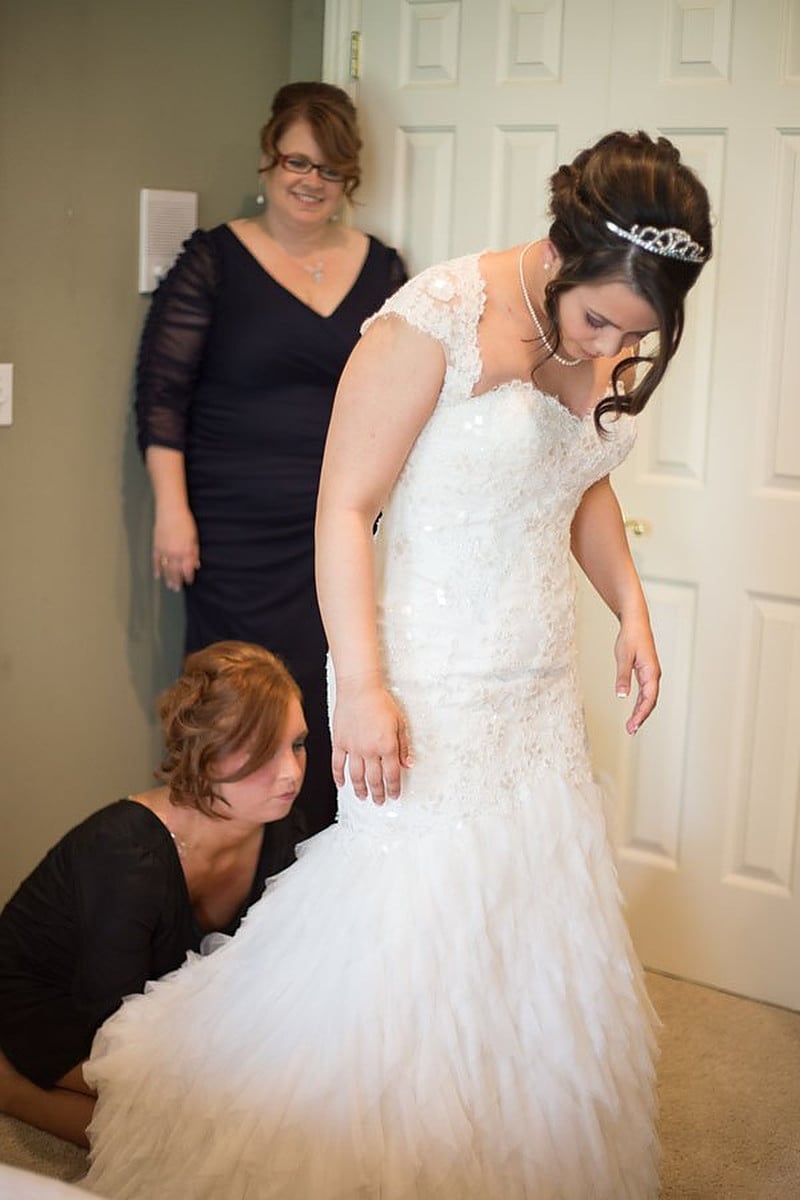
Don’t assume you’re getting hair and makeup with the wedding party or dressing in the same suite. Ask, and then take whatever answer you get gracefully. Brides talk about this decision a lot: “i think as long as you get along well enough, it’s nice to ask. she will be in your life for hopefully the rest of your life, so it’s good to take steps to get closer! if you’re not sure she wants to; you can always say she is welcome to come and go as she pleases (but clarify if she needs to be there certain times for hair/makeup/photos).”
Another bride offered her future mother-in-law the perfect middle: “she can come get her hair and makeup done with us first or second, then go to where her son is to hang out with him and help him get ready.” And one mom on the thread had been on both sides: “My daughter included her MIL in all events, including the day of wedding getting ready. My DIL did the same for me.” If you’re in, be on time with clean hair, and eat something. (Our mother of the groom hairstyles have you covered if you’re doing your own.)
11. Being Missing When It’s Time for Family Photos
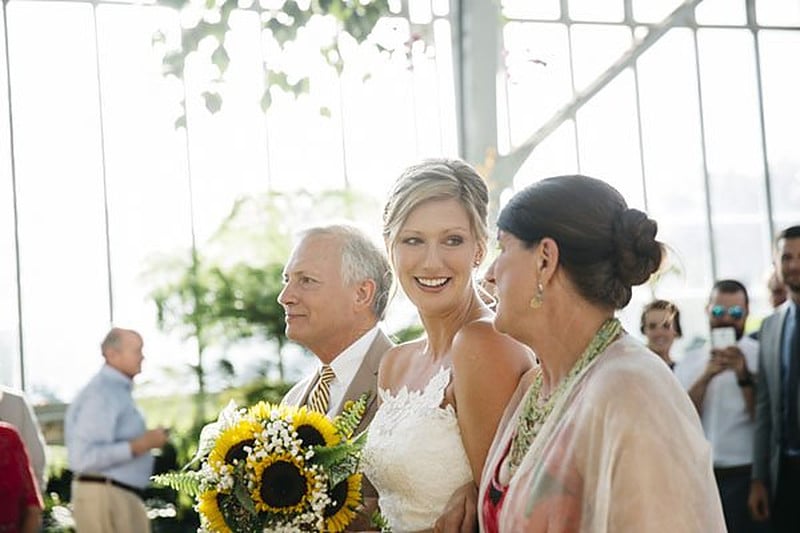
My sample timeline gives family photos 30 minutes. New York photographer Jon Lemon of JC Lemon Photography told me parents are exactly who he’s watching for: “during the reception portion of the evening, the moments that unfold with parents a lot of times is what I’m looking for. And immediate family, when the celebration has really started, all the dancing is happening, you’re focusing on those few people… I know those moments with the parents aren’t going to happen for the rest of the evening. I need to focus on this right now.”
Ask when and where you’re needed, and be standing nearby when your name is called.
12. Giving a Toast That Needs an Intermission

If you’re invited to speak, aim for three to five minutes. In my planner’s sample timeline, toasts get five minutes each, and my checklist tells couples: “For speeches, be sure to provide any guidance on topics to avoid (IE: exes, embarrassing situations, etc.)” He’s getting married, not entering witness protection. (We have mother of the groom speeches that work if you want examples.)
13. Becoming the Day-Of Information Desk
Your son shouldn’t be answering texts about parking while he’s getting dressed. Neither should you. Point your relatives to the wedding website ahead of time, and if there’s a planner or coordinator, that’s who gets the day-of problems. (Our wedding day timeline is a good one to share with them.)
14. Acting Like You’re Losing a Son

You’re allowed to be emotional. But “she’s taking him away” and jokes about being replaced put a shadow over a happy day. When one bride vented about in-laws asking for too much of the wedding weekend, a reply defended them in a way I think every mother of the groom should hear: “they’re probably not malicious in their intentions at all. For them it’s probably just completely normal and natural that you guys would want to spend that time with them.”
So yes, wear beige if beige makes you feel incredible. Just don’t pick it because somebody told you the mother of the groom is supposed to disappear.
Some links in this post may be affiliate links, which means we may earn a small commission if you make a purchase through them. Thank you for your support!