
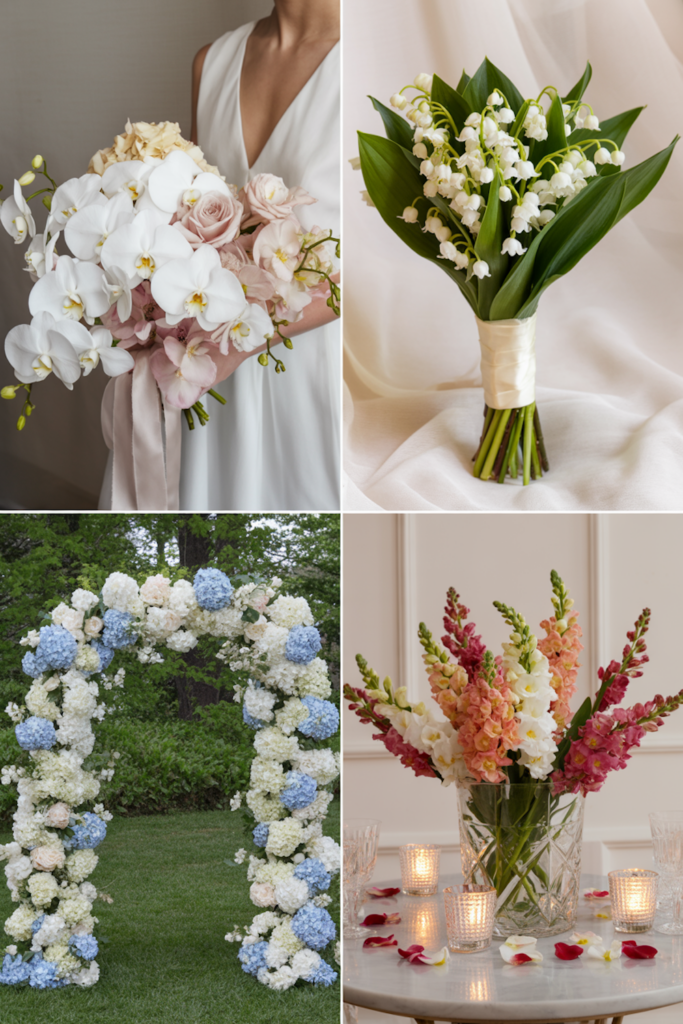
Spring weddings have one major advantage: the flowers are already doing the most. If you’re planning a spring 2026 wedding, this is your season to lean into color, texture, and that fresh “just-picked” look that photographs beautifully.
Below are the most popular spring wedding flowers, how to use each one, a simple cost level (low, medium, high), and color ideas that feel current without being a passing trend. Whether you’re building a bouquet you’ll obsess over or trying to keep centerpieces pretty and practical, this guide will help you choose flowers you actually love and a florist can realistically source.
Spring Wedding Flower Budget Basics (So You Don’t Overbuy)
Wedding flowers can range from a few hundred dollars to “did we accidentally order a greenhouse?” depending on guest count, how many arrangements you need, and which blooms you choose.
If you want the look without the sticker shock, use this formula:
- Pick 1–2 “hero” flowers you’re most excited about (usually the pricier ones).
- Build volume with seasonal supporting blooms and greenery (this is where the value lives).
- Make your ceremony flowers do double duty by moving them to the reception (sweetheart table, bar, escort display).
That’s how you get the “lush” look without paying premium prices for every single stem.
The Most Popular Spring Wedding Flowers (and Exactly How to Use Them)
1) Peonies
Cost level: High
Colors to consider: white, blush, soft pink, coral
Best uses: bridal bouquet, statement centerpieces, ceremony arrangements
Peonies are the definition of spring romance. They’re full, fluffy, and instantly “wedding.” If you love peonies but not the price tag, use them in your bouquet and keep reception arrangements peony-light by mixing in ranunculus, roses, and seasonal greenery.
2) Garden Roses (and Spray Roses)
Cost level: High (garden roses), Medium (spray roses)
Colors to consider: ivory, blush, toffee, peach, dusty rose
Best uses: bouquets, arches, lush centerpieces, bud vase mixes
Garden roses give that layered, ruffled look that feels classic and elevated. Spray roses are the best supporting player for a full, romantic arrangement without going all-in on premium stems. Together, they’re a florist’s “make it look expensive” combo.
3) Ranunculus
Cost level: Medium
Colors to consider: white, blush, butter yellow, orange, burgundy
Best uses: bouquets, boutonnieres, romantic centerpieces
Ranunculus has that soft, layered look people love in peonies, but usually at a more forgiving price point. It works beautifully for spring weddings because it can look airy and delicate or structured and modern depending on the design.
4) Tulips (Including Parrot Tulips)
Cost level: Low to Medium
Colors to consider: white, pink, yellow, purple, orange
Best uses: minimalist bouquets, bud vases, modern centerpieces
Tulips are perfect for a clean, fresh spring look. Standard tulips feel simple and chic. Parrot tulips feel more editorial, with ruffled edges that look incredible in photos. Let them be slightly loose instead of tightly packed so they look natural.
5) Anemones
Cost level: Medium
Colors to consider: white with dark centers, blush, purple
Best uses: bouquet focal flower, modern centerpieces
Anemones are for couples who want romance with contrast. That dark center makes white flowers look sharper and more design-forward, especially in black-tie or modern venues.
6) Sweet Peas
Cost level: Medium
Colors to consider: blush, mauve, lavender, white, peach
Best uses: bouquet movement, delicate centerpieces, bud vases
Sweet peas add softness and a slightly whimsical feel. They’re also great for adding gentle color without making the palette feel loud. If you love a garden-party vibe, sweet peas belong in the conversation.
7) Lilac
Cost level: High
Colors to consider: lavender, purple, white
Best uses: statement branches, ceremony installs, large arrangements
Lilac is pure spring and it smells amazing. It’s also more seasonal and can be harder to source consistently, so treat it like a “featured moment” instead of relying on it for every arrangement.
8) Hydrangea
Cost level: Medium
Colors to consider: white, blue, green, blush
Best uses: centerpieces, ceremony pieces, adding volume
Hydrangea is one of the best ways to get a full look. If you want arrangements that feel abundant, hydrangea helps you get there without using only premium blooms.
9) Stock
Cost level: Medium
Colors to consider: white, blush, lavender, soft yellow
Best uses: tall centerpieces, bouquet texture, ceremony arrangements, they’re also edible so you can use them on your cake!
Stock has a romantic, clustered look and gives arrangements body. It also works well if you want florals to feel classic without being overly formal.
10) Snapdragons
Cost level: Medium
Colors to consider: white, blush, peach, yellow, deeper pinks
Best uses: height, garden-style installs, aisle arrangements
Snapdragons are a simple way to add height and shape. If your venue has high ceilings or outdoor open space, adding vertical flowers keeps arrangements from looking “lost” in the room.
11) Daffodils (Narcissus)
Cost level: Low
Colors to consider: buttery yellow, cream, white
Best uses: cheerful bouquets, casual garden weddings
Daffodils look like spring. If you want a wedding that feels bright and happy, use them as accents in bud vases or mixed arrangements so they don’t overpower the palette.
12) Hyacinth
Cost level: Medium
Colors to consider: white, lavender, pink, blue
Best uses: bud vases, textured centerpieces, spring color pops
Hyacinth adds texture and a sweet, slightly vintage look. It’s an easy way to bring in lavender or blue while still keeping the overall design soft, or keep the flowers simple in white.
13) Hellebores
Cost level: Medium to High
Colors to consider: creamy white, dusty mauve, soft green, deep plum
Best uses: editorial bouquets, modern garden arrangements
If you like florals that feel a bit more “design-y,” hellebores are gorgeous. They work well in modern garden palettes, especially with soft neutrals and greens.
14) Lily of the Valley
Cost level: High
Colors to consider: white
Best uses: bouquet accents, intimate weddings, classic looks
This is a classic luxury flower. It’s delicate and can be pricey, so it’s best used as an accent in bouquets rather than trying to build large arrangements around it.
15) Flowering Branches (Cherry Blossom and Friends)
Cost level: Medium to High
Colors to consider: blush, white
Best uses: ceremony installs, statement centerpieces, entry moments
Flowering branches give instant wow factor. If you want your reception to feel like spring exploded (in a good way), branches create height and drama without needing dozens of centerpiece flowers.
16) Orchids
Cost level: High
Colors to consider: white, blush, green, purple
Best uses: modern luxury arrangements, cascading bouquets, minimalist installs
Orchids are the shortcut to a modern, elevated look. They work especially well in sleek venues, or if you want arrangements that feel less “garden” and more fashion-forward.
Spring Wedding Flower Color Palettes for 2026
If you’re choosing colors, it helps to think in a simple formula: two main colors, one neutral, and greenery. These spring palettes are crowd-pleasers and photograph well:
- Blush + cream + soft green: romantic, timeless, flattering on everyone.
- Butter yellow + white + fresh green: cheerful spring without feeling like a theme.
- Peach + ivory + warm neutrals: candlelight-friendly and slightly modern.
- Lavender + white + sage: soft, airy, garden-party energy.
- White + green (with one contrast bloom): clean and editorial; add anemones or toffee roses.
- Soft blue + white + green: classic spring, especially with hydrangea accents.
How to Get the Most Impact (Without Paying for 10,000 Flowers)
- Make your bouquet the star: If you’re going to splurge, this is the one place it shows up in photos all day.
- Use bud vases: They look pretty and modern, and they’re often more budget-friendly than a full centerpiece at every table.
- Repurpose ceremony flowers: Move them to the reception so you’re not paying twice for separate “big moments.”
- Choose in-season blooms: Spring has plenty of options. Let the season do the heavy lifting.
Frequently Asked Questions About Spring Wedding Flowers
What are the most popular spring wedding flowers?
Peonies, garden roses, ranunculus, tulips, anemones, sweet peas, lilac, and hydrangea are among the most loved spring blooms because they’re naturally in-season and photograph beautifully.
What spring wedding flowers are the most budget-friendly?
Tulips and daffodils typically fall into the low-to-medium range, and hydrangea is a strong value for adding volume. Ask your florist what’s most available in your wedding month for the best pricing.
How do I choose wedding flowers if I don’t know what I’m doing?
Start with your venue and your vibe. Then pick one flower you truly love. From there, your florist can recommend supporting blooms that match your palette and your budget.
Some links in this post may be affiliate links, which means we may earn a small commission if you make a purchase through them. Thank you for your support!


