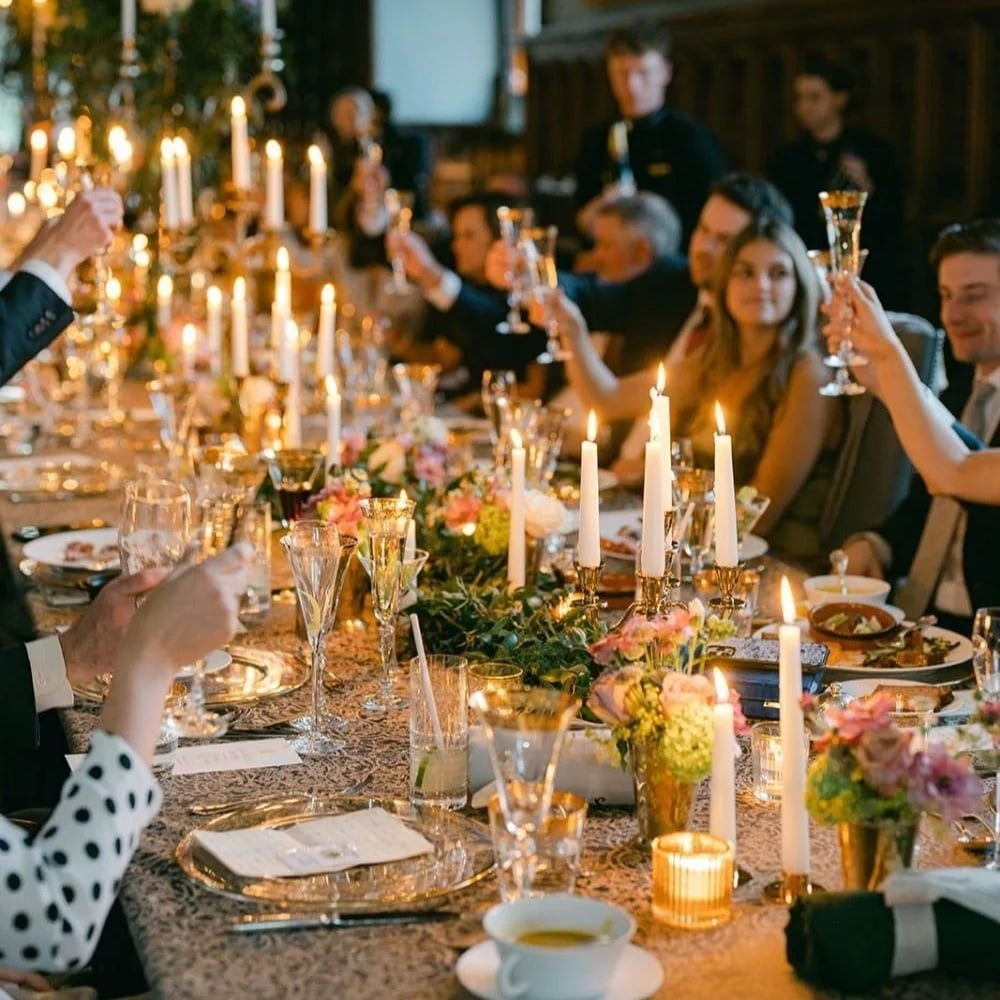
The rehearsal dinner is generally the last thing couples think about and plan for. After months of agonizing over the perfect venue, the ideal flowers, and the best seat assignments, you finally realize the wedding is just three short weeks away, and you still haven’t planned the dinner the night before. So you frantically throw something together, hope everyone knows the proper etiquette, and assume it’ll all fall into place.
And, surprisingly enough, most of the time it does. But the rehearsal dinner comes with a lot of etiquette pitfalls couples underestimate, and the mistakes tend to fall into the same few categories: not realizing who has to be invited, letting it drag on too late, turning it into a mini-reception that overshadows the wedding, or leaving the wrong people off the list and creating a mess you’ll be untangling for years. None of this has to happen. Here’s the etiquette to know before you start planning.
1. Not Knowing Who Actually Has to Be There
There’s a basic list of people who must attend the rehearsal dinner, and it can’t be negotiated: each member of your wedding party along with their partners, both sets of parents, any children in your immediate family, your officiant, and the parents of your flower girls or ring bearers. Any child in the ceremony brings their parents too. Including a partner is mandatory. Inviting a bridesmaid or groomsman without their significant other is an etiquette faux pas, not an oversight. The rehearsal dinner isn’t an optional event for your wedding party, and their partner shouldn’t have to spend the evening before the wedding alone at the hotel.
Beyond that, out-of-town guests are a separate question. A lot of couples feel they should be included, since they’ve spent hours traveling, used vacation time, and have nowhere else to be the evening before the wedding. Traditionally, though, the rehearsal dinner was just dinner for the people in the rehearsal, so including everyone who traveled is a thoughtful modern courtesy rather than a rule.
Many modern couples who can’t swing the extra cost handle it by inviting just the wedding party and their partners to dinner, then opening it up for appetizers and desserts afterward for the out-of-town guests.
Destination weddings make their own rules. If a big share of your guests traveled to be there, you’re generally expected to host some kind of welcome event. It doesn’t have to be a full dinner, but it can’t be nothing.
2. Letting It Go Too Late Into the Night
This is probably the most common complaint wedding professionals and couples report about rehearsal dinners. You’re all together, having fun, making toasts, ordering another round, and suddenly it’s midnight. And in ten hours, you’re getting married. The point of the rehearsal dinner is to set your wedding party up for the next day, not to wreck them.
A reasonable rehearsal dinner ends by 10 p.m. at the latest. If you’re getting married in ten hours, earlier is better. Put a time limit in your venue contract if you need to. Many couples deliberately pick venues that close early, or tell guests dinner ends at a certain hour and mean it. Anyone who wants to keep going can find a local bar. At a minimum, your wedding party should show up on the wedding day looking rested.
There’s a real cost to ignoring this, and it shows up in the photos. A wedding party that’s been up since early appears exhausted by the ceremony and fades through the reception. Whatever you think you saved by ending dinner early, you get back in how everyone looked and felt when it mattered most.
If you can, schedule your rehearsal for Thursday evening instead of Friday. Your guests can stay out as late as they want Thursday, sleep in Friday, and turn up rested for the wedding on Saturday. Scheduling on a Thursday can also lower your venue costs, since Thursdays are usually less in demand than Fridays.
3. Upstaging Your Own Wedding
A key benefit of a rehearsal dinner is its relaxed atmosphere and intimacy compared to your wedding. That was the whole premise behind hosting one, to provide a low-key, intimate setting for your loved ones to mingle, relax, and converse with one another before you begin preparing for the whirlwind that is your wedding. When you start turning the rehearsal dinner into a high-production affair comparable to your wedding, you’ve created an expectation that tomorrow will be difficult to meet, and wasted dollars that could have gone toward your wedding.
You don’t need a florist. You don’t need live music or a DJ. You don’t need intricate centerpieces or a customized multi-course meal. A nice restaurant with a private dining area offering excellent food and an open bar is essentially all you’ll ever need for this event.
According to Zola’s research, the average rehearsal dinner costs anywhere from $55 to $150 per attendee. A tiny fraction of what most couples pay for their wedding receptions. A rehearsal dinner should remain relatively inexpensive, and it should.
Couples wishing their rehearsal dinner to feel special without breaking the bank. If you prefer to celebrate at a favorite restaurant (one that holds sentimental value), odds are it’ll exceed any generic venue attempting to mimic your wedding style on a tighter budget.
4. Skipping the Actual Rehearsal
There exists a rehearsal in “rehearsal dinner” for a reason. Sometimes couples view the rehearsal dinner as merely a pre-wedding celebration and believe everyone will somehow understand how to manage the logistical aspects of conducting your ceremony.
Your officiant needs to know their cues. Your wedding party needs to know where they’re standing during the ceremony, when they need to exit the altar, and at what rate they should proceed down the aisle. Your flower girl needs to know what she’s doing so she doesn’t freeze at the head of the aisle in front of 150 people.
Conducting a full-dress rehearsal (approximately 30-45 minutes depending on your ceremony) will prevent unnecessary confusion on the big day. Do at least two complete dress rehearsals, and make sure anyone playing a specific role (reader, usher, ring bearer) understands precisely what they’re supposed to be doing, and when. Ten minutes of rehearsal can easily differentiate between a smooth-flowing ceremony, versus one in which multiple members of your wedding party are winging it at random points. Then eat!
Provide your officiant with a written timeline outlining what occurs during your ceremony before your rehearsal. It provides clarity and ensures everyone remains on the same page, reducing time-consuming conversations about what happens after various elements within your ceremony.
5. Confusing Who Pays With Who Decides
There’s a large difference in traditional etiquette and modern-day practices concerning the rehearsal dinner. Traditionally, it was expected that the groom’s family would host the rehearsal dinner. But many couples today choose to split the cost between both families or have both families host portions of the dinner. Others still may decide to pay for the entire rehearsal dinner themselves. According to The Knot’s Real Weddings Study, the average rehearsal dinner is approximately $2,700. No matter which method you use, being clear from the very beginning will help prevent future confusion.
It may come as a surprise to many people, but whoever funds the majority of the expense is usually given authority on certain aspects of the event, such as guest count, location, catering choices, and overall tone. So accepting money from another individual or couple for the rehearsal dinner does create an element of shared decision-making whether you realize it or not. The Knot puts it simply: if you want total control over the rehearsal dinner, it’s best to pay for it yourself. Otherwise, you could be entering a negotiation over what happens and who has the say, and it’s better to know that going in than to find out later, after someone has added thirty names to the guest list.
Before any money changes hands, reading our wedding etiquette guide and learning how to discuss finances and other details with families can help avoid potential disagreements throughout the process. This will save much stress and frustration when you reach the end of your planning process.
Failing to agree on the specifics before anyone writes a check. Early in your engagement, discuss the following with any other parties involved: the budget, who determines guest numbers, and who has the final say over the venue.
6. Letting the Speeches Run Unchecked
Toast-making is naturally suited for an evening such as the rehearsal dinner. The environment is intimate; attendees are comprised primarily of those closest to you; and it reduces pressure on your wedding reception timing. Moving speeches from your wedding reception to your rehearsal dinner truly offers advantages for both parties. It allows your guests an opportunity to express sentiments towards you both, prior to being overwhelmed with 200-plus people who may barely know them.
The mistake is letting it become an open mic with no time limit. When every groomsman, college roommate, and both sets of grandparents want a turn, an already-late evening turns into a two-hour speech marathon nobody remembers fondly.
When I talked with wedding planner Brooke Avishay of Orange Blossom Special Events, she pointed to the rehearsal dinner as the right home for all the extra speeches: “A great place to have all of your speeches, all of your friends roasting you, is at the rehearsal dinner.” Her rule for keeping them in check is simple: “Limit the speeches, tell the speakers in advance, make sure that they know it’s five minutes or less.”
Appoint one person (your wedding planner, coordinator, a bridesmaid, or the event manager) to signal speakers when their allotted time expires. Although it’s uncomfortable assigning responsibility for this task, it ultimately proves less unpleasant than observing an enthusiastic uncle deliver remarks for twenty-five minutes while the kitchen waits to serve the entrees.
7. Not Giving Gifts at the Rehearsal Dinner
This is one of those moments in the wedding process where giving gifts makes sense. Most people bring gifts to the wedding party at the rehearsal dinner because they’re thinking about what people are going to be using the very next day (such as jewelry, getting-ready robes, etc.), so it’s both practical and sentimental. It’s why our Smart Wedding Planner puts family and wedding-party gifts right on the rehearsal-day checklist. If you wait until the wedding day, there won’t be as much time to get some enjoyment from your new treasures; there may be fewer opportunities to fix something that requires immediate attention.
Besides the wedding party, this is usually when couples provide gifts to their families and other individuals they wish to recognize formally: stepparents, someone within the family who assisted with coordination, or any individuals who contributed significantly to the wedding day.
It’s completely acceptable to keep the gift-giving informal. Simply providing gifts either before or immediately after dinner could work nicely. But if you elect to skip the gift-giving altogether or delay it until the morning of the wedding when everything is hectic, you’re missing an opportunity to slow down and express gratitude to those individuals who have supported you. Presenting gifts during dinner, instead of stopping everything to make everyone watch, keeps the moment from feeling staged, and those receiving them will appreciate the gesture more.
Bring any gifts that require assembly, sizing, or customization to the rehearsal dinner with enough time to address issues. A bridesmaid necklace that doesn’t fit or an engraved flask with a spelling error is much easier to fix Thursday night than Saturday morning.
8. Asking Guests to Pay for Themselves
Wedding etiquette experts tend to agree that asking guests to pay for their meals at a rehearsal dinner is generally considered impolite. Your wedding party is required to participate in the rehearsal and can’t opt out of attending like they might at other pre-wedding events. Although budgets vary greatly among couples, it’s unreasonable to expect your wedding party to pay for attendance.
If having a seated dinner is financially unfeasible, scale back your plans, not your guests’ expenses. Holding a pizza and drink gathering at someone’s house, a casual backyard barbecue, or ordering food at a local bar are all acceptable ways to provide a fun and relaxed rehearsal dinner experience. But if you’re planning to seat people at a restaurant and then divide the bill among them, you’re not providing a suitable environment for either your wedding party or your guests.
As one WeddingWire forum commenter put it, rather than making your wedding party pay for your event, it’s better to skip the rehearsal altogether. This point hurts because it muddles the line between hosting versus inviting. A rehearsal dinner is something you’re hosting, so the cost associated with it is something you’re responsible for managing and arranging for your guests. Reduce your costs and nobody has to do math at the table.
Budget-friendly couples. A casual and delicious backyard dinner is more enjoyable than an awkward restaurant setting where no one is sure who’s footing the bill. Casual is always fine. Guests paying for their own meals is never.
9. Forgetting to Feed People Between the Rehearsal and Dinner
Typical rehearsal ceremonies last anywhere from 30-45 minutes. Following the ceremony, guests travel to the dinner location. Upon arrival, most guests spend time milling around while the tables are being set up. By the time food arrives at the table, it’s been 2-3 hours since guests have eaten. Hungry wedding party members equal cranky wedding party members. The energy surrounding a rehearsal dinner differs depending on whether guests have had time to eat and are energized during the first part of the evening.
To fix this, simply provide food immediately after guests arrive. Examples include a charcuterie board, a cheese platter, passed appetizers, or anything else that allows guests to snack while formalities are taking place. This also establishes a more sociable atmosphere than having guests wait for everyone to be seated. If you’re dining at a restaurant, ask about possible appetizer options available during cocktail hour while your private room is being prepared.
The reason this issue tends to fall through the cracks is that there’s no defined timeline. There’s a starting time for the rehearsal and a starting time for dinner. The space between those times (time spent traveling to the dinner location, getting parked, etc.) is where guests become increasingly hungry and slightly irritable. Provide for this window of time and the problem will disappear.
Scheduling your rehearsal during peak dinner hours and failing to account for adequate travel time to your dinner destination. If your rehearsal ceremony finishes at 6:30 PM and your dinner location is across town, your guests will likely be hungry by 7:15 PM when they arrive and won’t receive any food until 7:45 PM when the kitchen begins serving. Leave sufficient time, or consider bringing snacks to your rehearsal ceremony.
10. Treating It Like an Afterthought
A rehearsal dinner provides the first opportunity for both sets of parents to meet each other’s extended families. Many couples view it as the night their parents meet each other’s extended families, their college friends meet their childhood friends, and so on. First impressions are made here. That’s not nothing!
You don’t have to treat it as though it were a second wedding. But putting some thought into it (choosing a venue that holds special significance for you or one of your families, thanking those in attendance with a heartfelt speech, allowing a brief pause to enjoy each other’s presence before moving forward with preparations for the big day) can make this evening feel deliberate rather than routine.
Couples who look back fondly on their rehearsal dinner are nearly always couples who were able to slow down enough to appreciate what was happening in front of them (not rushing through the evening thinking about every detail that needed to be taken care of before their wedding).
Write a toast for your rehearsal dinner yourself! Express gratitude for those specifically present rather than expressing generic gratitude. Preparing a toast takes roughly 10 minutes but creates an unforgettable moment for your wedding party.
What It Really Comes Down To
The purpose of a rehearsal dinner is quite simple: gather your close loved ones, feed them well, and allow them to relax in anticipation of tomorrow. All other issues (venue selection, speeches, flowers, budget) should support this goal. Mistakes that result in disastrous rehearsal dinners generally stem from becoming sidetracked by other concerns: late timing, excessive spending, inviting the wrong group of people, or failing to run the actual rehearsal.
Casual, concise (keep it under an hour), feeding guests well, acknowledging those in attendance publicly, and ensuring everyone retires at a reasonable hour are all the essential components for a successful rehearsal dinner.
Also Read:
The Ultimate Wedding Planning Checklist
Wedding Etiquette and Advice
How Much Does a Wedding Cake Cost?
Some links in this post may be affiliate links, which means we may earn a small commission if you make a purchase through them. Thank you for your support!