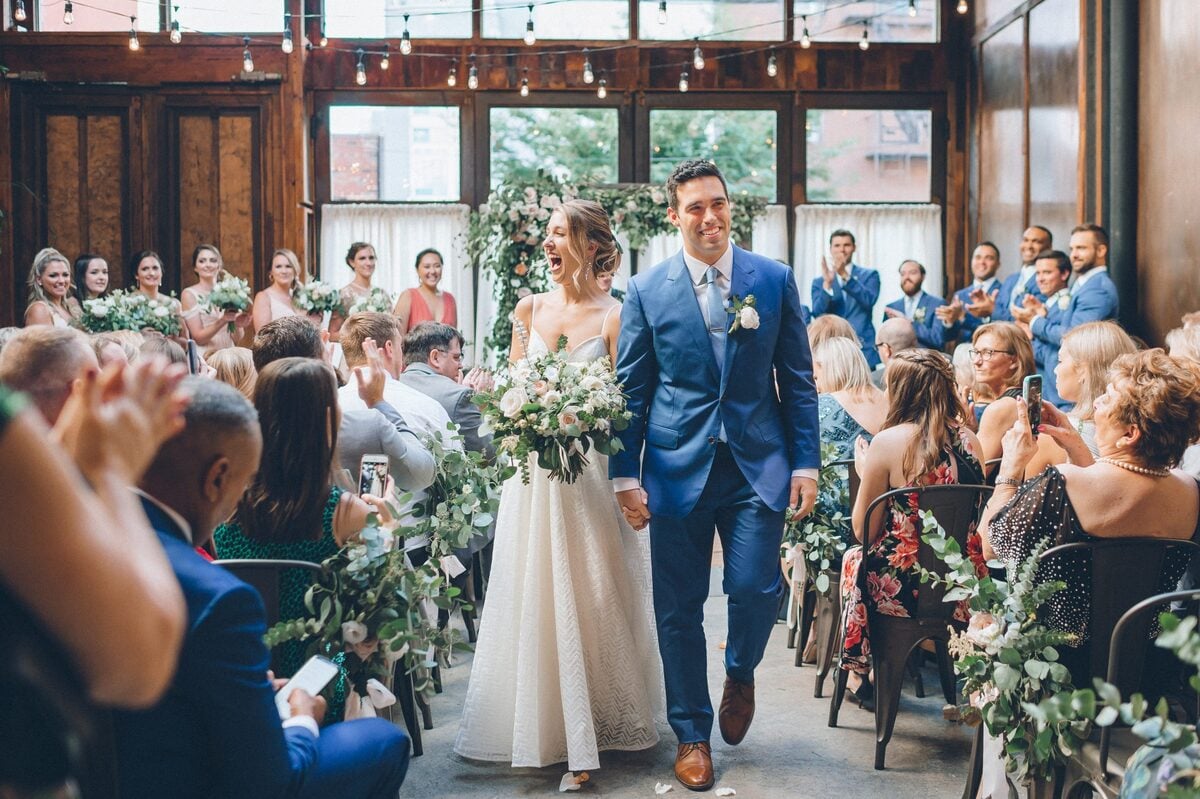
You have spent months deciding between ivory and cream, agonizing over centerpiece height, and Googling whether pampas grass is still acceptable in 2026. Meanwhile, your guests are going to walk in, find a seat, and immediately notice that they can’t hear anything and have no idea where the cocktail hour is.
That’s not a dig — it’s just how it works. The details that consume brides during planning are rarely the ones guests actually register on the day. And the things guests notice most are almost never the things getting pinned to inspiration boards. According to a study by The Knot, only 38% of guests said flowers and decor were among the top things they noticed at weddings in 2024. Food? 73%. Music? 57%. The gap between what brides plan for and what guests experience is real, and it’s worth knowing about before you finalize where to put your budget and attention.
Here are the ceremony details your guests will notice — most of which have nothing to do with your color palette.
1. Whether They Can Actually Hear the Vows
This is the one guests talk about most, and the one couples think about least. If your ceremony is outdoors, in a large open space, or in a venue with high ceilings and hard surfaces, your officiant’s voice is going to bounce around or disappear entirely without a microphone. Guests in the back rows — which is often where the older relatives end up — will spend your entire ceremony politely pretending they can hear you when they cannot.
Sound equipment is not glamorous and it does not photograph well. It also doesn’t show up on mood boards. This is exactly why it gets skipped. Don’t skip it. A lapel mic on your officiant and wireless mics for the vows is a relatively small cost compared to most ceremony line items, and it’s the thing that determines whether your guests actually experience your wedding or just watch it happen from a distance.
Smart move: Do a sound check before guests arrive. Walk to the back row yourself and have someone speak into the mic at normal volume. If you can’t hear it clearly, your guests won’t either.
2. How Long the Ceremony Actually Runs
Wedding planners and officiants consistently say the same thing: the ideal ceremony length is 20 to 30 minutes. Guests can stay emotionally present and genuinely moved for about that long. Beyond 45 minutes, you start losing people — not because they don’t love you, but because they’re sitting on a chair in formal wear and they’ve been holding their breath through three readings they didn’t fully understand.
The ceremonies that go long are almost never long because of the vows. They’re long because of extra readings, extended musical interludes, complicated rituals without context, or officiants who treat the ceremony as a chance to tell the couple’s entire love story. Your guests already know and love you. They came to watch you get married, not to hear a fifteen-minute recap of how you met at a pottery class.
Watch out for: Officiants who haven’t been given clear guidance on length. Ask yours specifically: how long will this run? If the answer is vague, have a direct conversation about what you want included and what you want cut.
3. The Gap Between Ceremony and Cocktail Hour
Here’s what your guests experience while you’re off taking photos: they’re standing around in formal wear, possibly in the heat or cold, not entirely sure where to go, waiting for something to happen. If that gap runs longer than 30 minutes with no plan for them, it’s the detail they’ll remember — not your ceremony arch.
The solution is simple but requires actually thinking about it in advance. Cocktail hour should open immediately after the ceremony ends, in a space guests can easily find. If there’s going to be a wait — shuttles, photos running long, venue logistics — tell someone to tell them. A brief announcement from your day-of coordinator, a note in the program, or even a sign that says “Cocktail hour begins at 5:30 in the garden” does the job. Guests can handle a gap. They can’t handle not knowing what’s happening or where to go.
Pro tip: If your photo session is going to keep you away from cocktail hour for a while, consider having a welcome drink ready the moment guests move from ceremony to cocktail space. Something in their hand immediately changes the experience.
4. Whether There’s Somewhere Comfortable to Wait
Guests arrive early. This is a fact of weddings that never changes regardless of what time you print on the invitation. The 20 to 30 minutes before a ceremony starts — when guests are milling around before being seated — is something almost no one plans for, and guests notice immediately whether it feels intentional or like they’ve arrived at a venue that isn’t ready for them yet.
A shaded area, a few seats, some ambient music, and ideally a small welcome drink or water station transforms that waiting period from awkward to pleasant. It doesn’t have to be elaborate — it just has to exist. Guests who feel welcomed and comfortable from the moment they arrive carry that feeling into the ceremony. Guests who’ve been standing in the sun for twenty minutes with nowhere to sit carry that feeling in too.
5. The Temperature of the Ceremony Space
If your ceremony is in August and your guests are sitting in direct sun on dark wooden chairs, that is what they will remember. Not your vows. Not your dress. The heat. The same applies in reverse — a February ceremony in a drafty barn with no heating solution means your guests are focused entirely on being cold rather than on anything you’ve said or done.
Temperature is one of those things that feels like a logistics detail but is actually a hospitality decision. Outdoor summer ceremonies need fans, shade, cold water at the entrance, and a realistic awareness of how long guests can sit in direct sun before it becomes miserable. Outdoor winter ceremonies need heat lamps, blankets on seats, or a genuinely warm indoor alternative. Your guests will be far more emotionally present if they’re physically comfortable.
Smart move: Visit your ceremony space at the same time of day your wedding will take place, at a similar point in the season. Sit in a chair for ten minutes. If you’re uncomfortable, your guests will be too.
6. Whether the Officiant Knew You
Guests can tell within about two minutes of a ceremony starting whether the officiant actually knows the couple or is delivering a generic script with your names filled in. It’s one of the most noticed — and least discussed — ceremony details. A ceremony that feels personal and specific to you as a couple creates an emotional experience guests carry with them. A ceremony that could have been written for anyone creates pleasant background noise.
This doesn’t mean you need a friend or family member to officiate. It means that whoever is officiating should have spent real time with you — learning how you met, what matters to you, what your relationship actually looks like — and should weave that specificity into what they say. If you’re working with a professional officiant, ask to see sample ceremonies and ask specifically how they personalize their services. A good one will ask you a lot of questions. A generic one won’t.
Best for: Couples who want guests genuinely moved rather than just present. A personal ceremony is one of the highest-impact, lowest-cost upgrades you can make to the whole day.
7. Seating Confusion
Reserved rows with no visible signage. Ushers who don’t exist. No clear indication of whether guests should seat themselves or wait to be guided. Seating confusion sounds minor until you’ve watched fifty people cluster at the entrance of a ceremony space for four minutes, all silently waiting for someone to tell them what to do.
If you have reserved rows — for immediate family, for elderly guests, for anyone — mark them clearly. A small reserved sign on the aisle seat is all it takes. If you’re doing open seating with a “choose a seat, not a side” approach, a sign or note in the program helps guests understand that quickly rather than spending the first five minutes worrying they’ve sat in the wrong place. And if you’re having ushers, brief them properly on who goes where and what to do when someone arrives late.
8. Whether the Ceremony Started on Time
Guests who arrive on time and then wait 25 minutes for a ceremony to start notice. It’s not that anyone is going to hold it against you — weddings run late, everyone knows this — but guests who’ve sat in their seats for half an hour before anything happens are already slightly less emotionally primed than guests who came in, sat down, and experienced a ceremony that started within a few minutes of when they expected it to.
If you know your timeline is going to run late, have someone communicate that to seated guests. “We’re going to get started in about ten minutes, thank you all for being here” goes a long way. Silence and uncertainty are what actually frustrate people, not a ten-minute delay. And if you’re consistently running behind during the getting-ready portion of the day, build in a buffer — starting fifteen to twenty minutes behind your printed time is one thing, starting forty-five minutes late is something guests will talk about on the drive home.
Watch out for: Printing a time on your invitation that is earlier than your actual start time without telling anyone. Guests who arrive at what they think is the start time and then wait 45 minutes feel the delay twice as much as guests who simply know to expect it.
9. The Music During the Processional
Not which song you picked — whether they could hear it, whether it fit the moment, and whether the timing worked. Ceremony music is something brides spend a lot of time selecting and then often under-invest in executing. A processional that starts too early, cuts out mid-aisle, or is barely audible through a single Bluetooth speaker is one of those details that guests notice not because they’re critical, but because it disrupts the emotional build of the moment you’ve both been working toward.
Live music during the processional consistently lands differently than recorded music — even something simple like a single guitarist creates a presence that recorded tracks rarely match. If live music isn’t in the budget, make sure your sound system is doing its job properly, that someone is managing the volume levels, and that whoever is cuing the music knows exactly when to start and when to fade. This is a job for a specific person with a specific brief, not a general “someone handle the music” instruction to a bridesmaid.
10. Whether They Knew What Was Happening
This is the overarching one that covers everything else. Guests who are oriented — who know where to go, what’s about to happen, and what comes next — are relaxed guests. Relaxed guests are present guests. Present guests are the ones who cry at your vows, laugh at the right moments, and leave saying it was the best wedding they’ve been to in years.
A simple ceremony program does most of this work. It tells guests who’s in the wedding party, what order events will happen in, whether there are any participation moments (a unity candle, a ring warming, a responsive reading), and what comes next after the recessional. It doesn’t have to be elaborate — even a single folded card covers the basics. Guests who’ve been to a lot of weddings can navigate uncertainty. Guests who haven’t appreciate being told what’s coming.
Pro tip: If you’re doing anything in your ceremony that guests might not be familiar with — a cultural tradition, a non-standard ritual, a participation moment — a brief line in the program explaining it makes the difference between guests feeling included and guests feeling confused.
So, What Actually Matters?
None of the things on this list are about spending more money. Most of them are about paying attention to the experience of being a guest at your wedding — which is a perspective that’s genuinely hard to maintain when you’re the one planning it. You’re thinking about how things look. Your guests are thinking about how things feel: whether they’re comfortable, whether they know what’s happening, whether they can hear you, and whether the ceremony felt like it was really about you.
The centerpiece flowers and the chair style and the exact shade of ribbon on the programs — those things matter to you, and that’s fine. But if you’ve been deciding between two napkin folds for three weeks and haven’t thought about your sound system yet, now’s the time to reorder the list.
Frequently Asked Questions
What do wedding guests notice most during the ceremony?
Sound quality, ceremony length, and whether the officiant seemed to genuinely know the couple are consistently the most commented-on elements. Guests who can hear everything and feel emotionally connected to the ceremony come away with a completely different experience than guests who spent 45 minutes straining to catch the vows from the back row.
How long should a wedding ceremony be?
20 to 30 minutes is the widely recommended sweet spot — long enough to feel meaningful, short enough to keep guests emotionally engaged throughout. Religious or cultural ceremonies may run longer for legitimate reasons, but if yours is extending past 45 minutes primarily because of optional additions, it’s worth reviewing what can be trimmed.
Do guests care about ceremony decor?
Less than most brides expect. According to a Knot study, only 38% of guests listed flowers and decor as among the top things they noticed at weddings. They care about comfort, sound, music, food, and how the overall day felt. Decor contributes to atmosphere, but guests are unlikely to remember the specific arrangements — they’ll remember whether the ceremony felt warm and personal.
What’s the most overlooked ceremony detail?
Sound. By a significant margin. Outdoor ceremonies especially are frequently planned with no microphone or an inadequate speaker setup, and guests spend the most important 20 minutes of the day either missing the vows entirely or leaning forward straining to catch them. It’s an easy fix that almost never makes it onto the priority list because it doesn’t show up in photos.
Also Read:
Wedding Venue Red Flags Guests Notice Immediately
The Ultimate Wedding Planning Checklist
Wedding Etiquette and Advice
Some links in this post may be affiliate links, which means we may earn a small commission if you make a purchase through them. Thank you for your support!