Some wedding splurges are pure nonsense. Other splurges are the reason your wedding feels expensive, runs on time, and looks incredible in photos—even if you’re otherwise living on ramen.
This list is the latter. These are the 21 things that actually change the experience: for you, for your guests, and for the “wait, why does this wedding feel so good?” factor. Not every item will apply to every wedding. But if you’re deciding where to put real money, these are the places where you’ll feel it.
And yes: you can do most of these without ballooning your budget—if you spend intentionally and skip the fake “luxury” extras that don’t move the needle. (If you want the companion piece on what to cut, bookmark your own “splurge vs. save” guide for later.)
1) A photographer whose work you love (not just someone who’s available)
If you’re going to splurge on anything, make it the person documenting the whole day. Your photos are the only thing you’ll open a hundred times. And the difference between “nice photos” and “oh my god, that’s us” is usually the photographer’s eye—lighting, composition, and timing—not the camera.
Do it smart: book fewer hours if you need to, but don’t downgrade talent. A great photographer for 6–8 hours beats an okay photographer for 10. If your budget is tight, prioritize ceremony through the first hour of dancing—the part you’ll actually want documented.
Also worth it: an engagement session if you’re nervous on camera. It’s basically rehearsal for your wedding photos.
Are you overspending on your wedding? This 60-second quiz will tell you.
Most brides go into planning with a number in their head and no idea where it's actually going. Enter your budget and guest count, and get a clear picture of exactly where your money is at risk, what you're most likely to overspend on, and where you can cut without anyone noticing.
What matters most to you?
Every vendor will tell you: unless you have an unlimited budget, you HAVE to prioritize. Tell us what matters most to you so your results are specific to YOUR wedding — not some generic checklist.
Your budget has a blind spot.
What’s inside your results
📊Your budget score & #1 blind spot
⚠️Your biggest pressure point
💡Where you’re most likely to overspend & save
💰Your recommended budget breakdown
No spam. Unsubscribe any time.
2) A videographer (if you care about voices, not just photos)
Photos capture how it looked. Video captures how it sounded: your vows, your people, the toasts, the way the room reacted. If you’re a sentimental person, video is the splurge you’ll thank yourself for later—especially once grandparents, parents, and beloved friends aren’t at every future milestone.
Do it smart: you don’t need a cinematic feature film. Ask for a tight highlight film + full ceremony + full toasts. That’s the gold. If you can only do one, pick full ceremony audio/video.
3) A planner or day-of coordinator who actually runs the show
Here’s what you’re really buying: a calm wedding. Someone to manage vendor arrivals, timeline drift, family chaos, and the million tiny decisions you should not be making in heels.
Do it smart: if full planning isn’t in the cards, hire a month-of or day-of coordinator. The handoff is magic. Your wedding stops being a project and becomes… a wedding.
Pair it with a solid checklist/timeline so nothing falls through the cracks.
4) A venue that does logistics for you
Venues are expensive because they’re infrastructure. The more a venue includes (chairs, tables, bathrooms, power, staffing, setup time, rain plan), the less you’ll bleed money on rentals, deliveries, and “wait, we have to rent WHAT?” surprises.
Do it smart: compare venues using the real total: venue fee + required catering + rentals + overtime. Some “cheap” blank spaces are budget traps because you end up building a wedding from scratch.
5) Great food that feels like a meal (not a mystery)
Guests will forget your linen color. They will never forget being hungry.
Do it smart: spend on quality and flow, not “fancy-sounding” menu language. Make sure there’s enough food during cocktail hour and that dinner starts on time. If you’re choosing between “extra passed apps” and “custom napkins,” pick the apps. Always.
6) An open bar that feels easy and intentional
You don’t need premium everything. You need a bar that doesn’t create a line, doesn’t run out, and doesn’t make guests do mental math all night.
Do it smart: do beer/wine + two truly good signature cocktails. Or do a limited open bar with a clear menu. Your guests want simple, fast, and decent. They’re not judging your vodka brand like it’s a tasting panel.
7) Real music (DJ or band) that keeps the room alive
The right music is the difference between “everyone danced” and “everyone politely hovered.” This is the splurge that changes the energy of the entire night.
Do it smart: invest in someone who can read a room. Also: sound matters. A great DJ with a weak sound setup is still a letdown.
If you’re trying to save on music in one area, cocktail hour is the place to do it.
8) Lighting that makes everything look expensive
Lighting is the cheat code. It makes florals look richer, skin look better, rooms look warmer, and photos look more editorial. If you want “luxury” without buying more stuff, buy the lighting.
Do it smart: prioritize warm uplighting + candles (or candle alternatives if your venue requires it). Then add a few high-impact moments: a lit entry, a lit dance floor, a lit sweetheart/head table background.
9) Ceremony florals designed to move (and reused at the reception)
This is a splurge that’s secretly a budget strategy. Instead of buying two sets of “wow,” build your biggest pieces once, put them behind you for the ceremony (photos!), then move them to your sweetheart/head table, bar, entry moment, or cake table.
Do it smart: skip a full floral arch unless you truly have “I don’t care” money. Do grounded statement pieces or a lush “meadow” that’s made to move and split. You get the same impact, but your florist isn’t building something that dies after 20 minutes.
10) A reception focal point that shows up in half your photos
If you splurge on florals anywhere, do it where cameras live: behind the sweetheart/head table, at the entry moment, or at the bar if that’s where everyone congregates.
Do it smart: one hero moment is better than ten scattered ones. Make one area feel intentionally styled, then keep everything else clean and consistent.
11) Comfortable chairs (yes, really)
This one isn’t sexy. It’s just true. Bad chairs make guests miserable, and they’ll spend more time standing awkwardly (or leaving early) than enjoying your dinner and speeches.
Do it smart: if your venue chairs are awful, upgrading can be more impactful than upgrading your linens. Your guests will feel it immediately.
12) Assigned seats (not just assigned tables)
Assigned seats are an “elevated” move because they remove chaos. Dinner starts faster, people stop doing the awkward “is this taken?” shuffle, and your room feels calmer.
Do it smart: keep the escort display simple and legible. Guests don’t want to hunt. They want to find their seat and get a drink.
If you want something pretty that still works, steal a place card idea here. Or go full practical with these seating plan tips.
13) Transportation that eliminates variables
Transportation is one of those costs that spikes when the plan is unclear. If you’re going to spend here, spend on clarity: one clean plan that runs on time, with as few moving pieces as possible.
Do it smart: if most guests are local (or staying nearby), consider telling guests to use rideshare instead of running a complex shuttle loop. Shuttles are best when the venue is remote, parking is limited, or drinking + driving is a real concern. Otherwise: designate one pickup point, publish exact times, and keep the route simple.
If you want a reality check on what transportation can cost, start here.
14) A professional hair and makeup team (for the key people)
This is worth it for photos and confidence. The goal isn’t looking “done.” It’s looking like yourself on your best day, under heat and camera flash, for hours.
Do it smart: prioritize the bride + a few key people, and let everyone else opt in. Build enough buffer time so you’re not racing the clock.
15) A trial run for anything that can go wrong
Hair trial. Makeup trial. Dessert tasting. Timeline walkthrough. The money you spend here buys peace—because the wedding day is not the time to discover your lashes hate humidity.
Do it smart: schedule trials in lighting similar to your wedding (daytime vs. evening), take photos in natural light, and wear something close to your wedding neckline so you can see the whole look.
16) A good officiant (not a random person reading a template)
A great officiant sets the tone. They make the ceremony feel warm, personal, and not painfully long. If you’ve ever sat through a ceremony that felt like a corporate training, you already understand why this matters.
Do it smart: ask for a draft. Ask how they personalize. Ask how long the ceremony typically runs. You want “tight and meaningful,” not “we’re all sweating and checking the time.”
17) A cocktail hour that feels like a party
This is where your wedding either feels effortless or starts to feel messy. Guests need: a clear place to go, something to drink, something to eat, and enough seating so they’re not hovering like they’re waiting for a bus.
Do it smart: add one “experience” element: a great passed bite, an espresso martini moment, a raw bar, a fun station. One. Not five.
18) A dance floor (that doesn’t fail you)
If your venue needs a dance floor rental, don’t cheap out. Bad dance floors look cheap, feel unstable, and kill momentum. A solid floor keeps the party going and keeps people from slipping (aka: the least cute wedding story).
Do it smart: if you want a statement (checkerboard, custom wrap), do it only if the basics are handled: size, stability, and setup timing.
19) A late-night bite that feels like a reward
Late-night food is the fastest way to keep energy up—especially if you’re doing a longer reception. It also becomes a “remember when…” moment, which is what you want from a splurge.
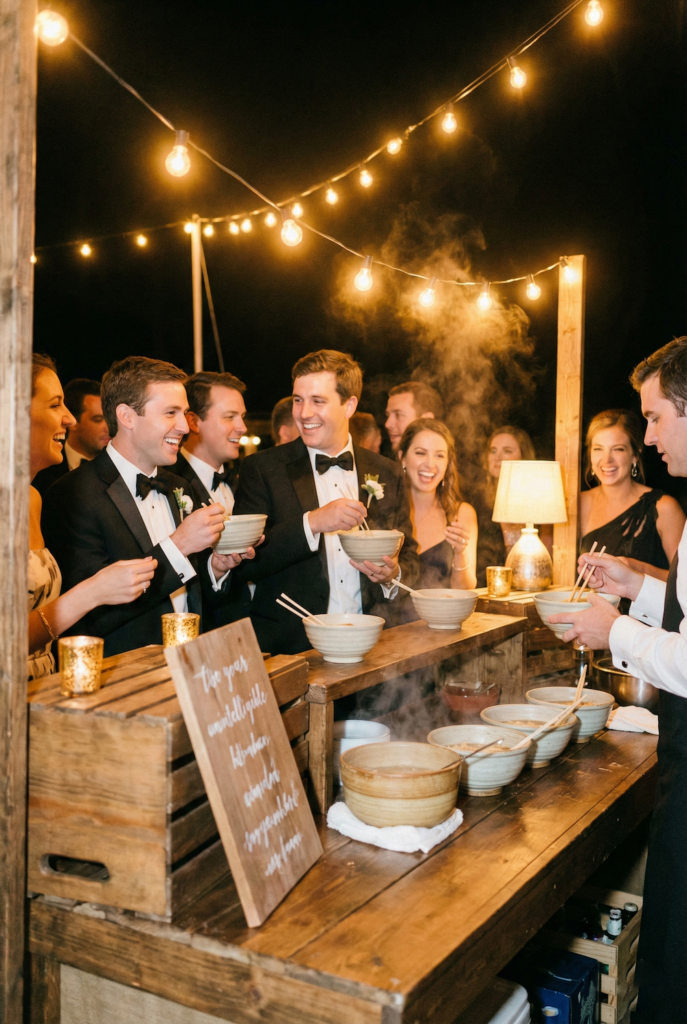
Do it smart: choose something easy to eat while standing up: pizza slices, sliders, tacos, fries, dumplings, ramen cups. Serve it 60–90 minutes after dancing starts. That’s the sweet spot when people suddenly realize they’re starving again.
20) Sound checks and audio for toasts + vows
Nothing ruins a moment faster than nobody being able to hear it. If you’re doing heartfelt vows or meaningful toasts, invest in clean audio and a quick sound check. This is the “small” splurge with a massive payoff.
Do it smart: test microphones before guests arrive, and make sure the officiant knows how to use theirs. (You’d be shocked how often this is the failure point.)
21) Guest comfort extras that actually get used
This is the “great host” splurge. Not the overproduced, overly themed stuff—just the basics that make people feel cared for: water available all night, clear signage, shade if it’s outdoors, fans if it’s hot, blankets if it’s chilly, and enough bathrooms so nobody spends half the night in line.
Do it smart: buy fewer things, but make them real. A real water station beats cute signage about hydration. A real plan beats a “vibes” timeline.
Bottom line
If you’re going to spend, spend where it changes the day: the photos, the comfort, the flow, the energy, the memories. That’s what makes a wedding feel expensive—whether your budget is $12k or $120k.
And if you want to keep your spending sane while still getting the “wow,” revisit your own guide here: Wedding Budget: Splurge vs. Save.
Are you overspending on your wedding? This 60-second quiz will tell you.
Most brides go into planning with a number in their head and no idea where it's actually going. Enter your budget and guest count, and get a clear picture of exactly where your money is at risk, what you're most likely to overspend on, and where you can cut without anyone noticing.
What matters most to you?
Every vendor will tell you: unless you have an unlimited budget, you HAVE to prioritize. Tell us what matters most to you so your results are specific to YOUR wedding — not some generic checklist.
Your budget has a blind spot.
What’s inside your results
📊Your budget score & #1 blind spot
⚠️Your biggest pressure point
💡Where you’re most likely to overspend & save
💰Your recommended budget breakdown
No spam. Unsubscribe any time.
Some links in this post may be affiliate links, which means we may earn a small commission if you make a purchase through them. Thank you for your support!