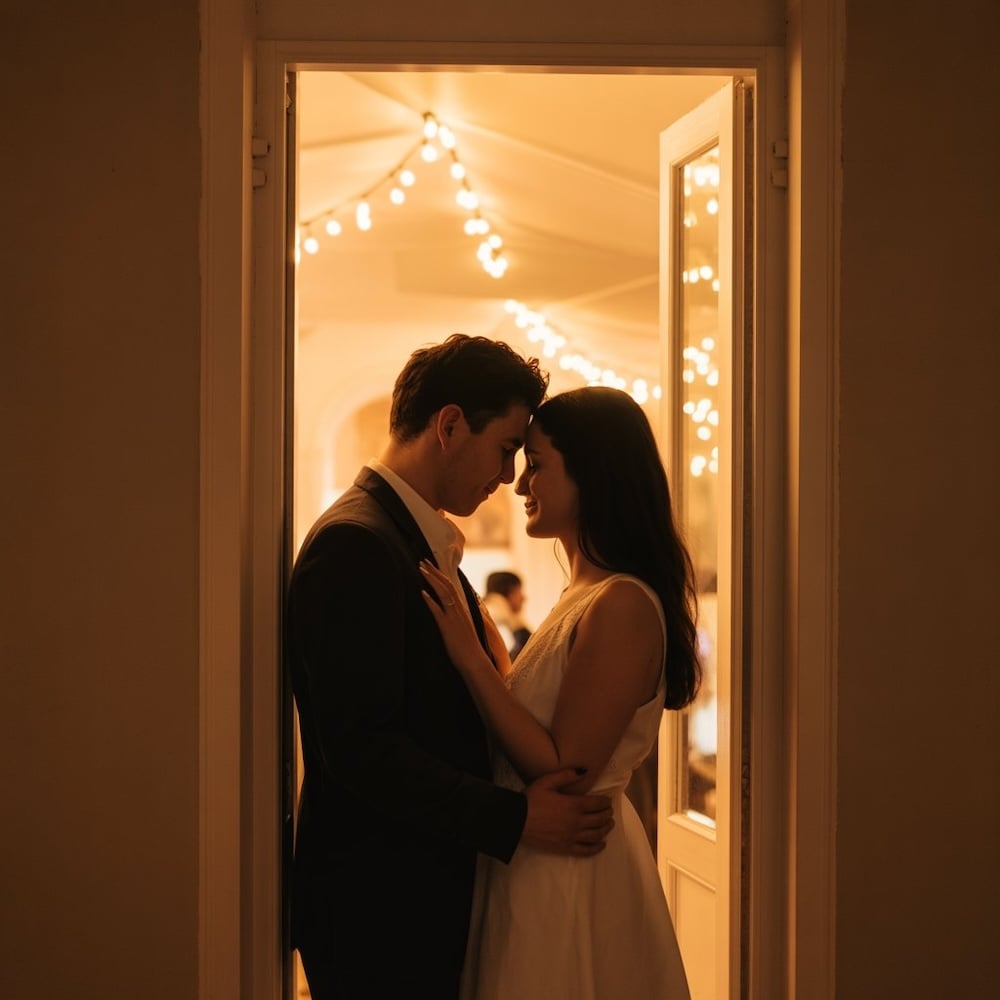
You spent months obsessing over centerpiece heights and escort card fonts. You finalized the playlist, confirmed the caterer, and triple-checked the seating chart so your aunt and your mother-in-law aren’t within earshot of each other. The ceremony was flawless. And then the reception starts — and suddenly, you’re winging it.
Here’s what nobody tells you: the reception is where the planning gaps actually show up. Not because you didn’t plan enough, but because most wedding prep is laser-focused on before the party — the dress, the vows, the décor. The actual being at the party part? That gets surprisingly little airtime. And that’s how brides end up starving at their own wedding, missing their cake cutting, or realizing at midnight that they never said a word to half the guest list.
So consider this your reception cheat sheet — the stuff that falls through the cracks for even the most organized brides. Read it, screenshot it, send it to your maid of honor. Future you (the one holding a cocktail and actually enjoying her wedding) will be grateful.
1. Actually Eat Your Dinner
This sounds ridiculous. There is a literal meal being served in your honor. And yet, an alarming number of brides barely touch it. Between table visits, photo requests, bathroom trips that require an entourage to manage a bustle, and the general adrenaline of being the main character — eating falls to the bottom of the list. Then you’re three champagne toasts deep on an empty stomach, and things go sideways fast.
The fix isn’t complicated, but it does require intention. Tell your coordinator or maid of honor that you need 15–20 uninterrupted minutes to sit down and eat with your partner. Not nibble. Not take two bites between hugs. Actually sit, fork in hand, and eat a real plate of food. If your cocktail hour runs into dinner, ask the caterer to plate your meals first so you’re not waiting while everyone else digs in.
Smart move: Have your coordinator set aside a backup plate in the kitchen or bridal suite. If your dinner gets cold or cleared, you’ve got a second chance. Some couples also do a private “first meal” moment during cocktail hour — highly underrated.
2. Designate Someone to Handle the Gift Table and Cards
Guests will bring cards with cash and checks. Sometimes gift boxes, too. These things sit on a table near the entrance for hours, and at the end of the night, someone needs to gather them and make sure nothing walks off or gets left behind. If that “someone” hasn’t been assigned in advance, you’ll be the bride scrambling at 11 PM asking, “Wait, where’s the card box?”
This is a job for a trusted family member or wedding party member — not the venue staff, not your coordinator (they’re busy breaking down). Give one person a large tote bag or a lidded box, and ask them to collect all cards and gifts at the end of the night and either store them in a locked car or bring them to your hotel room.
Watch out for: Card boxes without a secure slot or lid. An open box full of envelopes at a 150-person wedding is a theft risk, full stop. Use a box with a narrow slot that can’t be easily reached into, and have your designated person do a check-in halfway through the night.
3. Prep Your Vendor Tips and Final Payments in Advance
End-of-night vendor tips are one of those things that feel very “I’ll handle it later” during planning — and then “later” arrives when you’re barefoot on the dance floor and your DJ is packing up. You do not want to be stuffing cash into envelopes in the bathroom at midnight.
Before the wedding day, prep labeled envelopes with the correct cash amounts for each vendor: DJ/band, photographer, videographer, coordinator, hair and makeup artist, bartenders, shuttle driver, officiant (if not already tipped). Hand the full set to your best man, parents, or coordinator with a simple checklist of who gets what and when.
Pro tip: Some vendors include a service charge or gratuity in their contract — double-check before you tip on top of it. And don’t forget the venue staff. If the banquet captain or catering team went above and beyond, a group tip goes a long way.
4. Do a Walkthrough of Your Reception Space Before Guests Arrive
Most brides see their reception setup in a blur — either as they’re rushing in for their entrance or through photos after the fact. But taking five minutes to actually walk through the room before guests enter is one of those small things that pays off emotionally. You spent a fortune on that room. You should see it when it’s still pristine.
Coordinate with your planner to carve out a moment — usually during cocktail hour while guests are in a different area — for you and your partner to step into the empty reception space together. Take it in. Let your photographer capture a few candid shots of you seeing it for the first time. It’s a private moment in what’s otherwise a very public day, and couples who do this almost always say it was a highlight.
Best for: Brides who are heavily involved in the design and décor. If you hand-picked every candle and linen, don’t cheat yourself out of seeing the finished product without 150 people blocking the view.
5. Make the Rounds — With a System
You already know you should say hello to every guest. What you might not realize is how quickly the night evaporates once dinner, toasts, dances, and cake happen back to back. If you don’t have a plan for table visits, you’ll end up spending 20 minutes with your college roommates and zero minutes with your partner’s grandparents. That math doesn’t work.
A solid approach: split the room with your partner. One of you takes the left side, the other takes the right, and you swap halfway. Aim for 2–3 minutes per table — enough for a genuine hello, a quick thank you, and a photo if someone asks. Your maid of honor or coordinator can keep you moving if you get stuck in a conversation vortex (you will).
Smart move: Do your table rounds during dinner, not after. Once dancing starts, it’s nearly impossible to track down guests, and some of your older relatives may leave early. Hit the tables while people are seated and easy to find.
6. Touch Up Hair and Makeup Before Key Moments
Your makeup was flawless at 2 PM. By 8 PM — after crying during the vows, sweating on the dance floor, and hugging 97 people — it’s a different story. And that’s exactly when your photographer is capturing toasts, cake cutting, and the bouquet toss. The photos you’ll frame are mostly reception photos, so looking pulled-together matters more now than you’d think.
Schedule a quick touch-up during the transition between cocktail hour and the reception entrance. It takes five minutes. Blot, powder, reapply lip color, tame any flyaways. If your hairstylist offers reception touch-up service for an additional fee, it’s worth considering — especially for outdoor or summer weddings where humidity is working against you from hour one.
Pro tip: Stash a small touch-up kit at the bridal table or with your maid of honor: blotting papers, your lip color, a few bobby pins, and a mini hairspray. Don’t leave it in the bridal suite — you won’t go back for it.
7. Take Five Minutes Alone With Your Partner
This is the one every married couple says they wish they’d done — and the one that gets skipped most often. The entire day is built around the two of you, yet you’ll spend shockingly little of it actually alone together. Between getting ready separately, the ceremony, photos, and the social marathon of the reception, the quiet moment never happens unless you make it happen.
Build it into the timeline. After your grand entrance but before dinner. Or right after the first dance. Step away — a balcony, a hallway, the venue garden — for just five minutes. No phones, no bridal party, no photographer (unless you want a few candid shots from a distance). Just the two of you processing the fact that you actually did it.
Watch out for: Saying “we’ll find a moment” without actually scheduling it. You won’t find it. The night moves too fast. Put it on the timeline and ask your coordinator to physically pull you aside when it’s time.
8. Confirm Your Last Dance / Exit Plan
The end of the night is weirdly emotional and chaotic — and it often catches couples off guard. The band plays the last song, the lights come up, and suddenly you’re standing there wondering what happens next. Do you do a sparkler exit? A private last dance? Just… leave? If you haven’t thought this through, the ending of your wedding will feel like a movie that cuts to credits mid-scene.
Decide in advance what your final moment looks like. If you’re doing a send-off (sparklers, ribbons, confetti), make sure your coordinator has the supplies distributed and guests lined up before the last song ends. If you’re doing a private last dance, tell your DJ/band to clear the floor and play your chosen song after the crowd thins. If you’re just slipping out, have your getaway car or ride ready and your overnight bags already loaded.
Smart move: Appoint someone to be in charge of your personal items at the end of the night — your phone, your clutch, your vow book, the guest book. These things get left behind constantly, and you don’t want to be calling the venue Monday morning.
9. Bring Emergency Supplies to the Reception
Your getting-ready emergency kit did its job. But it’s probably sitting in a hotel room two miles away now. The reception has its own set of emergencies: blisters from new shoes, a headache from skipping lunch, a broken bustle, a stain on the dress from an enthusiastic uncle with red wine. You need a second kit — or at least the essentials — within arm’s reach at the venue.
Pack a small bag to keep at or near your table (or with your coordinator): comfortable flat shoes for dancing, band-aids, pain reliever, stain remover wipes, mints, phone charger, granola bar, and a few safety pins. That’s it. It fits in a tote and it will save you at least once.
Best for: Every single bride, but especially outdoor receptions (heels + grass = disaster), summer weddings (deodorant and blotting papers belong in this kit), and long receptions that run past 10 PM.
10. Actually Request Songs From Your DJ/Band
You probably gave your DJ a do-not-play list (no “Chicken Dance,” no “Blurred Lines,” message received). But did you give them a must-play list? A lot of brides assume the DJ will read the room, and good ones will — but they’re not mind readers. If there’s a song that will get your college friends screaming or a deep cut that means something to your family, it won’t happen unless you communicate it.
Send your DJ or band a curated list of 15–20 must-play songs about two weeks before the wedding. Include notes on timing: “Play this during dinner,” “Save this for late-night dancing,” “This is for when my dad’s side has had enough wine.” Also flag 3–5 songs you’d love to hear if they fit naturally but aren’t mandatory. This gives your DJ structure and flexibility.
Pro tip: Ask your DJ to check in with you or your maid of honor once during the reception to see if there’s anything you want to hear. A quick “any requests from the bride?” at the 90-minute mark keeps the night feeling personal.
11. Have Someone Capture Toasts on a Phone (Backup Video)
Your videographer will get the toasts. But what if there’s a sound issue? What if the angle is off? What if — and this happens more than you’d think — the videographer’s audio cuts out during the best man’s speech because a speaker was feeding back? You don’t get a redo on toasts. Having a phone backup is cheap insurance.
Ask a bridesmaid or family member to stand near the front with a phone recording the full speeches. Not a shaky hand in the crowd — a steady, intentional recording from a decent angle with good audio proximity. It takes zero effort to arrange and could be the only clear recording you have of your dad’s toast.
Watch out for: Assuming your photographer is also getting video. Many don’t. And even if you have a videographer, toast audio is the single most common technical issue in wedding films. The backup phone is non-negotiable.
12. Stop for a “Mental Snapshot” Moment
At some point during the reception — ideally when the dance floor is packed and everyone you love is in the same room — stop. Just stop moving for 30 seconds. Look around. Take a breath. Let it register that all of these people showed up for you. Brides who do this on purpose, even briefly, consistently describe it as one of the best moments of the night. Brides who don’t almost always say the reception was “a blur.”
You can do this from the edge of the dance floor, from your table, or from a balcony overlooking the room. You don’t need to announce it or make it a “thing.” Just give yourself permission to step out of hostess mode for half a minute and be present in the room you built.
Smart move: Tell your partner about this ahead of time and do it together. Squeeze their hand, look at the room, and say nothing. It sounds cheesy on paper. It’s not cheesy in person.
13. Thank Your Parents (Out Loud, In Person)
This isn’t about the toast. This is about a private, face-to-face moment where you look your parents in the eye and thank them — for the wedding, for showing up, for everything that got you here. A lot of brides assume this will happen naturally during the night. It usually doesn’t, because the night is chaos and your parents are busy being emotional and hosting their own friends.
Find them during dinner or right after toasts. It doesn’t need to be a speech. A hug, a few words, and genuine eye contact is enough. Do the same for your partner’s parents. These are the moments that matter more than centerpieces — and they take 60 seconds.
Best for: Literally everyone, but especially brides whose parents contributed financially or emotionally to the planning. They spent the last year stressed about this too. A direct “thank you” lands harder than you’d expect.
14. Know When to Stop Worrying About the Details
At some point during the reception, you will notice something wrong. A centerpiece got knocked over. The wrong song played during dinner. The cake topper is slightly crooked. Your seating chart had a typo. And here’s the truth you need to hear: nobody else noticed. Not one person. Your guests are eating, drinking, dancing, and having the time of their lives. The only person auditing the details is you.
Give yourself a hard cutoff. Once the reception starts, you are no longer the wedding planner. You are a guest at your own party — arguably the most important guest. If something goes wrong, that’s what your coordinator is for. If you don’t have a coordinator, that’s what your maid of honor is for. Delegate the worry and go dance.
Pro tip: Before the reception, tell your coordinator and bridal party: “Don’t tell me about problems unless it’s an emergency. Handle it.” This one sentence will free you more than anything else on this list.
What to Remember…
The reception is the party you’ve been planning for months — and ironically, it’s the part most brides spend the least time preparing to actually experience. The logistics are important, yes. But so is eating, breathing, and being present for the celebration instead of managing it.
Print this list. Share it with your coordinator, your maid of honor, and your partner. Assign the tasks that can be assigned, schedule the moments that need protecting, and then — for the love of your sanity — let the rest go. You did the work. Now go enjoy the wedding.
FAQs
How do I make sure I actually eat at my wedding reception?
Ask your caterer to plate your meals first, and have your coordinator block 15–20 minutes for you and your partner to eat uninterrupted. A backup plate held in the kitchen is smart insurance — receptions are unpredictable, and your dinner getting cold or cleared before you sit down is more common than you’d think.
When should I visit each table at the reception?
During dinner is the sweet spot. Guests are seated and easy to find, and you haven’t lost anyone to the dance floor or the bar yet. Split the room with your partner to cover ground faster, and aim for 2–3 minutes per table. Don’t save this for after dinner — older guests may leave early, and the dance floor makes it nearly impossible to track people down.
How much should I tip my wedding vendors?
Standard tipping ranges are 15–20% for catering staff and bartenders, $50–$150 per person for hair and makeup artists, $50–$200 for DJs and photographers (depending on the total contract value), and $100–$500 for your lead planner or coordinator. Always check contracts first — some vendors include a service charge that covers gratuity. Prep labeled cash envelopes before the wedding day and hand them to a designated person with a checklist.
What should I keep in a reception emergency kit?
The essentials: comfortable flat shoes, band-aids (specifically blister ones), pain reliever, stain remover wipes, mints or breath strips, a phone charger, a granola bar, safety pins, and blotting papers. Keep it in a small tote near your table or with your coordinator — not in the bridal suite, because you won’t make the trip back to get it.
Should I do a last dance or a send-off at the end of the reception?
Either works — what matters is that you decide in advance. A private last dance (just the two of you, after the crowd thins) is romantic and gives you a quiet ending. A send-off with sparklers or confetti is high-energy and makes for great photos. Just make sure your coordinator has the logistics handled before the last song ends — guests standing around in a parking lot waiting for sparklers to be distributed kills the vibe fast.
Some links in this post may be affiliate links, which means we may earn a small commission if you make a purchase through them. Thank you for your support!