Your wedding dress fitting is not the time to smile and nod while your alterations specialist does their thing. This is your chance to understand exactly what’s happening to your gown, make informed decisions about fit and function, and avoid last-minute surprises that could’ve been solved weeks earlier. Come prepared with specific questions, and you’ll walk out confident that your dress will actually work for your body, your venue, and the twelve hours you’ll be wearing it.
What Alterations Does My Dress Actually Need?
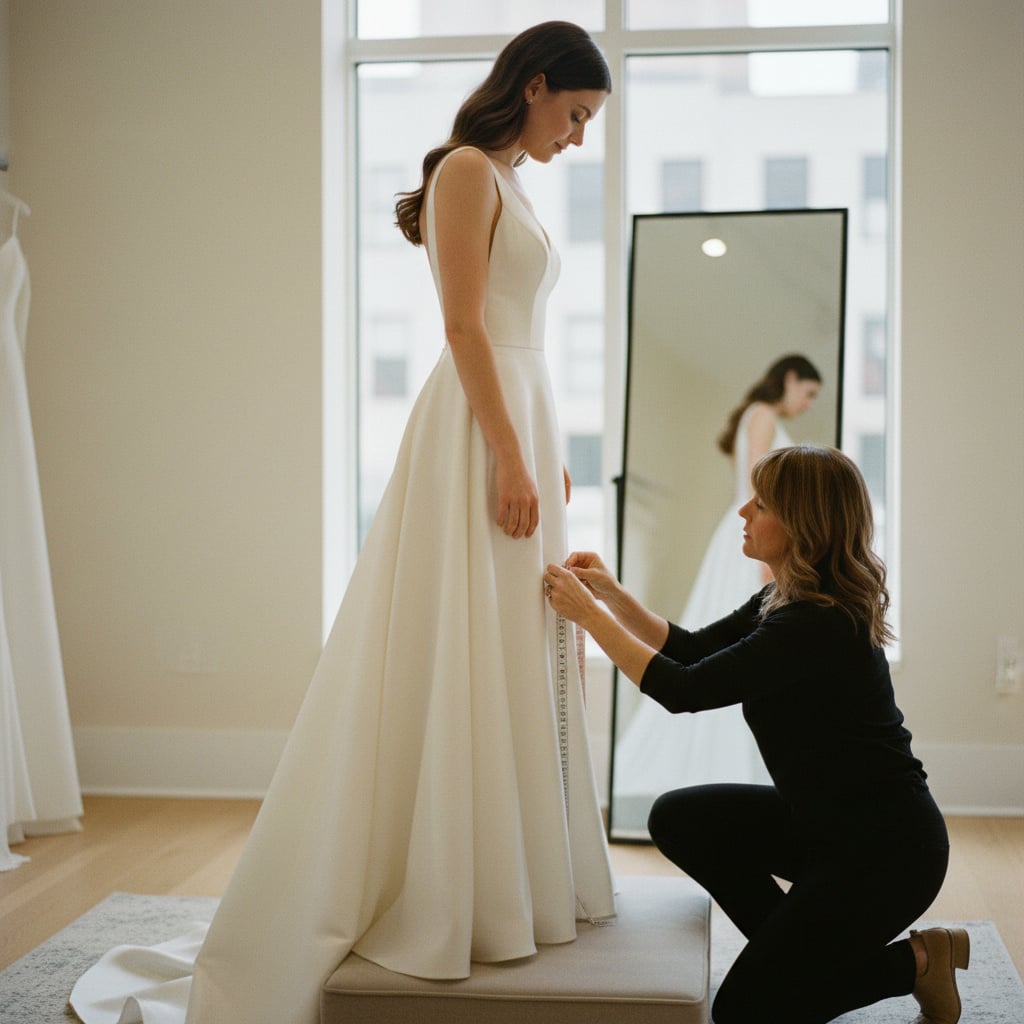
This is the foundation question that determines everything else about your fittings. Your alterations specialist should walk you through each change they’re recommending, from taking in the bodice to adjusting strap length to hemming the skirt, and explain why each one matters for the overall fit. Don’t assume every dress needs major work. Some gowns only need a bustle and minor tweaks, while others require significant restructuring to fit properly. Ask for a written estimate that breaks down each alteration and its cost, so you’re not surprised by the final bill. If something on the list sounds excessive or unnecessary, ask them to explain the reasoning in plain terms, especially if it’s adding hundreds to your budget. The goal is to understand the difference between essential alterations that affect fit and optional tweaks that are mostly aesthetic.
How Many Fittings Should I Plan For?
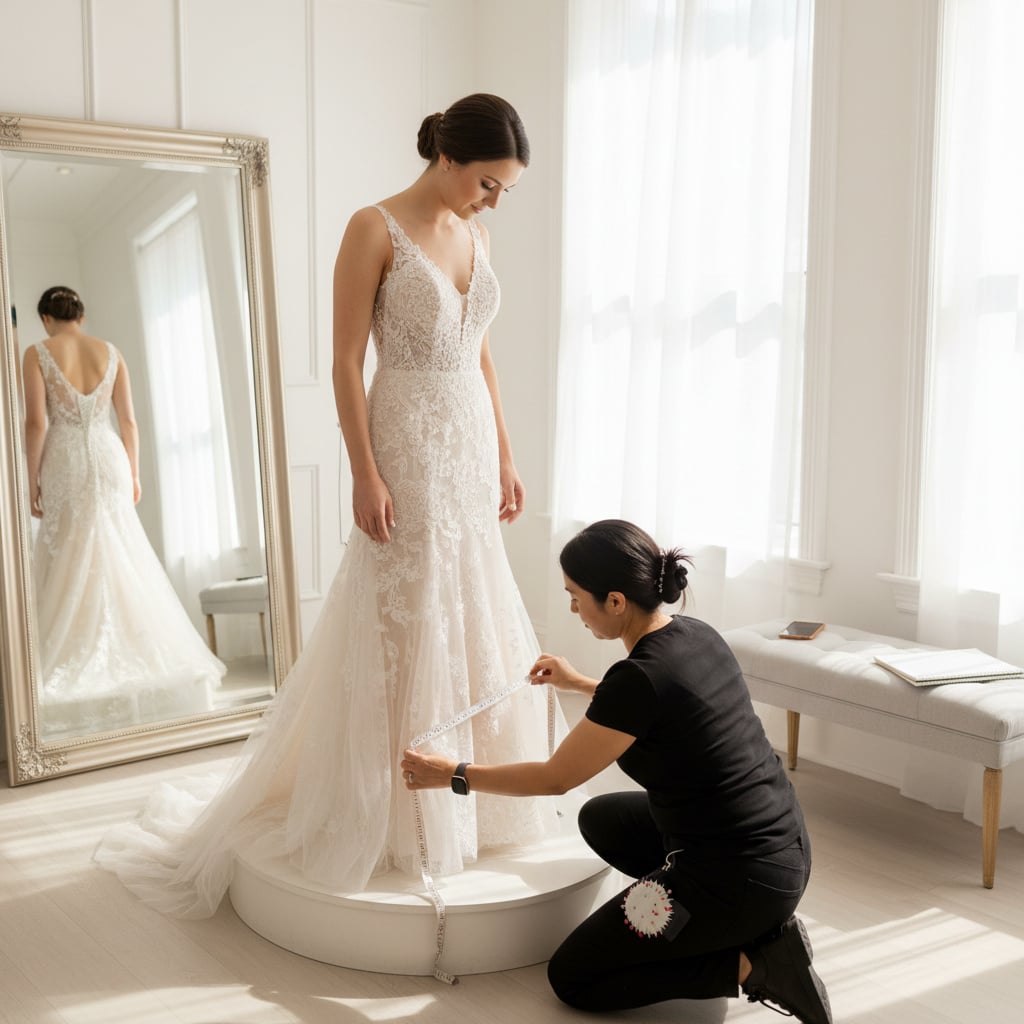
Most brides need two to three fittings, but the answer depends on how much work your dress requires and how far out you are from your wedding date. Your first fitting usually happens six to eight weeks before the wedding to assess what needs to change, the second fitting is for checking progress and fine-tuning details, and the third (if needed) is your final check before pickup. If you’re having significant alterations like taking in multiple sizes or adding sleeves, expect to be on the higher end of that range. Ask your specialist to map out the fitting schedule now so you can block the dates on your calendar, and find out how much flexibility exists if you need to reschedule one. Also confirm whether there’s an additional charge for extra fittings beyond the standard package, since some salons include two but charge for a third.
You Might Also Like: Wedding Suits for Men: Avoid These Mistakes
What’s the Timeline for Completing Everything?

You need specific dates, not vague assurances that everything will be ready “in time.” Ask exactly when your alterations will be finished and when your dress will be available for final pickup, then work backward from your wedding date to make sure there’s a cushion for emergencies. Most alterations take four to six weeks once the work actually starts, but delays happen, especially during peak wedding season when seamstresses are backed up. If your wedding is less than two months away, ask directly whether that timeline is realistic or if you need to pay for rush service. Find out what happens if the salon runs behind schedule, whether they’ll cover expedited shipping if needed, and if there’s any penalty-free window to make tiny last-minute tweaks. The earlier you pin down these dates, the less you’ll stress as your wedding approaches.
How Should My Dress Fit in the Bodice?

The bodice is where fit issues become most obvious, so you need to know what “perfect” actually looks like for your specific dress style. A properly fitted bodice should feel snug without cutting into your skin, stay in place when you move and dance, and not require constant adjusting or tugging throughout the night. Ask your fitter to show you how tight is too tight, since some brides assume uncomfortable means secure when really it just means the dress needs better structure or boning. Check how the bodice feels when you sit, raise your arms, and lean forward, because standing still in front of a mirror doesn’t tell you much about real-world wearability. If you’re spilling out of the top or gaping anywhere, ask whether that requires taking in the sides, adjusting the cups, or adding grip tape and boning for support. The bodice sets the foundation for everything else, so don’t leave this fitting until it feels genuinely comfortable and secure.
What Type of Bustle Works Best for My Gown?

Not all bustles are created equal, and the wrong one can make your reception photos look lumpy or feel like you’re dragging fabric around all night. Your alterations specialist should recommend a bustle style based on your dress silhouette, train length, and the amount of fabric that needs to be lifted off the ground. An American bustle (also called an over-bustle) folds fabric up and over in neat sections and works well for ballgowns and voluminous skirts, while a French bustle (under-bustle) tucks fabric underneath for a sleeker look that suits fitted gowns and lighter materials. Ask how many bustle points your dress needs, whether the bustle will be obvious in photos, and most importantly, have them teach you (or your maid of honor) how to bustle it yourself during the fitting. Practice it a few times right there in the fitting room, because fumbling with ribbons and hooks while guests wait for your reception entrance is not the vibe you want.
How Do I Know the Hem Length Is Correct?
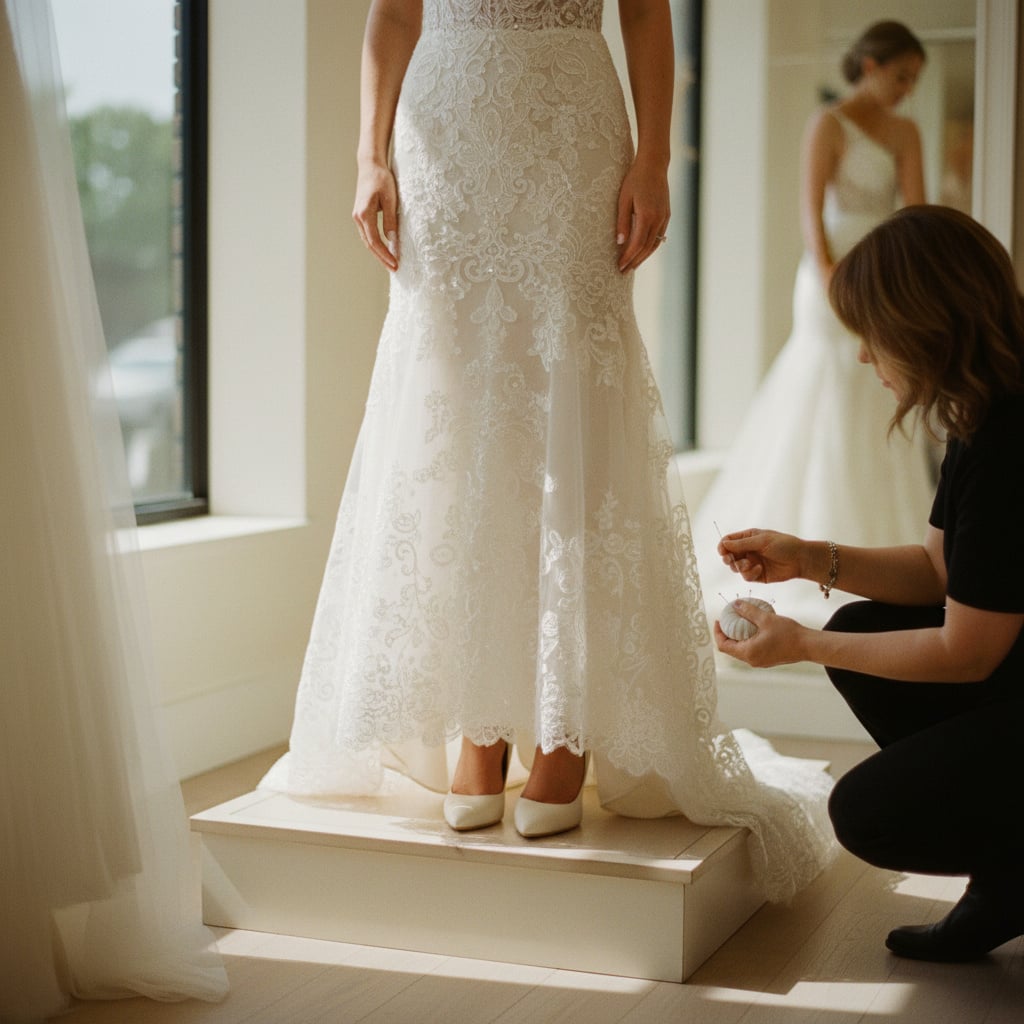
Hem length is trickier than it sounds, especially if you’re wearing heels or your venue has mixed flooring like grass and hardwood. Bring the exact shoes you’ll wear on your wedding day to every fitting, because even a half-inch difference in heel height changes where your hem should fall. The standard rule is that your hem should just barely graze the floor when you’re standing naturally, with no bunching or dragging behind you (unless you specifically want a train). Ask your fitter whether they’re accounting for outdoor terrain if you’re getting married on grass or uneven ground, since dresses often need to be slightly shorter to avoid collecting dirt and tripping hazards. If you’re planning to change shoes for the reception, mention that now so they can adjust accordingly. Walk around the fitting room, sit down, and do a few dance moves to see how the hem behaves in motion, not just standing still in front of the mirror.
Which Undergarments Should I Wear on My Wedding Day?

Whatever you wear to your fittings is what you should plan to wear on your wedding day, so now’s the time to commit to specific undergarments and make sure they work with your dress. Some gowns have built-in bras or corsetry that make traditional undergarments unnecessary (or impossible), while others require strapless bras, shapewear, or stick-on cups for the right silhouette and support. Ask your alterations specialist what they recommend based on your dress structure and fabric, and whether you need to invest in anything specific like low-back converters or silicone petals. If you’re planning to wear shapewear, bring it to the fitting so the dress can be altered to fit over it, not just your body alone. Test everything by moving around, sitting, and bending to make sure nothing digs in, rolls down, or peeks out from unexpected angles. The goal is invisible support that you can forget about for the entire day, not undergarments you’re constantly adjusting.
How Do I Care for Delicate Lace and Beading?

Fragile embellishments like lace appliqués, hand-sewn beading, and delicate tulle need special handling, and your alterations specialist can tell you exactly what your dress can and can’t tolerate. Ask whether there are specific areas of your gown that are particularly vulnerable to snagging or damage, and what you should avoid doing while wearing it. Some beading is sewn securely and can handle normal wear, while other detailing is more delicate and might shed or catch on jewelry, chairs, or even your own hands. Find out if your dress can be spot-cleaned if something spills on it, or if attempting to clean it yourself will make things worse and require professional intervention. Ask whether they recommend any protective measures like garment bags for transport or specific hanging methods to prevent stress on beaded areas. If any beads or appliqués come loose during the wedding, ask if they can provide a small emergency kit with matching thread and a few spare beads, or at least instructions for quick temporary fixes.
What’s Your Policy If I Need Last-Minute Changes?

Life happens, and sometimes you need adjustments closer to your wedding date than anyone planned for, so you need to know what’s possible and what’s not. Ask your salon what their cutoff date is for making changes, whether they offer emergency alteration services, and what those services cost compared to standard work. Some shops have a hard deadline of one or two weeks before your wedding and won’t touch your dress after that point, while others will accommodate last-minute tweaks for an additional rush fee. Find out whether “last-minute” means minor fixes like adjusting a bustle hook or hem, or if they can handle bigger changes like taking in the bodice if your weight shifts. Ask if they have on-call seamstresses or same-day services for true emergencies like a torn seam or popped button the day before your wedding. Knowing these policies now means you won’t panic if something unexpected comes up, and you’ll know exactly who to call and what it’ll cost to fix it.
How Should I Steam or Press My Dress?

Not all wedding dress fabrics respond well to heat, and the wrong steaming technique can permanently damage delicate materials or beading. Ask your alterations specialist whether your specific dress should be steamed or pressed, what temperature setting is safe, and whether certain areas (like beaded sections or tulle overlays) need to be avoided entirely. Most gowns do better with a handheld steamer held several inches away from the fabric rather than direct iron contact, but some structured fabrics actually need light pressing to look crisp. Find out if the salon offers steaming services on the day you pick up your dress, or if they recommend a specific professional who knows how to handle wedding gowns. If you’re planning to steam it yourself or have a bridesmaid help, ask them to demonstrate the technique during your fitting so you can see the proper distance and motion. Get clear instructions about whether you should steam the dress hanging or lying flat, and how long before the wedding you should do it to avoid new wrinkles from transport and storage.
What Happens If My Weight Changes Before the Wedding?
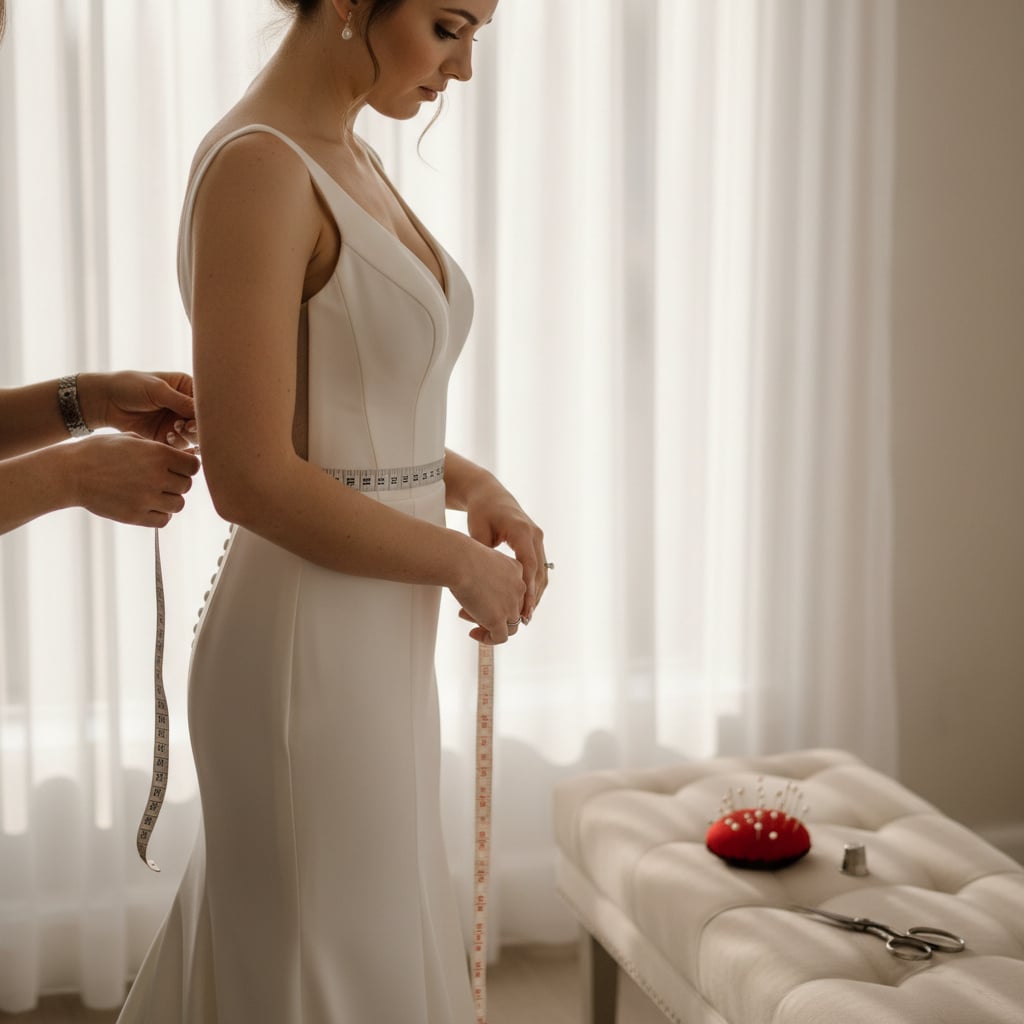
Bodies fluctuate, and stressing about minor weight changes in the weeks before your wedding will only make things worse, but you do need a plan for what happens if your dress no longer fits properly. Ask your alterations specialist what the threshold is for needing additional work, whether they build in any wiggle room when they alter your gown, and how much weight change (up or down) the dress can accommodate without major re-alterations. Most well-constructed bodices can handle a five-pound fluctuation in either direction without looking noticeably different, but significant changes might require letting out seams or taking things in further. Find out what the cost and timeline would be for those adjustments, and whether they’re even possible given your dress construction and how much fabric is available in the seams. If you’re concerned about this, ask whether they can schedule your final fitting closer to the wedding date to minimize the window for change. The goal isn’t to obsess over the scale, but to know your options if your body does something unexpected in those final weeks.
Can You Add or Modify Sleeves or the Neckline?

If you’re having second thoughts about your dress’s sleeves (or lack thereof) or the neckline feels too revealing or too conservative now that you’ve lived with the decision for a while, speak up during your fitting. Many alterations specialists can add detachable sleeves, cap sleeves, or illusion lace to create more coverage, or modify existing sleeves to be shorter, longer, or a different style entirely. Ask whether these changes are possible with your specific dress fabric and construction, what the additional cost would be, and how long it would take to source matching materials. If you want to alter the neckline by raising it, lowering it, or changing the shape, find out whether that’s structurally feasible or if it would compromise the dress’s built-in support and boning. Request fabric swatches or sketches of what the modification would look like so you can visualize the change before committing. These aren’t small tweaks, so make sure you’re making the change because you genuinely want it, not because someone else commented on your original choice.
How Do I Transport and Store My Dress Safely?

Getting your dress from the salon to your getting-ready location without wrinkling, staining, or damaging it requires more planning than tossing it in your back seat. Ask your alterations specialist whether your dress should be transported hanging or laid flat, what type of garment bag offers the best protection, and whether you need a specific type of hanger that won’t stress the fabric or stretch out the shoulders. Find out if they recommend any particular folding techniques if your dress is too large to hang in a standard vehicle, and whether certain fabrics (like organza or tulle) are more prone to creasing during transport. Ask about storage once you get to your venue or hotel, including whether the dress should be hung immediately, kept in its bag until you’re ready to put it on, and what room conditions (humidity, temperature) are ideal. If you’re traveling to a destination wedding, get specific advice about packing your dress in luggage versus carrying it on, and whether you should steam it before you leave or wait until you arrive. The goal is a dress that looks exactly as perfect when you put it on as it did at your final fitting.
What Should I Do If Something Tears or Stains?
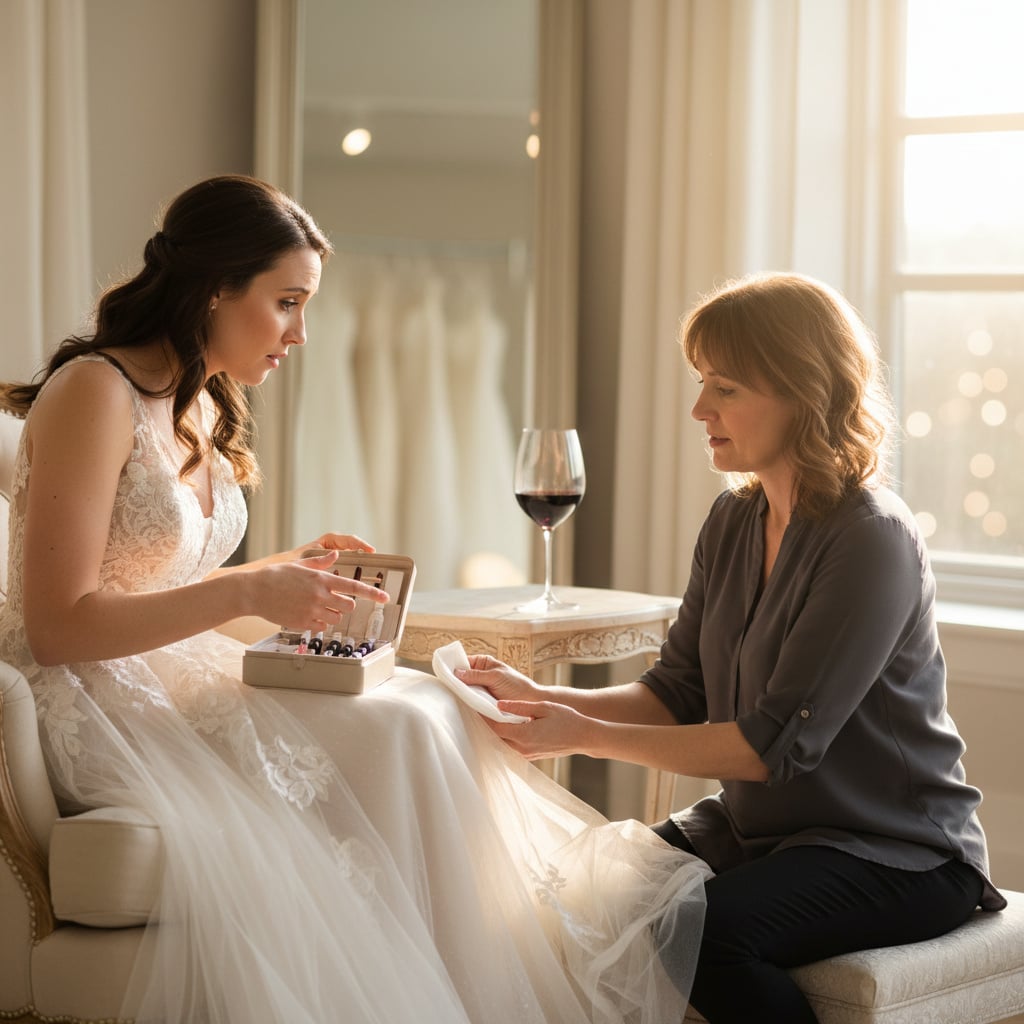
Even the most careful bride can end up with a last-minute disaster, so you need an emergency plan before you’re standing in your dress with red wine dripping down the skirt. Ask your alterations specialist what immediate steps you should take if something spills on your dress, whether blotting or attempting to clean it yourself will make things worse, and if they have recommended stain-removal products that are safe for your specific fabric. Find out if minor tears (like a popped seam or snagged lace) are something a bridesmaid with basic sewing skills can quickly fix, or if they require professional intervention, and ask them to include a small emergency kit with matching thread, spare buttons, and safety pins when you pick up your dress. Get the contact information for someone who can handle true emergencies on short notice, whether that’s your alterations specialist or another professional they recommend for same-day repairs. Ask whether your dress fabric and construction are particularly vulnerable to specific risks like catching on jewelry, snagging on rough surfaces, or showing water marks, so you can be extra cautious around those hazards.
When Should I Pick Up My Dress Before the Wedding?

Timing your dress pickup is a balance between having enough time to address any issues and not having your gown sitting around collecting wrinkles and potential damage. Most alterations specialists recommend picking up your dress one to two weeks before the wedding, which gives you a buffer to spot any problems while they still have time to fix them, but not so early that the dress gets wrinkled from hanging in your closet for a month. Ask your salon what their specific recommendation is based on your dress fabric and storage situation, and whether picking it up earlier or later makes sense for your timeline. Find out what you should check for during pickup, like verifying that all alterations were completed as discussed, the bustle works correctly, and any requested details (like sewn-in cups or hem tape) are in place. Ask whether someone will be available to do a final once-over with you to make sure everything is perfect, or if you’re just grabbing the dress and leaving. If you’re traveling for your wedding, confirm whether the salon can hold your dress until closer to your departure date, or if you need to arrange for someone else to pick it up and bring it to you.
Some links in this post may be affiliate links, which means we may earn a small commission if you make a purchase through them. Thank you for your support!