
Affection isn’t just a “nice to have” in marriage. Research has consistently shown that everyday expressions of warmth — things like physical closeness, verbal appreciation, and small gestures of care — are closely tied to relationship satisfaction and emotional well-being, especially for women. Studies published in journals like Journal of Social and Personal Relationships and Family Process have found that when affection declines, women are more likely to report feelings of loneliness and emotional distance, even when the relationship otherwise looks stable from the outside.
What’s striking is that this kind of deprivation doesn’t usually show up as one big problem. It shows up quietly, over time. The marriage keeps functioning. Life keeps moving. But something essential starts to feel missing.
Therapists who work with long-term couples often say the same thing: when women feel starved of affection, they don’t always ask for more directly. Instead, they adapt. They cope. They change their behavior in small, often misunderstood ways.
Here are eleven patterns relationship experts say commonly emerge when wives are missing affection — not because they’re dramatic or demanding, but because they’re trying to make sense of a connection that no longer feels reciprocal.
1) They stop reaching first

They might still want closeness, but initiating starts to feel risky. If you’ve been brushed off enough times, you eventually stop offering your hand.
2) They get “busy” in a very specific way

Not just busy-busy — but busy as a shield. More errands. More scrolling. More projects. More staying occupied so they don’t have to sit in the feeling of “I miss you.”
3) They lean harder on friends, kids, or work

When affection isn’t available at home, people naturally look for warmth somewhere. That can be healthy — but it can also be a sign of a gap.
4) They start doing everything themselves

This is the quiet version of “I can’t count on you.” They handle the logistics, the planning, the emotional load — and slowly stop expecting help.
5) They talk less about their inner world

They still have thoughts and feelings. They just stop sharing them because the response doesn’t feel good — or doesn’t come at all.
6) They become more irritated by small things
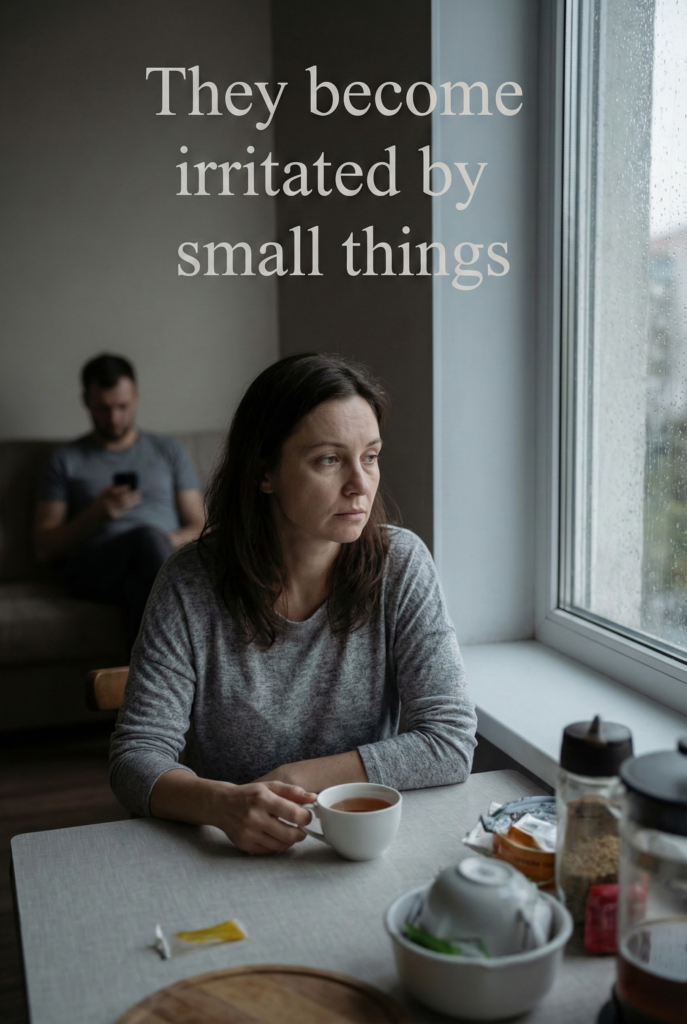
When affection is steady, little annoyances stay little. When it’s missing, everything feels sharper. Not because they’re “too sensitive,” but because the relationship isn’t giving much softness to land on.
7) They stop asking for reassurance
At first they might have tried: “Do you still like me?” “Are we okay?” Over time, they may stop asking because they don’t want to feel embarrassed for needing it.
8) They lower their expectations
This can sound like: “This is just how marriage is.” But often it’s: “It hurts less if I don’t hope for more.”
9) They feel lonely even though they’re not alone

This one is big. You can be in the same house, living the same life, and still feel emotionally by yourself.
10) They start imagining what it would feel like to be loved differently

Not always by a new person — sometimes just imagining what it would feel like to be noticed again. To be touched casually. To be wanted in small, everyday ways.
11) They emotionally detach before anything “big” happens

This is the part that scares people. The distance usually starts long before any serious conversation. By the time she seems checked out, she may have been grieving the relationship quietly for a while.
The important part
If you recognize your marriage in this, it doesn’t automatically mean it’s doomed. It means there’s a real need not being met — and it’s showing up in predictable ways.
Affection isn’t a grand gesture thing. It’s tiny and daily. And when it disappears, the relationship doesn’t always fall apart… but it does start feeling colder.
What Actually Helps (Without Turning It Into a Big Production)
Affection doesn’t come back because someone makes a speech about it. It comes back when the day-to-day feels safer again.
Here’s what tends to help, according to therapists who work with long-term couples:
Start smaller than you think you need to.
Affection usually fades because of missed moments, not one big rupture. Bringing it back works the same way. A hand on the back while passing in the kitchen. Sitting closer on the couch. A genuine “I’m glad you’re here.” These things matter more than grand gestures.
Don’t argue with the feeling.
If your partner says they feel disconnected or lonely, the most helpful response isn’t explaining why that wasn’t your intention. It’s acknowledging the experience. Feeling seen is often the first step toward feeling close again.
Consistency beats intensity.
One good conversation won’t fix months or years of distance. What helps is steadiness — showing up in the same small ways over time so affection stops feeling like a special occasion and starts feeling normal again.
Say things out loud that you’ve assumed were obvious.
Long-term partners often stop expressing appreciation because they think it’s understood. Research shows that hearing it still matters, even years in. Especially years in.
Notice when affection is being offered — and respond to it.
Many couples miss each other because one person reaches out quietly and the other doesn’t realize it’s happening. Recognizing those small bids for connection — and meeting them — changes the tone of a relationship faster than most people expect.
Affection doesn’t disappear because people stop caring. It usually fades because life gets loud, habits take over, and couples stop tending to the emotional space between them.
The good news is that space can warm up again — not by fixing everything at once, but by paying attention to the moments that used to come easily, and choosing to bring them back on purpose.
Some links in this post may be affiliate links, which means we may earn a small commission if you make a purchase through them. Thank you for your support!