

You can have the most beautiful venue, the most talented photographer, and a guest list full of people who actually like each other — and still have a wedding day that feels rushed, chaotic, and nothing like you planned. Nine times out of ten, the culprit isn’t a vendor who dropped the ball or weather that didn’t cooperate. It’s the timeline.
A bad wedding timeline doesn’t announce itself. It shows up quietly: as a photographer who’s missing shots because family formals ran long, as a bride still in the makeup chair when she should be getting dressed, as a couple who never got their golden hour portraits because nobody protected that window on the schedule. You don’t realize it happened until you’re looking at the photos.
The good news is that every single blunder on this list is avoidable. None of them require a bigger budget or a more experienced vendor team. They just require knowing where the traps are before you build your timeline — which is exactly what this article is for.
Here are the timeline mistakes that catch even well-organized brides off guard, and exactly what to do instead.
1. Underestimating How Long Hair and Makeup Will Actually Take
This is the single most documented reason wedding days fall behind — and when it happens, the damage isn’t contained to the morning. Hair and makeup running late compresses everything that follows: the first look, couple portraits, family formals, and sometimes the ceremony itself. Wedding photographers and planners see it constantly, and it almost never happens because of a bad artist. It happens because the timeline was built on optimistic assumptions instead of real math.
The actual numbers: plan 60 to 90 minutes for the bride, and roughly 45 minutes per person for the rest of the party. Add mothers and grandmothers getting services, factor in the bridesmaids who said they didn’t want hair and makeup — and then changed their minds the morning of (it happens at almost every wedding) — and you’re looking at five to six hours for a party of six before anyone has touched a dress. One artist for the whole group is almost always not enough.
There’s a second thing that slows down the morning that nobody talks about: the bride being distracted. She’s answering texts, making decisions, putting out small fires, checking in with vendors. Meanwhile her artist is waiting to work on her. The getting-ready room is the most chaotic, question-filled environment of the entire day, and the bride is at the center of all of it. Building in more time than you think you need isn’t pessimism — it’s the only way to protect the morning.
Pro tip: The bride should always go first, not last. If she’s last in the chair and anything runs over — a bridesmaid’s style takes longer, someone wants a redo — the delay lands directly on her. Finish the bride’s hair and makeup at least 45 to 60 minutes before she needs to get dressed. That buffer is where the real, unhurried getting-ready moments happen. It’s also where some of the best photos of the morning come from.
2. Forgetting to Eat
This sounds obvious until you’re eight hours into your wedding day running on coffee and adrenaline and wondering why you feel like you might pass out during your first dance. It happens constantly, and it’s completely avoidable.
Build a real meal into the timeline — not just a granola bar someone hands you while you’re getting your lashes done. Schedule a sit-down lunch or brunch with your wedding party during the getting-ready window, ideally mid-morning before things get too hectic. For the guys, the same rule applies: coordinate food delivery to wherever they’re getting ready so nobody is running on empty heading into ceremony photos.
Also make sure you actually eat at your own reception. Assign someone — your maid of honor, your coordinator, your mom — the specific job of getting you a plate and making sure you sit down with it. Couples who don’t plan this often end up having half a bite of chicken between toasts and then wondering why they crashed at 9 p.m.
Watch out for: Skipping the pre-ceremony snack because you’re nervous. Nerves plus no food plus a full day of photos and socializing is a recipe for feeling terrible by the time the dancing starts. Keep easy snacks — nuts, cheese, fruit — in the getting-ready suite and eat them.
3. The Travel Time Trap No One Accounts For
On paper, the drive from your getting-ready hotel to the ceremony venue is twelve minutes. On your wedding day, with a bridal party of eight people who each need a few minutes to gather their things, load into vehicles, account for traffic, and then actually walk into the venue — that twelve minutes becomes thirty. Every time.
Any time you’re moving locations, double whatever you think it will take. Add loading time, unloading time, and a buffer for the inevitable moment when someone left something in the room or needs a bathroom stop. Multi-location weddings — ceremony at a church, portraits at a park, reception at a venue — need this math applied at every transition, not just one.
If you’re using a shuttle or transportation for guests, add even more time. Shuttles run late. People miss them. Someone always needs one more trip to the parking lot. Build it in now so it doesn’t blow up your photography window later.
Smart move: Do a test drive on a similar day and time to your wedding, ideally a few weeks out. Real traffic, real route, real conditions. You’ll know exactly what you’re dealing with and can build your timeline accordingly.
4. Not Protecting Golden Hour
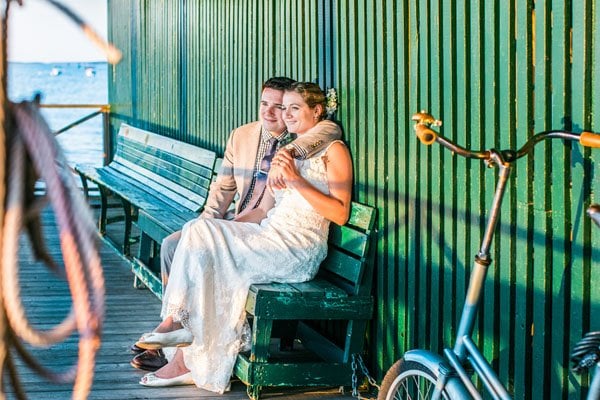
Golden hour — the 30 to 45 minutes before sunset — is the single most transformative window in wedding photography. The difference between portraits taken in harsh midday sun and portraits taken in that soft, warm evening light is not subtle. It’s the difference between photos you post and photos you frame and hand down.
Here’s the problem: most couples don’t schedule for it. They know it exists, they want it, and then they build a timeline that makes it impossible. Dinner runs long, toasts go over, and by the time someone suggests sneaking outside for golden hour portraits, the light is gone.
Look up the actual sunset time for your wedding date and location at timeanddate.com, then work backwards 30 to 45 minutes. Block that window on the timeline — put it in writing, tell your coordinator, tell your DJ to hold off on starting a toast, and actually step away from the reception for 15 to 20 minutes. That’s all you need. It doesn’t have to be long; it just has to be protected.
Watch out for: Terrain. If your venue is surrounded by trees, buildings, or hills to the west, the effective golden hour window may end 10 to 15 minutes earlier than the official sunset time. Ask your photographer to scout this in advance.
5. Scheduling the Ceremony Invite Time and the Actual Start Time as the Same Thing
Your invitation says the ceremony begins at 4:00 p.m. So it begins at 4:00 p.m., right? Not exactly. Your actual ceremony start time — when you walk down the aisle — should be about 15 minutes after your invitation time. That buffer exists to account for guests who arrive on the dot or slightly late, get seated, and settle in. Starting the processional the second the clock hits 4:00 means some guests are still scrambling to their seats when the music begins.
That 15-minute window also gives your wedding party time to line up, gives you a moment to breathe before you walk, and creates a buffer for the inevitable small delays that happen at every ceremony. It’s not wasted time. It’s intentional padding that makes the whole moment feel calm instead of frantic.
Best for: Outdoor ceremonies especially. If guests are walking from a parking area or navigating an unfamiliar property, they need more time to get seated than you think.
6. Cramming Too Many Family Formal Photos Into Too Little Time
Family formals are the most time-consuming, least glamorous part of the photography timeline — and almost everyone underestimates how long they take. You picture it as a quick, orderly process. In practice, it involves locating people who wandered to the cocktail hour, waiting for Uncle Someone to put down his drink, wrangling children who have already hit their limit, and re-doing every grouping at least twice because someone blinked.
Plan for 30 to 45 minutes for family formals and stick to a shot list. Write down every grouping you want before the wedding day, give it to your photographer in advance, and assign someone — a bridesmaid, a family member — to be the designated wrangler who rounds people up and keeps things moving. Without a wrangler, you will spend a third of your photo time just finding people.
Also consider doing as many family photos as possible before the ceremony — immediate family on each side, parents, grandparents. The more you get done before, the more time you have after the ceremony to enjoy cocktail hour and get to your reception on schedule.
One bride on Reddit put it perfectly: “I regret spending SO MUCH TIME doing pictures. A number of family members didn’t show up in time so we had to re-gather people after the ceremony to get the rest.” That re-gathering eats 20 minutes you didn’t budget for — and it happens at a huge percentage of weddings.
Pro tip: Tell family members involved in formals exactly where to be and when — not just “right after the ceremony.” Give them a specific location and a specific time. Vague instructions are how people end up at the open bar when you need them in front of the altar.

7. Skipping the First Look to “Keep It Traditional” — Without Adjusting the Timeline
Choosing not to do a first look is a completely valid decision. Seeing your partner for the first time at the ceremony is a genuinely powerful moment, and plenty of couples feel strongly about preserving it. The mistake isn’t skipping the first look — it’s skipping it without understanding what that means for your photography timeline.
When you do a first look, you can knock out couple portraits, wedding party photos, and some family formals before the ceremony — leaving the post-ceremony window free for cocktail hour, enjoying your guests, and a smooth transition into the reception. When you don’t do a first look, all of that photo time has to happen after the ceremony, which compresses everything and means you’ll miss a significant portion of your own cocktail hour.
Neither choice is wrong. But if you’re skipping the first look, build a longer post-ceremony photo window — at least 90 minutes — and factor that into when your reception actually starts. Don’t assume you can skip the first look and still be at your grand entrance on time without adjusting everything else around it.
Best for: Couples who want the traditional moment but also want enough time for portraits. The solution is usually pushing the ceremony start time earlier so the post-ceremony photo window doesn’t cut into reception time.
Also Read: The Ultimate Wedding Planning Checklist and Timeline
8. Letting Toasts Run Without a Time Limit
Toasts are one of the most unpredictable parts of the reception timeline. In theory, each speaker takes a few minutes, says something heartfelt, and sits down. In practice, well-meaning people who love you very much will speak for eight minutes when they promised three, go off-script, circle back to a story they already told, and finish with a second toast nobody planned for.
Every extra minute of toasts is a minute taken from dancing, from couple time, from the general flow of the night. And unlike other timeline delays, toast overruns are almost impossible for a coordinator to interrupt gracefully. The fix has to happen before the wedding day.
Tell every speaker — in advance, clearly — that their toast should be five minutes or less. If you can, review what they plan to say beforehand. One or two toasts at dinner is genuinely enough; more than that and guests start checking their phones. Work with your DJ or coordinator to keep things moving, and make it clear that once the cake is cut and toasts are done, the dance floor opens and that’s where the energy goes.
Watch out for: The open mic moment. Giving guests an open opportunity to say something sounds lovely in theory. In practice it can add 30 to 45 unplanned minutes to dinner and kill the momentum before dancing even starts.
9. No Buffer Time Between Events
A timeline that runs perfectly on paper — every event ending exactly when the next one begins — will fall apart in real life. Real days have small delays. A guest who needs an extra minute. A bustle that takes longer than expected. A vendor who needs five minutes to reset before the next thing. When you’ve built no buffer into the schedule, every small delay cascades into the next event, and by the time you reach the reception you’re running 30 minutes behind for reasons you can’t even identify.
Add 10 to 15 minutes of breathing room between major events — after getting dressed, after family photos, after the ceremony, before the grand entrance. It sounds wasteful until you need it, at which point it will feel like the smartest thing you did all day. And if a buffer window passes without incident? You’re ahead of schedule. That never feels bad.
Also build buffer specifically for your photographer. They need a few minutes between events to move locations, change lenses, swap batteries, and set up lights for the reception. Ending family photos at 5:59 and expecting your grand entrance at 6:00 means your photographer walks in behind you. That’s not a great start to the rest of your night’s coverage.
Smart move: Add a 30-minute buffer into your overall day that you never tell anyone about. If your ceremony is actually starting at 4:15, tell vendors and your wedding party it starts at 4:00. You’ll thank yourself when someone inevitably runs a little late.
10. Not Building in a Private Moment Together
Your wedding day will be filled with people who love you — which is exactly the point, and also makes it surprisingly difficult to have a single quiet moment with the person you just married. Couples who don’t plan for this often look back on their wedding day and realize they spent most of it being hosts rather than being together. You spent the day sharing your partner with 150 other people and the two of you barely had a moment to look at each other.
Build in a private window — 15 to 20 minutes after the ceremony ends, or a quiet moment during cocktail hour before you make your entrance. No photographer, no coordinator, no maid of honor checking in. Just the two of you, a glass of something cold, and a chance to actually absorb what just happened. Many photographers will tell you these are among the most natural, unguarded moments of the entire day — and some of the best photos come from just before or just after this window.
You don’t need long. You just need it to be on the schedule so it actually happens instead of getting swallowed by the logistics of the day.
Best for: Every couple, but especially those who tend to run at high energy and might need a reminder to slow down and actually feel the day.
11. Setting Up the Timeline Without Your Vendors
A timeline built without input from your photographer, caterer, and DJ is essentially a guess document. You’re making assumptions about how long things take that your vendors — who have done this dozens or hundreds of times — know to be incorrect. And by the time you find out the assumptions were wrong, it’s usually your wedding day.
Before you finalize your timeline, share a draft with every key vendor and ask them specifically: does this work for you, and what am I missing? Your photographer will tell you that 20 minutes for family formals isn’t enough. Your caterer will flag that dinner service takes longer than you’ve scheduled. Your DJ will let you know that certain transitions need more lead time. These conversations cost nothing and will prevent the kind of timeline problems that cascade through the whole day.
If you’re working with a wedding coordinator, they should be building this timeline with you rather than just receiving it from you. That’s a significant part of what they’re there for, and it’s worth leaning into it fully.
Watch out for: Assuming the venue coordinator and your personal coordinator are the same thing. A venue coordinator manages the venue — setup, catering, logistics of the space. They are not managing your personal timeline or making sure your photographer is in the right place. If you don’t have a personal coordinator, someone in your wedding party needs to own the timeline on the day itself.
Also Read: Everything You Need to Know About Wedding Photography
12. Scheduling the Reception Gap Too Long
A gap between your ceremony end and your reception start is sometimes unavoidable — different locations, photo time, cocktail hour logistics. But when that gap stretches past an hour, your guests are left to fend for themselves, and the celebratory momentum that was building during the ceremony quietly dies. People get restless. They drink too much at the hotel bar waiting. They start wondering if they have time to run errands. The energy you worked so hard to create doesn’t survive a 90-minute gap.
Keep any gap between ceremony and reception to 60 minutes or less if at all possible. If your locations require more travel time than that, consider offering guests a structured activity — a cocktail hour at a nearby location, a clear place to gather with light refreshments — so they’re not just waiting in a parking lot. A gap with a plan is completely manageable. A gap with no plan is a mood killer.
Smart move: If you’re taking portraits during this window, let guests know in advance — on your wedding website, in your program — that photos are happening and cocktail hour is open. Guests who understand the reason for the gap are patient. Guests who don’t know what’s happening get frustrated.
So, What Actually Matters?
A great wedding timeline isn’t about being rigid. It’s about being realistic. Every event takes longer than you think, every transition needs more time than you’ve planned, and the moments you’ll remember most — the quiet ones, the unscripted ones, the ones where you actually got to look at your partner and feel what was happening — require space you have to build in on purpose.
Go through this list with your timeline draft open. Identify which of these blunders are lurking in your current schedule, fix them before the wedding day, and then hand that timeline to every vendor and let them poke holes in it. The more eyes on it before the day, the fewer surprises during it.
The best wedding days feel effortless. They feel that way because someone did a lot of unglamorous work on the timeline beforehand. That someone can be you.
Frequently Asked Questions
How long should a wedding day timeline be from start to finish?
Most weddings run five to six hours from ceremony start to reception end, but your full day — including getting ready — typically spans ten to twelve hours. If you’re doing a first look and pre-ceremony portraits, plan for your beauty services to begin four to five hours before the ceremony. If you’re skipping the first look, push that start time earlier to create the post-ceremony photo buffer you’ll need.
When should I share the timeline with my vendors?
Share a draft at least four to six weeks out and ask for feedback. Finalize it two weeks before the wedding and distribute the final version to every vendor, your wedding party, and anyone who has a specific arrival time or role on the day. Don’t wait until the week of — vendors need time to plan their own logistics around your schedule.
How much buffer time should I build into the timeline?
Add 10 to 15 minutes between every major event as a minimum. Build a larger 30-minute buffer somewhere in the late afternoon — usually after family formals and before the reception grand entrance — as a catch-all for anything that ran long earlier in the day. Most couples will use at least some of this buffer, and the ones who don’t will simply arrive at the reception a little early, which is never a problem.
Do I need a day-of coordinator to manage the timeline?
Not necessarily, but someone needs to own that role. If you don’t have a coordinator, designate a specific person — not your maid of honor, who has her own responsibilities, but someone organized and assertive who can track time, communicate with vendors, and keep things moving without needing direction from you. Trying to manage your own timeline on your wedding day is a reliable way to feel stressed during moments that should feel joyful.
What’s the most important part of the timeline to get right?
The morning getting-ready window and the golden hour portrait window are the two that have the most downstream consequences when they go wrong. The morning sets the tone for everything that follows, and golden hour can’t be recovered once it’s gone. If you protect nothing else, protect those two windows and build everything else around them.
TRENDING NOW: Wedding Etiquette & Advice: What Every Bride Should Know
Some links in this post may be affiliate links, which means we may earn a small commission if you make a purchase through them. Thank you for your support!


