
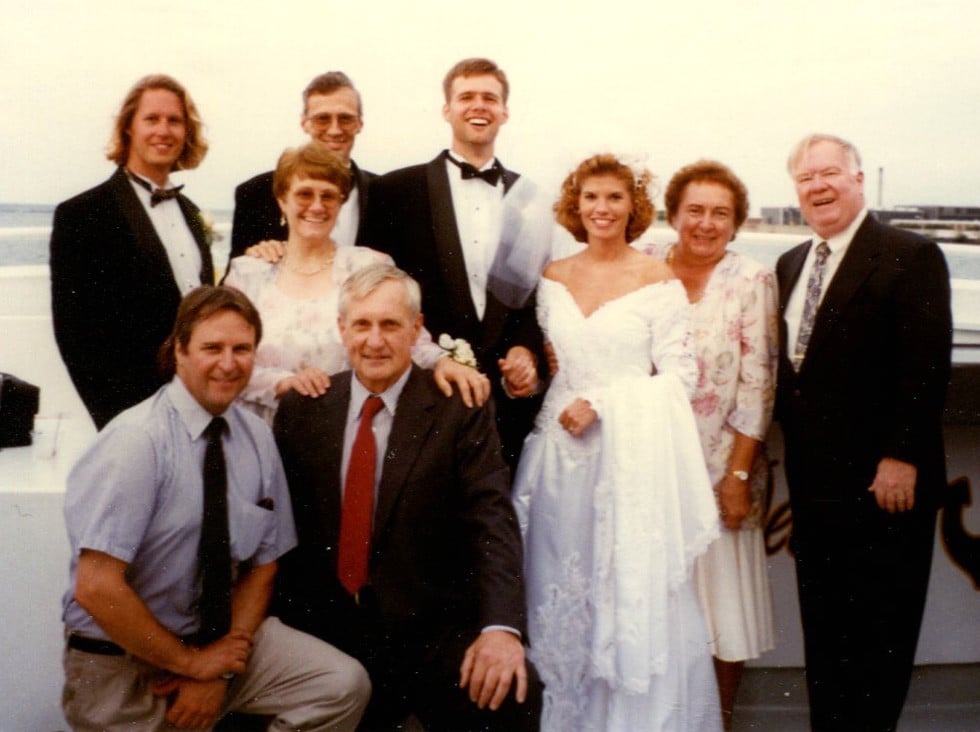
Early in the 1990s, the typical U.S. couple spent around $463 on their wedding flowers. This expense included all of their flower purchases: the ceremony arrangements, the bride’s and groom’s boutonnieres, and the flower centerpieces and decorations for their wedding. The amount today is around $2,800, and many couples are spending more than that simply on ceremony flowers. WOW!
The Knot launched in 1996, which was somehow THIRTY years ago. Nobody was running big wedding-cost studies back then (The Knot’s own Real Weddings Study came years later), so I dug up the closest hard numbers we have: a survey of Bride’s magazine readers from the early ’90s, tracking data from Condé Nast (the publisher behind Bride’s), and The Knot’s brand-new 2026 Real Weddings Study of over 10,000 couples who got married in 2025.
Yes, weddings cost more than double what they did back then. But it’s really not the whole picture…
The Headline Numbers: $15,800 Then, $34,200 Now
When Bride’s magazine (officially called Bride’s & Your New Home at the time) polled its readers in the early ’90s, the average American wedding cost about $15,800. Condé Nast reported that the average wedding cost $15,208 in 1990. The details from that 30-year-old poll are a time capsule: $77 for the rental of the groom’s tuxedo, $113 for the officiant, and $228 for all of the invitations.
Jump ahead to The Knot’s new 2026 Real Weddings Study and couples who married in 2025 spent an average of $34,200. That’s more than double the ’90s number, and it doesn’t even include the honeymoon or the engagement ring. If you’ve ever had a parent react to one of your vendor quotes with a gasp, this is where it’s coming from.
Fun fact: The Knot reports that spending per guest reached $292 in 2025. If you’ve ever wondered why everyone keeps telling you to trim your guest list, that’s why!
The Plot Twist: After Adjusting for Inflation, It’s About a Wash
This is the part that never comes up when people complain about wedding prices. Run $15,800 through the Bureau of Labor Statistics inflation calculator and you get about $35,000 in today’s dollars. Weddings cost basically what they did when your parents got married. The money simply goes to entirely different places today.
So whenever a relative tells you they spent $15,000 for their entire wedding in the ’90s (someone will), you can lovingly inform them that your $34,000 and their $15,000 are the same money. I also took my own figures from my wedding in 2010 and applied them to the inflation calculator, and what I spent on my Miami wedding (with 110 guests) lands right in the middle of the pack. (If you want every category side by side, I put the full table near the end of this post.)
Then vs. now: $15,800 in 1993 dollars and $34,200 in 2025 dollars are nearly the same number once you run them through an inflation calculator.
Flowers Have Increased More Than Any Category (By Far!)
After adjusting for inflation, wedding flowers are costing nearly triple what they were during the ’90s. That $463 order comes out to about $1,030 in today’s dollars, and the 2025 average is $2,800. No other category comes remotely close.
I don’t believe it’s a mystery why. A ’90s flower order meant bouquets, boutonnieres, and a centerpiece on each table. A 2026 flower order can mean a ceremony arch, an aisle lined with arrangements, an installation hanging over the dance floor, and yes, still all the bouquets and centerpieces. And I say this with love, as someone who runs a wedding site: all that gorgeous inspo is not innocent here.
Watch out for: paying for ceremony flowers that only get seen for 30 minutes. Before signing any contract, ask your florist how they’ll move your arch arrangements and aisle pieces into your reception decor. Most florists are happy to build it into your quote if you ask before you sign.
Photography and Videography Went From One Line Item to Two
In the Bride’s magazine survey taken in the ’90s, $1,208 accounted for both your photography AND your videography. That’s about $2,700 in today’s dollars. The average photographer alone today costs about $3,000, and video is typically listed separately at about $2,300. That’s $5,300 combined, or about double what couples used to spend capturing their day.
I’ve been monitoring wedding photography pricing since planning my own wedding, and this is one area where what you’re buying genuinely changed. A ’90s package got you a shot list and an album. Today you’re getting hundreds of edited photos, sneak peeks, maybe a drone, and maybe even a content creator grabbing phone footage for social media. Whether you need all of that is a different question, but you’re certainly not paying 1993 prices for a 1993 product.
Worth it: Photography is still the thing couples say they’d splurge on again. When wedding planner Brooke Avishay shared her save vs. splurge list for my Smart Wedding Planner, photography topped the splurge column, no contest.
The Things That Cost Exactly the Same
And now for my favorite find! Wedding invitations cost an average of $228 in the early ’90s. Run that through the inflation calculator and you get about $510. The Knot’s average for invitations and stationery in 2025? Also $510. The numbers match to the dollar!
Officiants are a similar story: $113 then, which works out to about $250 in today’s money, and the current average is $260.
Wedding dresses are close too. Brides paid $869 for a dress, headpiece, and veil back then (about $1,940 in today’s dollars), and the 2025 dress average is $2,100. Some corners of the wedding industry truly never change.
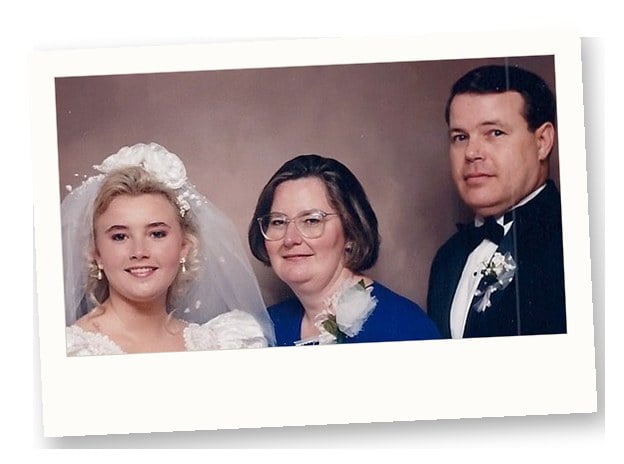
Fun fact: your invitations might be the only thing at your wedding priced like it’s still 1993. Enjoy that while you’re addressing the envelopes!
Guest Lists Are What Truly Changed
The biggest change of the last thirty years is hiding in the guest count. In the late ’80s, the average wedding had 200 guests. By 1993, that number dropped to 171. Divide today’s average of $34,200 by The Knot’s $292 per guest and you arrive at a guest list of about 117. In thirty years, the average wedding dropped about 80 people from the list while spending way more on each guest who stayed.
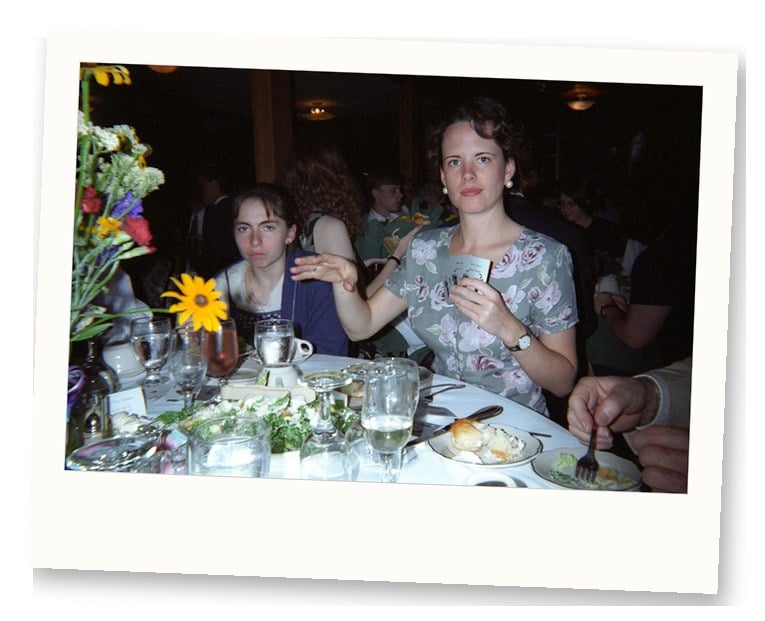
“As you’re working on your [guest] list…take 10 people off. Then later, if you want to invite them, you can send them an invitation.” — Brooke Avishay, Orange Blossom Special Events
That $292 per guest number is also one of the easiest ways to cut your costs, since every guest you take off the list saves you money in five categories at once. Before you cut something you love, look at the guest list first. Taking ten guests off at $292 each frees up nearly $3,000, which just happens to be equal to an entire photography budget. You can run your own numbers through the budget tool at the bottom of this post.
Smart move: reduce your guest list prior to reducing any category you prefer spending money on.
The Full Breakdown, Side by Side
One heads up before you look at this table: the categories don’t line up perfectly. Back then, “photography” included the video, the reception number included the food, and “transportation” meant one limo. I’ve noted the differences where they matter.
| Category | Early ’90s | In today’s dollars | 2025 average |
|---|---|---|---|
| Total wedding | $15,800 | ~$35,000 | $34,200 |
| Reception (venue + food) | $5,957 | ~$13,300 | $12,900 venue alone |
| Photography (incl. video then) | $1,208 | ~$2,700 | $3,000 + $2,300 video |
| Flowers | $463 | ~$1,030 | $2,800 |
| Wedding dress (incl. veil then) | $869 | ~$1,940 | $2,100 |
| Music | $539 | ~$1,200 | $1,800 DJ / $4,500 band |
| Invitations | $228 | ~$510 | $510 |
| Transportation | $192 | ~$430 | $1,100 |
| Officiant | $113 | ~$250 | $260 |
What This Means for Your Budget
If these numbers prove one thing, it’s that couples have ALWAYS spent serious money on weddings. The happy ones just decided where that money went on purpose. That part hasn’t changed since 1996 either.
“The very, very, very first thing I do is create a budget, because no decision can be made until we understand where the money is coming from and where the goal is for it to go.” — Brooke Avishay
So before booking any vendors, come up with your total number, deduct ten percent for unexpected expenses, and divvy up the rest based on your own priorities rather than anyone else’s percentages. If you want a reference point, plug your numbers into our wedding budget tool below, and the Smart Wedding Planner takes you through each step, including which categories brides indicate they’d be willing to spend less on (spoiler alert: The Knot says couples still average $480 on favors, and brides have been telling us for years that most of them end up in the trash).
Are you overspending on your wedding? This 60-second quiz will tell you.
Most brides go into planning with a number in their head and no idea where it's actually going. Enter your budget and guest count, and get a clear picture of exactly where your money is at risk, what you're most likely to overspend on, and where you can cut without anyone noticing.
What matters most to you?
Every vendor will tell you: unless you have an unlimited budget, you HAVE to prioritize. Tell us what matters most to you so your results are specific to YOUR wedding — not some generic checklist.
Your budget has a blind spot.
What’s inside your results
📊Your budget score & #1 blind spot
⚠️Your biggest pressure point
💡Where you’re most likely to overspend & save
💰Your recommended budget breakdown
No spam. Unsubscribe any time.
Next time a relative tells you they spent $15,000 for their entire wedding, you can smile and tell them you’re spending the exact same money. You’re just spending it on 80 fewer people and a lot more flowers.
Some links in this post may be affiliate links, which means we may earn a small commission if you make a purchase through them. Thank you for your support!


